

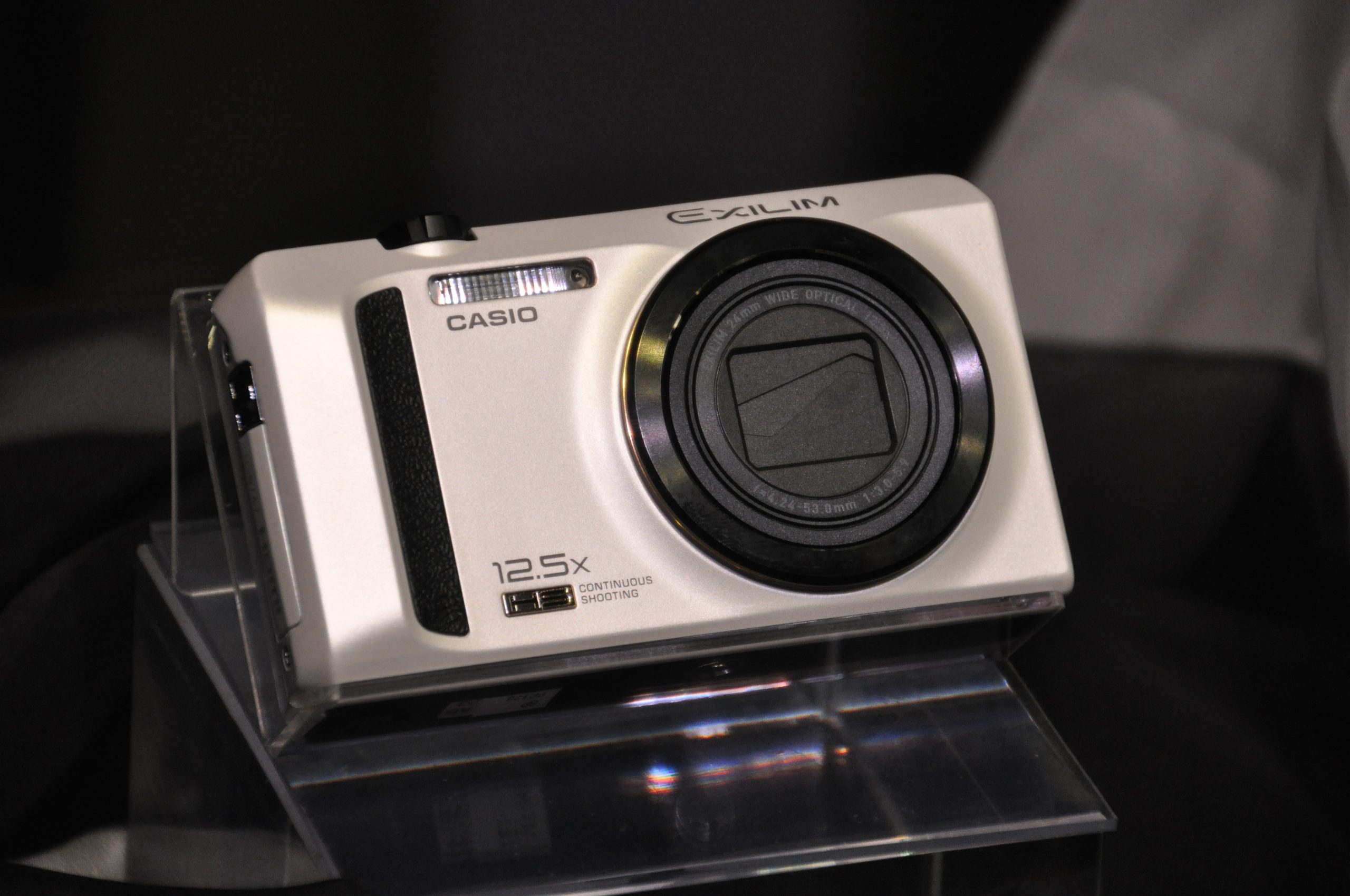
The early years of digital camera manufacturing were filled with immense innovations. From a binocular camera to a wooden camera, companies were trying their best to offer a blend of style, performance, and price point. Like the various innovations, one that marks an interesting turn in the world of prototypes is Casio’s look into the future. Way before Apple launched a smartwatch, the company introduced something that was never seen before: the world’s first wristwatch digital camera, the Casio WQV-1.
The lead image is courtesy of [email protected] from Flickr. Used with license.
In an era when cameras were becoming larger, Casio had other plans. The company launched Wrist Camera, a wristwatch that had a digital camera. This was a huge deal because one could take photos as and when they wanted and very discreetly. It was also a camera that featured a full-screen LCD display to preview images, while the lens was on the side. The device arrived at a time when fashion, technology, and photography were at a great intersection, and everyone was looking for a statement piece. Here is a look at its specifications:
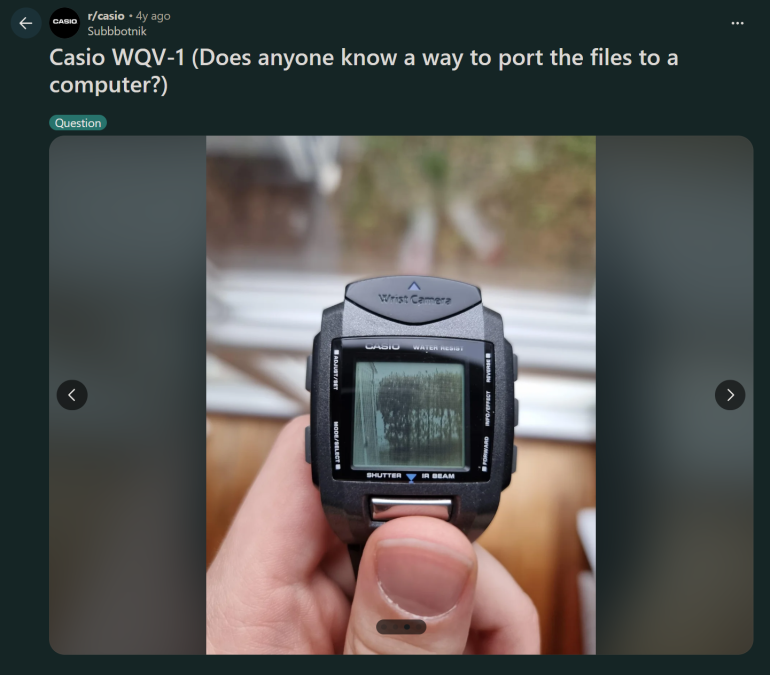
- Sensor: 0.028MP CMOS 1/1.4 inch sensor
- Image resolution: 120 x 120 pixels, grayscale. Roughly equivalent to a Game Boy Camera
- Display: 120 x 120 dot LCD monitor with 16 grey levels
- Internal memory: 1MB, storing up to 100 images
- Shooting distance: 30cm to infinity
- Data transfer: Infrared (IrDA) at 115kbps to other WQV-1 watches or a compatible PC
- File format: Proprietary format on device, converted to BMP/JPEG on transfer to PC
- Case diameter was approximately 42mm, lug to lug 52mm
- Battery: CR2032 rated for six months
- Available variants: dark grey resin case and strap for casual wear, and stainless steel case for the business world
- Additional functions: stopwatch, countdown timer, multiple alarms, tilt sensor, indoor/outdoor shooting mode, contrast control
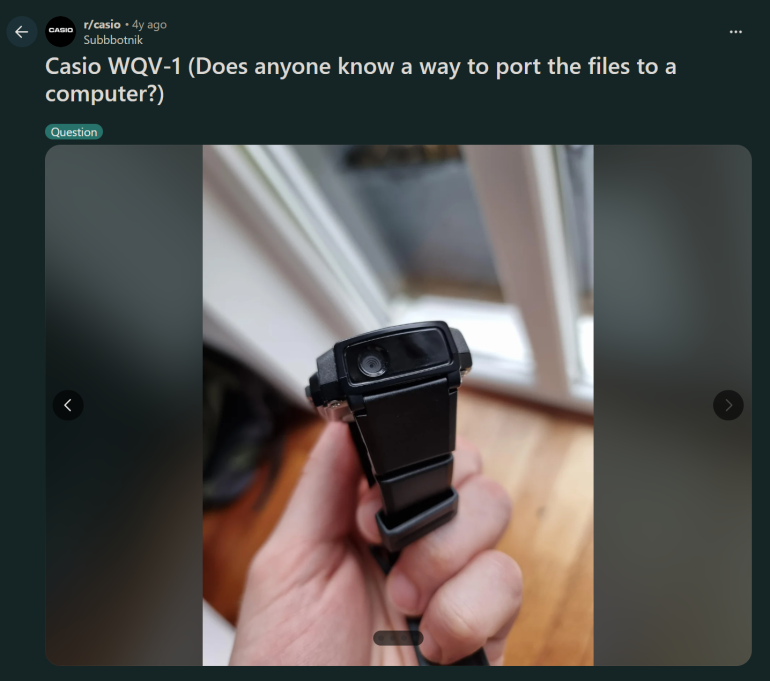
The Wrist Camera also had a visual database, which means one can take images of a person, put a name in the photo, and use it as a visual phone book. This may seem gimmicky, but it was an attempt to offer a wearable contact system, much like the ones we see today with profile photos, facial recognition, and so on. Moreover, one could keep the photos or delete them.
Furthermore, image sharing between two WQV-1 watches via infrared port was a stunning addition, but before Bluetooth photo sharing or AirDrop came into existence. In some ways, Casio’s Wrist Camera kept all the social dimensions of photography in mind and helped users to try something new.
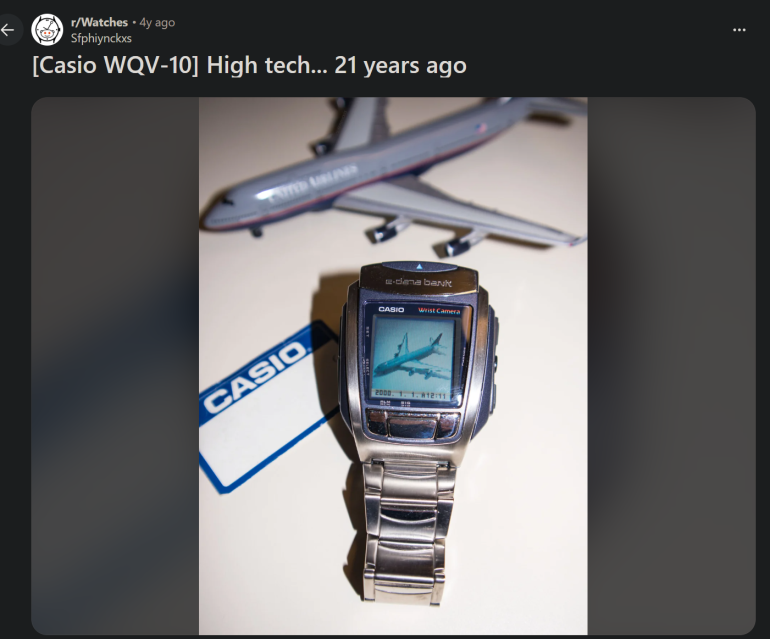
A year after the first watch, Casio also introduced the WQV-10, another version that featured digital zoom functions and color photos. It also offered a 176 x 144 JPEG sensor capable of producing images of 16.77 million colors when transferred to a PC; a 20 x 20 mm color LCD screen utilizing a 25,344-pixel CMOS sensor; and 2x digital zoom, among others. In fact, this progress only showcased how serious Casio was about the product.
But like all good things come to an end, so did the Wrist Camera. One of the reasons was that there were better megapixel cameras out there, and it was becoming redundant to use a watch as a camera. It was also around the point where phones were coming up with their own cameras, which made wristwatches look like child’s play.
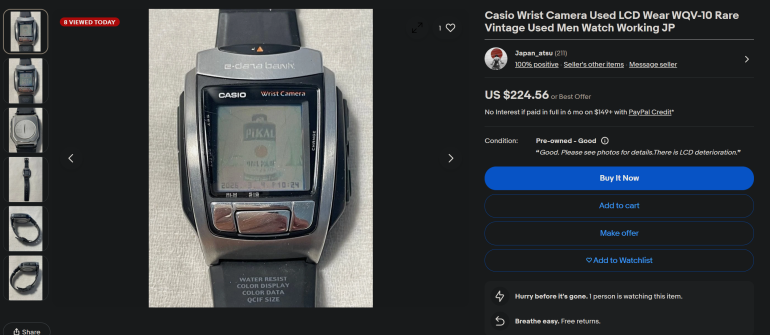
Today, WQV-1’s legacy proves what we can achieve if we put our minds to it. The device was the basis for most modern tech, including the ability to share photos even before most cameras thought. The wrist camera did a fabulous job of seeing our needs and translating it into a single wristwatch product. This is why the device is still being sold on eBay amongst rare found items. Collectors are now reminded of a time when the future seemed to have arrived a bit too quickly.
Get rid of the ads!
Did you enjoy reading this article as much as we enjoyed writing it? There's a way to support us and our reporting, getting ad-free navigation and more as a bonus. Subscribe to us for less than a coffee per month —just $3.99— or take advantage of our yearly subscription with a hefty discount for only $25.- An ad-free experience
- A free mystery box for Lightroom or Capture One
- All the books in our store
- 20% discount on Capture One
- 30% discount on Imalume Photo Theft Protection
- 20% off Herbs and Kettle Tea Company.
- 20% off your order from MPIX printing services.
- 5% off Viltrox Products via their eCommerce store.
- 10% off all film developing, printing and scanning services from Blue Moon Camera and Machine
- 15% off 7Artisans products: The lens and accessory maker is offering a sweet discount for Phoblographer's readers.