

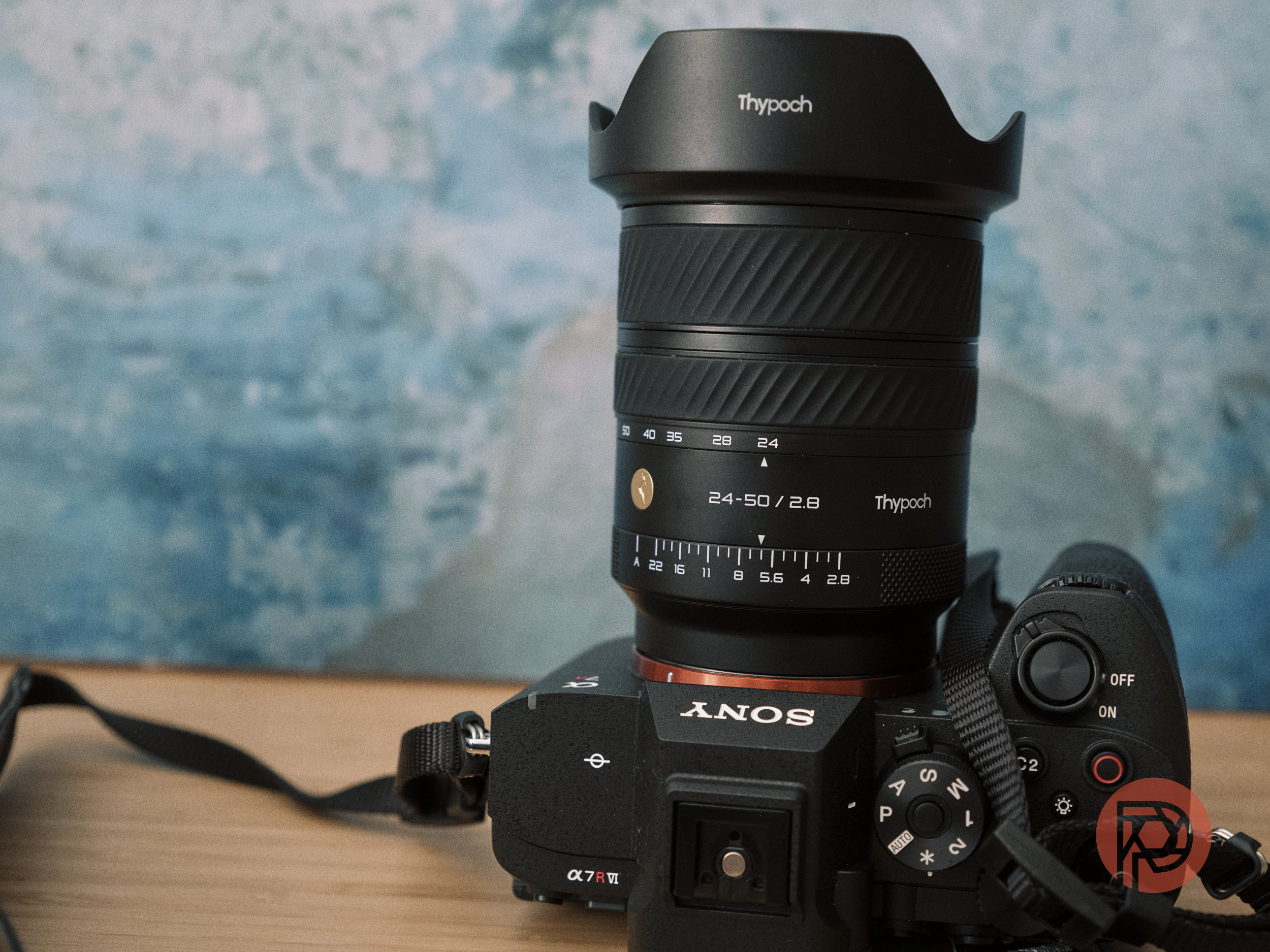
Third-party lenses have been a core part of Sony’s success in dominating the mirrorless camera market for years. And while the official company line is that they cannot guarantee the performance of any third-party lens, at The Phoblographer we pride ourselves on having one of the world’s most complete and rigorous lens reviews database. So, when Thypoch asked if we wanted to check out the world’s first third-party zoom lens, the Voyager 24-50mm F2.8, we jumped on the opportunity. Here’s what you need to know about this world’s first.
The Big Picture: Thypoch 24-50mm F2.8 Review Conclusions
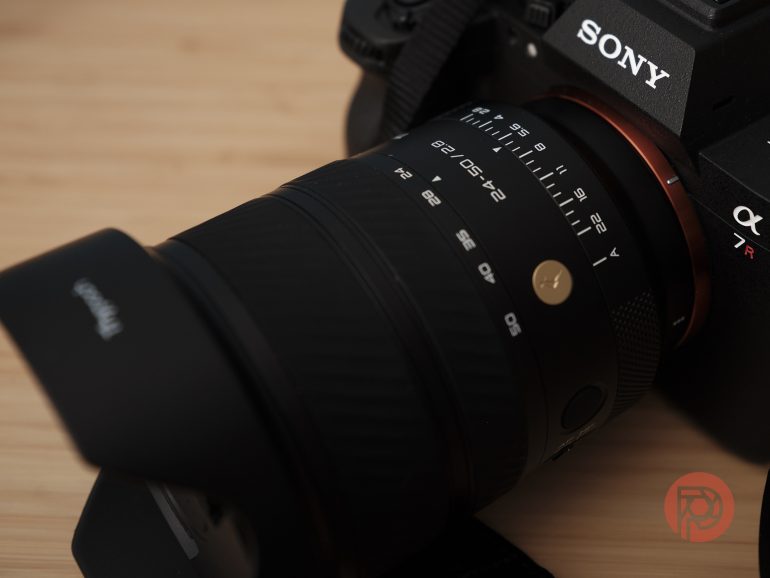
The compact and lightweight standard zoom lens seems to be a standard option every camera manufacturer makes as a potential first fast aperture zoom lens for enthusiasts. That’s exactly who the Thypoch Voyager 24-50 F2.8 was made for. Its 24-50mm focal range puts it squarely in the “normal” to “just wide” field of view that’s common for anyone that’s looking for a walk-around lens. Like its Sony-made equivalent, the Voyager 24-50 has some weather and dust resistance, a bright F2.8 aperture, and weighs just under a pound (15 ounces) it’s the perfect companion for travel and competent as a street lens once you get used to some of the odd design choices.
Make no mistake, Sony makes a 24-50mm F2.8 G lens that has many of the same features as the Thypoch Voyager 24-50mm F2.8 – aside from the addition of a click/de-click switch on the Sony version, the biggest reason you’ll pick up the Voyager is its $649 price tag compared to the $1200 Sony is charging.
We’re awarding the Thypoch Voyager 24-50mm F2.8 four out of five stars for its innovation and generous price point. Want to check one out for yourself? Buy it from Thypoch directly for $649.
- Extremely lightweight design.
- Odd placement of focus and zoom rings.
- Some weather and dust resistance, including a gasket at the rear / mount.
- Solid autofocusing performance.
- Clicky aperture ring.
- Constant F2.8 Aperture.
- No AF issues with both older (Sony a7III) and newer (Sony a7RVI) camera bodies.
Experience
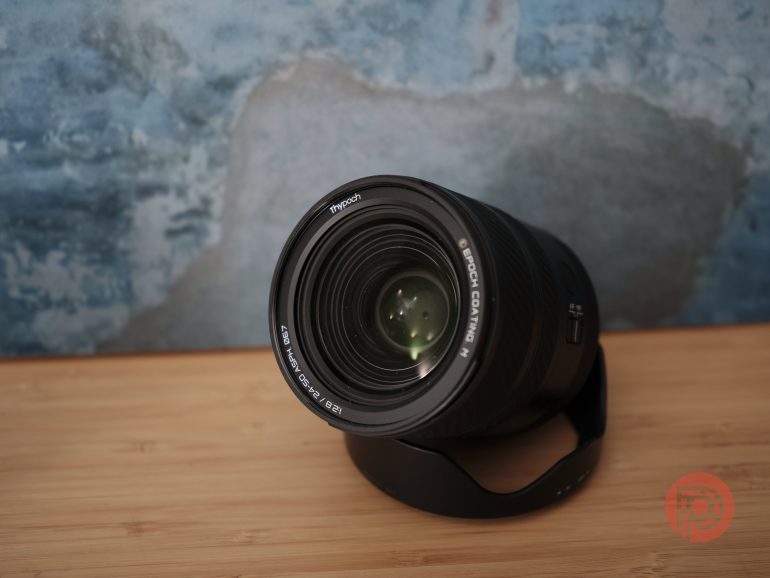
For this review, I paired the Thypoch Voyager 24-50 with both the Sony a7III I own and the Sony a7RVI on loan from Sony. Additional gear used includes a Flashpoint Li-ion Zoom II (manual) flash and both the Polar Pro Shortstache and Center-S lens filters.
Before going any further in this review, it’s important that I share that I typically will only use a zoom lens for my event work. When I think about passion projects, or personal work, I am very firmly in the primes-only camp. That said, I found the Thypoch to easily loan it itself for everyday carry thanks to its extremely compact and lightweight design. I was thrown off by the miniscule size when it first came in for review and was further shocked to see just how tiny it is compared to my Viltrox AF 35mm F1.2 LAB. When placed side by side, the Voyager 24-50mm F2.8 is comically small – a lesser photographer might start questioning their bokeh size. That size is in large part the beauty of this lens – I’ve never truly used my a7III for anything other work and many “good” lenses often added so much bulk to the camera that I’d often just pick a different camera to explore with.
The Thypoch Voyager 24-50 makes me rethink this from a purely packing standpoint. Last month I was on a quick trip out of town and left behind my cameras because I didn’t want to be bogged down by the added weight of bringing my Nikon Z7II and the Tamron 35-100mm F2.8 that is now perpetually attached to the camera. It’s not the biggest camera/lens combination, but it’s not exactly easy to pack. When paired to my Sony a7III or the a7RVI, the Voyager 24-50 fits like a small extension to the body. Its internal zoom construction further emphasizes the overall slim profile as you never have to worry about a protruding lens element too far in front of your camera. I found this especially handy while at a recent Mets game; I was able to walk into the stadium without being questioned about “professional” equipment.
One of the interesting tidbits of using this lens was how quickly and accurately it appeared to lock focus. This lens uses a stepping motor to achieve focus, and for years photographers have lamented the speed and accuracy of these lenses, but in real-world use, I’ve found that the Thypoch Voyager not only held its own, in some ways managed to lock focus more accurately and consistently than Sony’s 50-150mm F2 GM at 50mm. This was by far the most shocking revelation when using this lens, a lens that retails for under $700 was giving a lens that more than five times that the business.
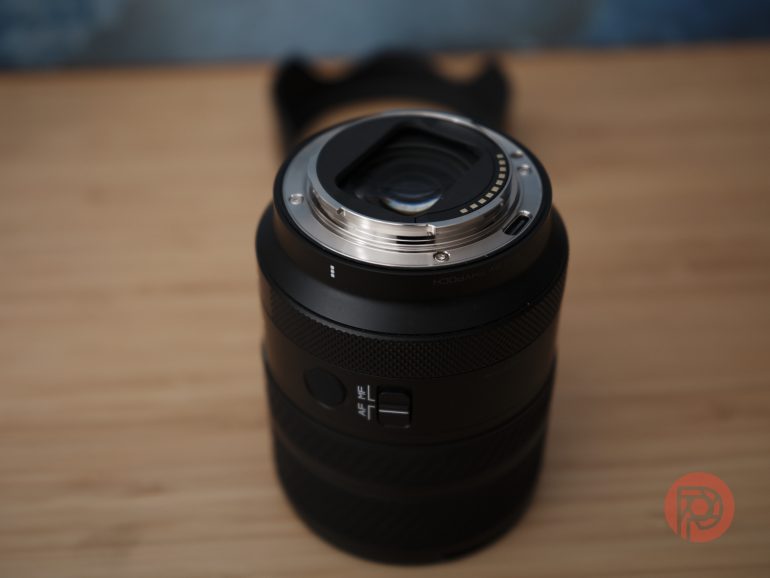
Another big plus is the Voyager’s weather and dust resistant design. While there is no indication that this is fully sealed throughout the lens body, there is evidence of a rubber gasket at the mount which means it does have some protection from the elements, I’m not fully convinced and Thypoch has not confirmed as of this writing, that physical seals exist at both the front element and at the mount. This is not unlike how Sigma has designed its Contemporary line of lenses, so it’s not the detractor that a lens with no protection of any kind would be. During my time with the lens, I’ve enjoyed a nice long stretch of beautiful weather and didn’t find myself out in the rain much, but I have shot in some dusty, dingy locales and the lens was able to keep trucking along even after getting banged about during a BMX rider shoot.
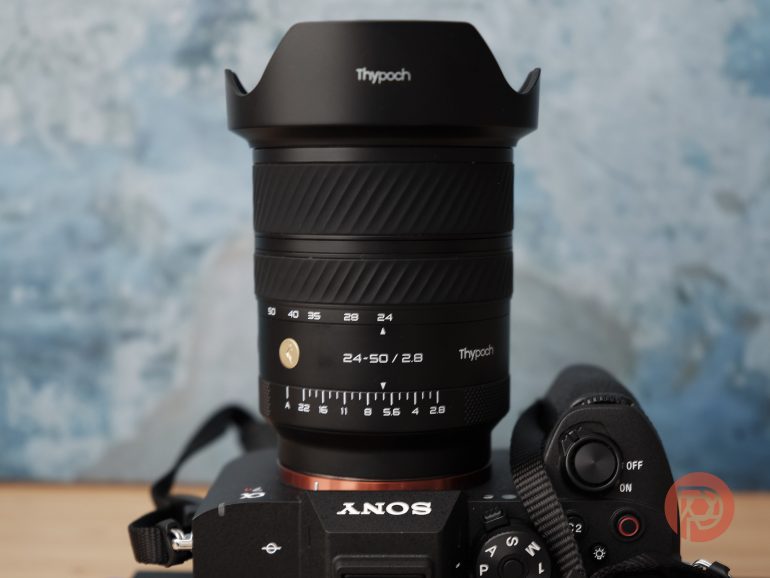
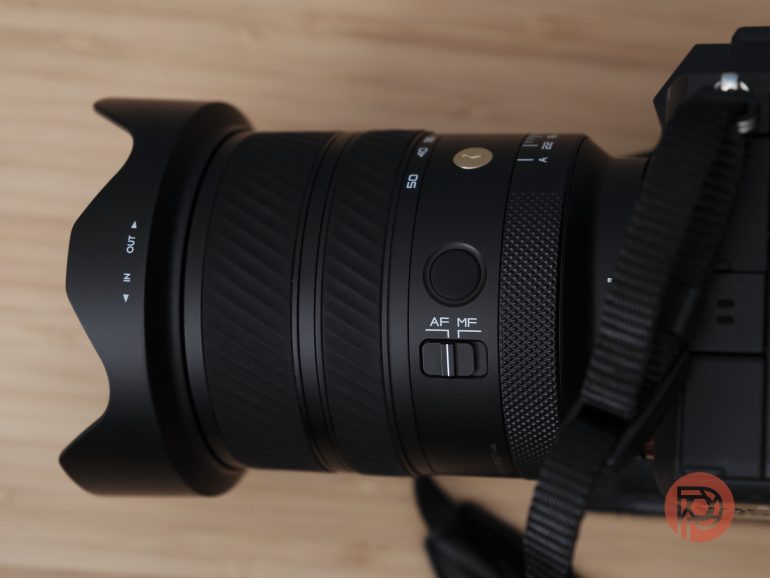
The Voyager 24-50mm F2.8 isn’t perfect, not by far. Aside from the questionable weather-sealing, the lens also suffers from some odd design choices. For whatever reason, Thypoch opted to place the zoom ring at the very front of the lens instead of the middle where it is most common. The middle control ring has been designated as the 24-50mm F2.8’s focus control ring. In practice, this meant that there were several instances where I ended up adjusting focus instead zooming in or out as needed. It may seem a bit picky, but there’s a reason why even third-party manufacturers keep these types of conventions – we’ve been trained to feel for these controls in those specific places.
Lastly, the zoom range is something that I understand why it exists, it also doesn’t really fit my style of shooting the way I’d hope. While the 24-50mm focal range covers most “normal” perspectives, I would’ve like to see this be a bit wider (20-60 maybe?). There were plenty of times where I wish I had a bit more room on either side of the spectrum. It’s not necessarily a dealbreaker, especially if you’re primarily using this as a street or travel lens, but for me I found it a little too limiting even though Thypoch markets this for its flexibility.
Image Quality

Here’s where the rubber really hits the road. Having a wonderful experience with a bad lens is still a bad time. Full stop. Thankfully, that’s not what I found with the Thypoch Voyager 24-50mm. The images that the lens produces had me seriously considering why anyone should buy another OEM lens, especially at the entry-to-mid-level category. The Voyager 24-50mm F2.8 was able to consistently produce images that were on-par with far more expensive and bulkier Sony gear. While the Voyager might not have the kind of character that the Sony Sonnar T* 55mm F1.8 ZA has or even the charm of the Viltrox AF 28mm F4.5, it delivers the level of image quality that you’d expect from any of Sony’s G Series lenses.
The following unedited images were taken with the Thypoch Voyager 24-50mm F2.8:


These were also taken with the Thypoch Voyager and were edited using The Phoblographer’s Presets for Capture One:


Declaration of Journalistic Intent
The Phoblographer is one of the last standing dedicated photography publications that speaks to both art and tech in our articles. We put declarations up front in our reviews to adhere to journalistic standards that several publications abide by. These help you understand a lot more about what we do:
- At the time of publishing this review, Thypoch isn’t running direct-sold advertising with the Phoblographer. This doesn’t affect our reviews anyway and it never has in our 15 years of publishing our articles. This article is in no way sponsored.
- Note that this isn’t necessarily our final review of the unit. It will be updated, and it’s more of an in-progress review than anything. In fact, almost all our reviews are like this.
- None of the reviews on the Phoblographer are sponsored. That’s against FTC laws and we adhere to them just the same way that newspapers, magazines, and corporate publications do.
- Thypoch loaned the unit and accessories to the Phoblographer for review. There was no money exchange between us or their 3rd party partners and the Phoblographer for this to happen. Manufacturers trust the Phoblographer’s reviews, as they are incredibly blunt.
- Thypoch knows that it cannot influence the site’s reviews. If we don’t like something or if we have issues with it, we’ll let our readers know.
- Thypoch paid for the shipping to us and the return shipping costs.
- The Phoblographer’s standards for reviewing products have become much stricter. After having the world’s largest database of real-world lens reviews, we choose not to review anything we don’t find innovative or unique, and in many cases, products that lack weather resistance. Unless something is very unique, we probably won’t touch it.
- In recent years, brands have withheld NDA information from us or stopped working with us because they feel they cannot control our coverage. These days, many brands will not give products to the press unless they get favorable coverage. In other situations, we’ve stopped working with several brands for ethical issues. Either way, we report as honestly and rawly as humanity allows.
- At the time of publishing, the Phoblographer is the only photography publication that is a member of Adobe’s Content Authenticity Initiative. We champion human-made art and are frank with our audience. We are also the only photography publication that labels when an image is edited or not.
More can be found on our Disclaimers page.
Get rid of the ads!
Did you enjoy reading this article as much as we enjoyed writing it? There's a way to support us and our reporting, getting ad-free navigation and more as a bonus. Subscribe to us for less than a coffee per month —just $3.99— or take advantage of our yearly subscription with a hefty discount for only $25.- An ad-free experience
- A free mystery box for Lightroom or Capture One
- All the books in our store
- 20% discount on Capture One
- 30% discount on Imalume Photo Theft Protection
- 20% off Herbs and Kettle Tea Company.
- 20% off your order from MPIX printing services.