

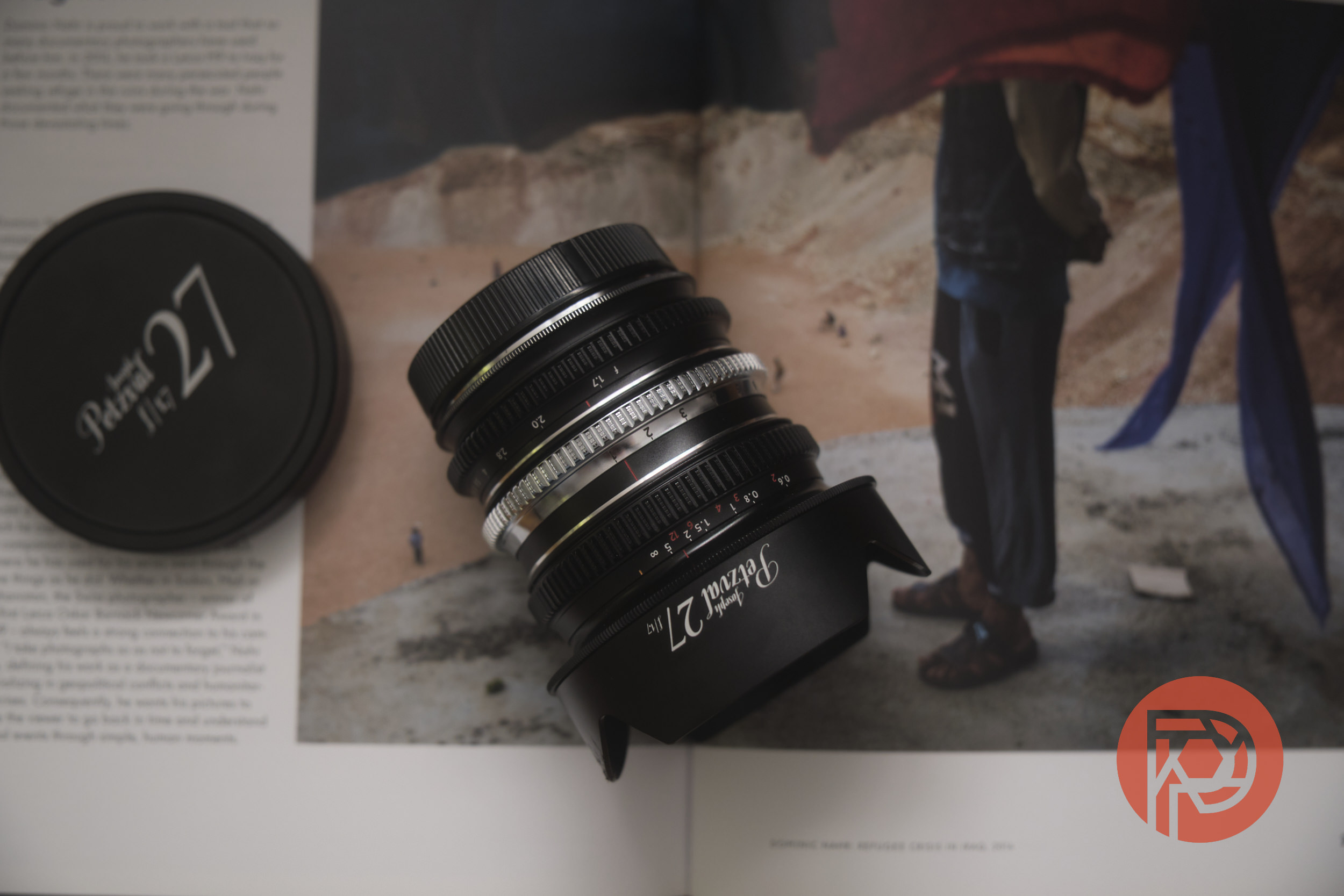
In a world of technically “perfect” lenses that produce boring, bland images, the Petzval lens feels like something meant to break up the monotony of modern photography. After all, the Petzval lens was designed at the very beginning of photography – both as a technology and an art form. To that end, Lomography’s Joseph Petzval 27mm F1.7 lens hopes to keep the tradition of the Petzval lens alive and well in an ever-expanding number of focal lengths. After a month with this lens, I have some thoughts.
Table of Contents
The Big Picture: Lomography Joseph Petzval 27mm f1.7 Review Conclusions
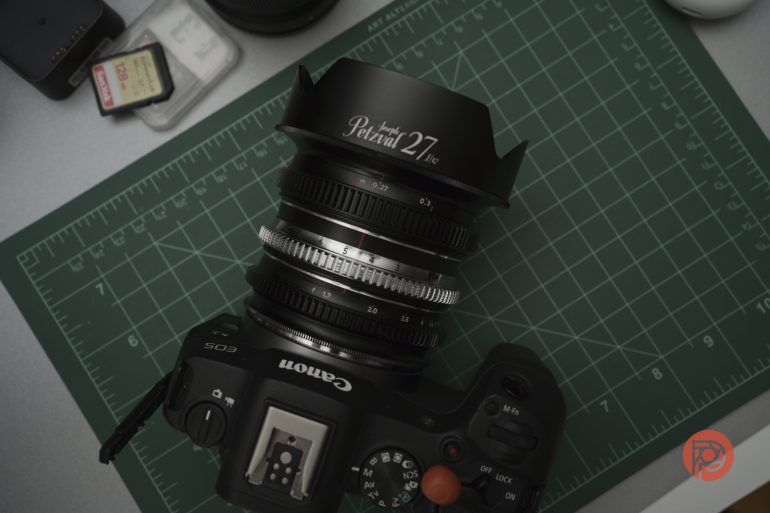
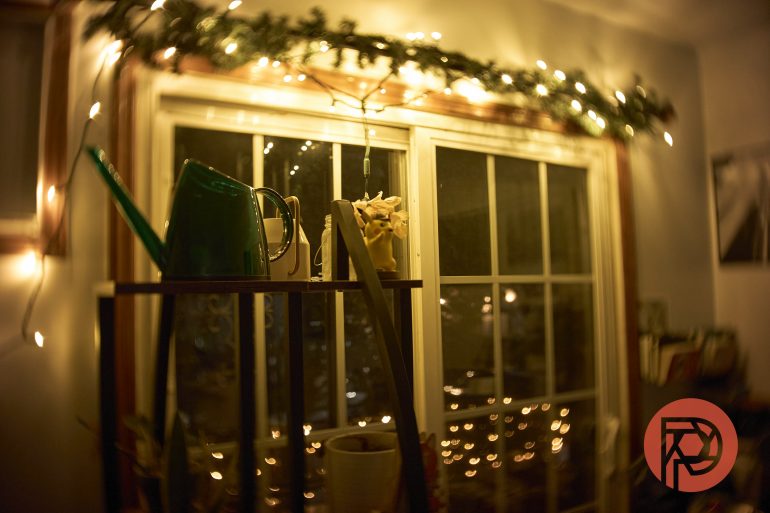
The Lomography Joseph Petzval 27mm F1.7 Art Lens is the widest focal length in Lomogaphy’s Joseph Petzval Art Series Lenses that are intended to be shot wide-open (or very close to it) to deliver the dreamy, swirly bokeh effect that the original Petzval lenses are known for. The Petzval 27mm F1.7 does in fact achieve this look but at 27mm, it’s not always the easiest to get or most versatile for different kinds of photography. For portraits, this lens makes sense, albeit the 27mm focal length might be too wide. For street photographers, the focal length is right, but the need to shoot at F2.8 and brighter could limit how you might want to shoot a scene. The lack of weather-sealing on this lens also limits the conditions where it would be practical to carry this lens. I’d love to take advantage of the f1.7 maximum aperture in darker, rainy days but I don’t want to risk damaging my camera.
When the opportunity to review this lens came up, I was excited by the idea of the Petzval look. I wanted to go out and turn the background of every shot into a swirly, dreamy backdrop that would highlight my subjects. In practice, I found myself making too many compromises to always keep this lens with me. At times, it felt like the photography experience was second to using this particular lens for video applications – a true shame.
We’re giving the Lomography Joseph Petzval 27 F1.7 Focus-coupled Bokeh Control Art Len three out of five stars. You can check it out on Lomography’s store for $599.
- Great, all-metal construction – including mount and external lens accessories (cap, petal hood)
- The bright F1.7 aperture allows you to use this lens in a variety of challenging light scenarios
- The swirly bokeh of the Petzval look is there but not as present as it would be at tighter focal lengths
- Great as a black-and-white lens
- No weather-sealing and the aperture plates require screwing/unscrewing a hatch at the rear of the lens is just asking for trouble
- Expensive considering is at its core a manual focus, 28mm lens
Experience
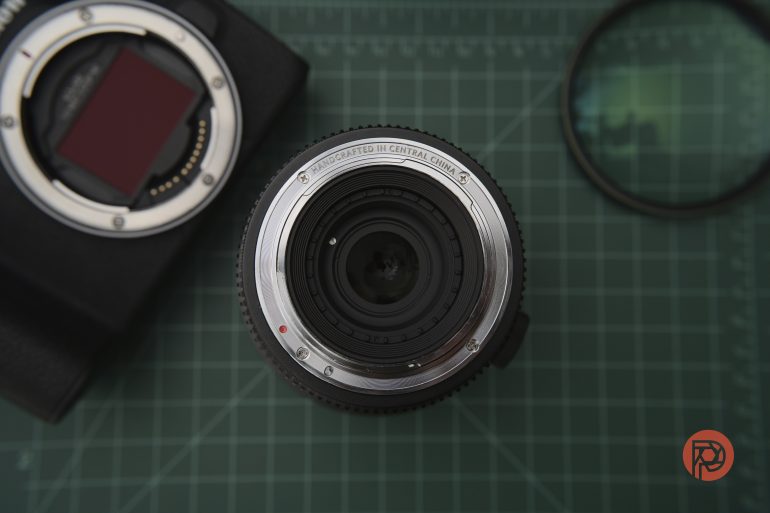
Let me start this section by saying that this lens, as a manual lens, has a very premium feel and heft. The Lomography Petzval 27mm sports an all-metal build with a substantial, but not too heavy, weight with lots tactile feedback in the ring controls thanks to its gnarled design. There is no plastic anywhere to be found on the outside of this lens, lending to that premium look and feel.
For this review, I used the Lomography Joseph Petzval 27mm F1.7 Art lens with the Canon EOS R and the Canon EOS R8 – both are owned by ThePhoblographer.
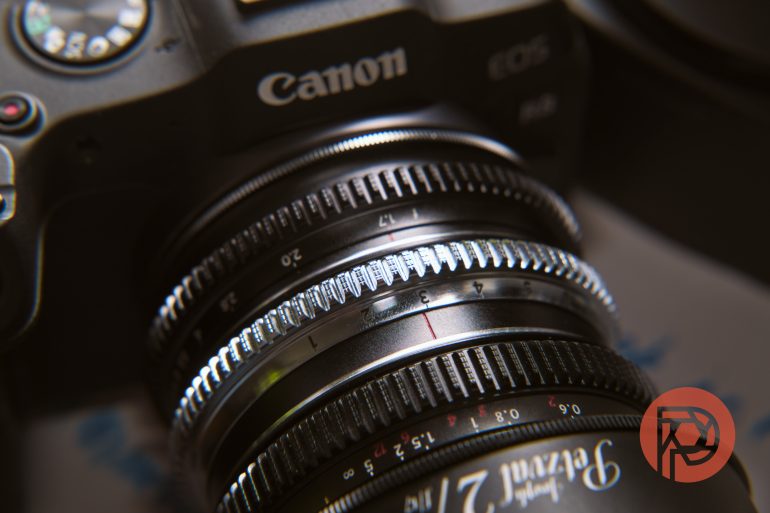
Speaking of the control rings, there are three rings on the barrel of this lens controlling aperture, focus, and a center ring to control bokeh. While the first two are standard on any lens, the third is what Lomography developed to help this lens stand out. The bokeh control ring is intended to give photographers control not just the strength of the swirly bokeh effect but also its direction. You can max it out or all but make it disappear depending on the look you’re hoping to achieve. The control rings themselves are very smooth and with a 180-degree rotation from closest focusing distance to infinity, photographers will be pleased with the level of accuracy they can get with the Petzval 27mm Art Lens. Unlike many other wide-angle lenses though, you’ll need to double check that focus as I found that both EOS R and EOS R8 would show that a subject was in focus (using focus peaking), but the resulting images showed otherwise.
The Petzval 27 F1.7 also includes a set of gobo-like “aperture plates” that can change the shape of the bokeh balls in your scene. This is done through Lomography’s dual aperture system that requires you to unscrew a plastic ring on the mount-side of the lens. In my testing, I found this to be something of a hassle and if you’re trying to work quickly or simply have trouble seeing – the plates themselves have a tiny notch that needs to be aligned to the inside of the lens – you’ll quickly abandon this effort out of frustration. Full disclosure, I did add one of these aperture plates (the heart shaped one) and did use it again. I just found it not worth the time for the gimmick.
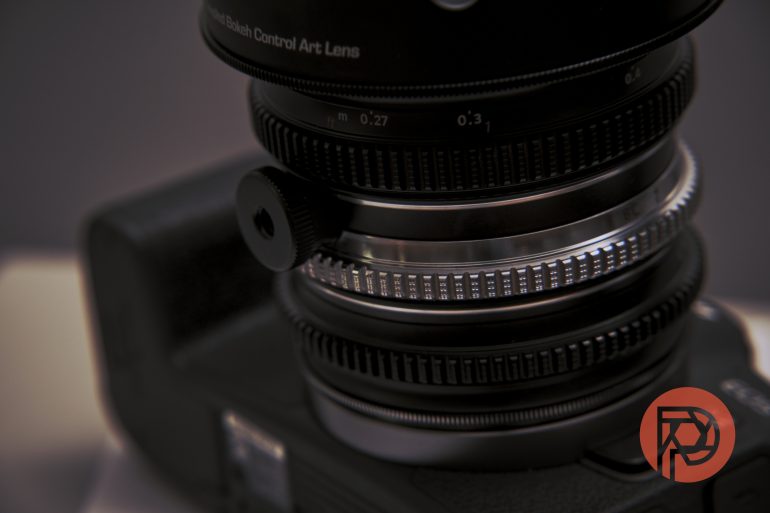
For all the photocentric language that appears on Lomography’s product page, the truth is a bit different. Many of the physical features of the lens, including the machined focus rings are designed for videographers first and foremost. The Lomography Petzval 27mm’s focus ring is designed with follow-focus rigs in mind. There’s even a ¼-inch mount at the bottom of the barrel intended to allow easy access for rigs, mounts, and other videocentric applications.
Image Quality
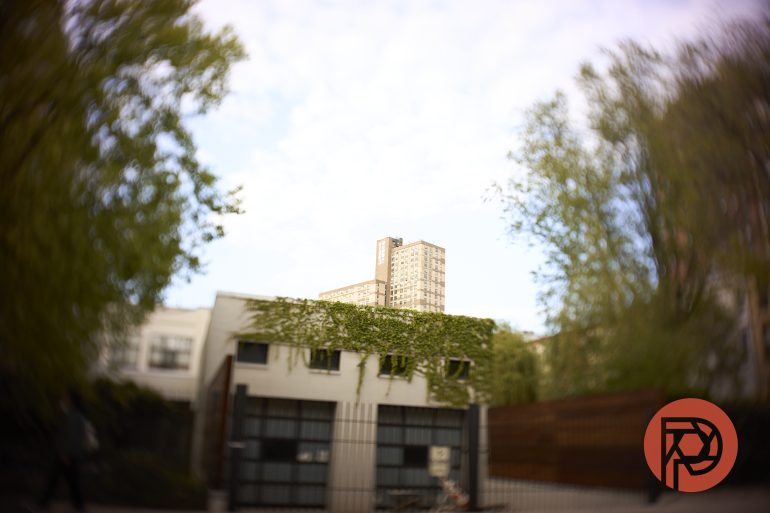
Here’s where the rubber hits the road. Unlike your typical “image quality” section, you won’t hear us wax poetic about technical clarity and for good reason – this isn’t that kind of lens. In practice, the Petzval 27mm Art Lens does its intended job of adding a swirly bokeh to your images adding a whimsical look that can bring attention to anything that’s at the center of your frame. Unfortunately, at 27mm it can feel a bit limiting as the focal length might be too wide for the use of the lens’s main feature. It’s difficult to compose street scenes or documentary-styled images with only the center of the frame staying in sharp focus. It’s not impossible for sure, but again, it just feels like a lot of work for little reward in the end. Portraitists will find the most use for the Lomography Joseph Petzval Art Series of lenses, though I’m sure that they’ll opt for longer focal lengths before considering the 27mm version.

When photographing in color, the effect can get lost if you’re composing without the intention of having the lens’s aperture wide open or keeping all subjects dead center. Here are some unedited images for reference:


What I do find the Lomography Petzval 27’s greatest strength is when making images in black and white. The high contrast between light and dark really opens what can be achieved at this focal length. The following images were edited in Capture One:


Lomography Joseph Petzval 27mm F1.7 Tech Specs
The following tech specs were taken from Lomography’s product page. The lens is available in Sony E, Nikon Z, and Canon RF mounts.
- Focal Length: 27 mm
- Lens Aperture System: Stopless Iris Style Aperture, Drop In Special Aperture Plates
- Closest Focusing Distance: 0.27 m
- Lens Focusing: Manual Focusing Ring, Mod 0.8 Follow Focus Gear
- Available Apertures: Stopless f/1.7 – f/22
- Filter Thread: 77 mm
- Lens Material: Multi–Coated Glass
- Lens Body Material: Anodized Aluminum
- Lens Family: Joseph Petzval Focus-Coupled
Declaration of Journalistic Intent
The Phoblographer is one of the last standing dedicated photography publications that speaks to both art and tech in our articles. We put declarations up front in our reviews to adhere to journalistic standards that several publications abide by. These help you understand a lot more about what we do:
- At the time of publishing this review, Lomography isn’t running direct-sold advertising with the Phoblographer. This doesn’t affect our reviews anyway and it never has in our 15 years of publishing our articles. This article is in no way sponsored.
- Note that this isn’t necessarily our final review of the unit. It will be updated, and it’s more of an in-progress review than anything. In fact, almost all our reviews are like this.
- None of the reviews on the Phoblographer are sponsored. That’s against FTC laws and we adhere to them just the same way that newspapers, magazines, and corporate publications do.
- Lomography loaned the unit and accessories to the Phoblographer for review and have not requested a return. There was no money exchange between us or their 3rd party partners and the Phoblographer for this to happen. Manufacturers trust the Phoblographer’s reviews, as they are incredibly blunt.
- Lomography knows that it cannot influence the site’s reviews. If we don’t like something or if we have issues with it, we’ll let our readers know.
- The Phoblographer’s standards for reviewing products have become much stricter. After having the world’s largest database of real-world lens reviews, we choose not to review anything we don’t find innovative or unique, and in many cases, products that lack weather resistance. Unless something is very unique, we probably won’t touch it.
- In recent years, brands have withheld NDA information from us or stopped working with us because they feel they cannot control our coverage. These days, many brands will not give products to the press unless they get favorable coverage. In other situations, we’ve stopped working with several brands for ethical issues. Either way, we report as honestly and rawly as humanity allows.
- At the time of publishing, the Phoblographer is the only photography publication that is a member of Adobe’s Content Authenticity Initiative. We champion human-made art and are frank with our audience. We are also the only photography publication that labels when an image is edited or not.
More can be found on our Disclaimers page.
Get rid of the ads!
Did you enjoy reading this article as much as we enjoyed writing it? There's a way to support us and our reporting, getting ad-free navigation and more as a bonus. Subscribe to us for less than a coffee per month —just $3.99— or take advantage of our yearly subscription with a hefty discount for only $25.- An ad-free experience
- A free mystery box for Lightroom or Capture One
- All the books in our store
- 20% discount on Capture One
- 30% discount on Imalume Photo Theft Protection
- 20% off Herbs and Kettle Tea Company.