

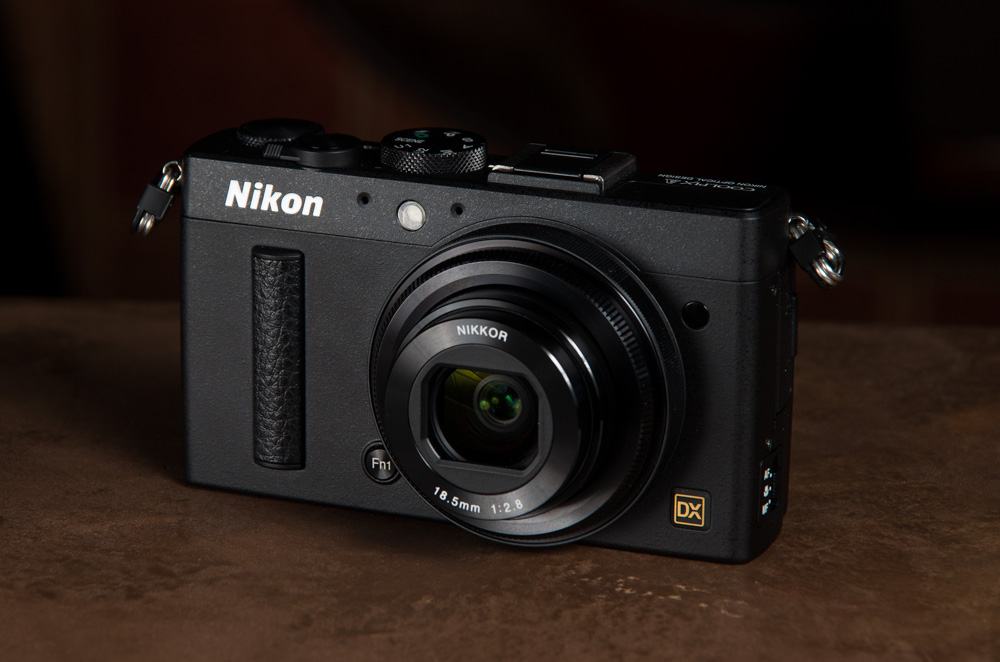
It has been a while since we have seen anything interesting from Nikon. The company introduced the Z5 II in 2025, and since then, there has been no news of what they may have in store. As part of the company’s most anticipated releases of 2026, reports state that Nikon will be delivering a compact full frame camera soon. Some even describe this as being Nikon’s answer to the Fujifilm X100VI, Ricoh GR IV, and Leica Q lineup.
Nikon’s Photography-First Camera
According to Nikon Rumors, the camera will be based on the Nikon ZR, but will be redesigned to serve only photographers. Some of the specifications also include as follows:
- No built-in EVF; optional hot shoe EVF available
- Two physical dials (one dual-purpose)
- High-resolution full-frame sensor
- No IBIS
- No video capabilities
- Tilt-only OLED display
- Small and slim. About 22-25mm thickness
- Fixed lens
- Black, Champagne, and Panda colors
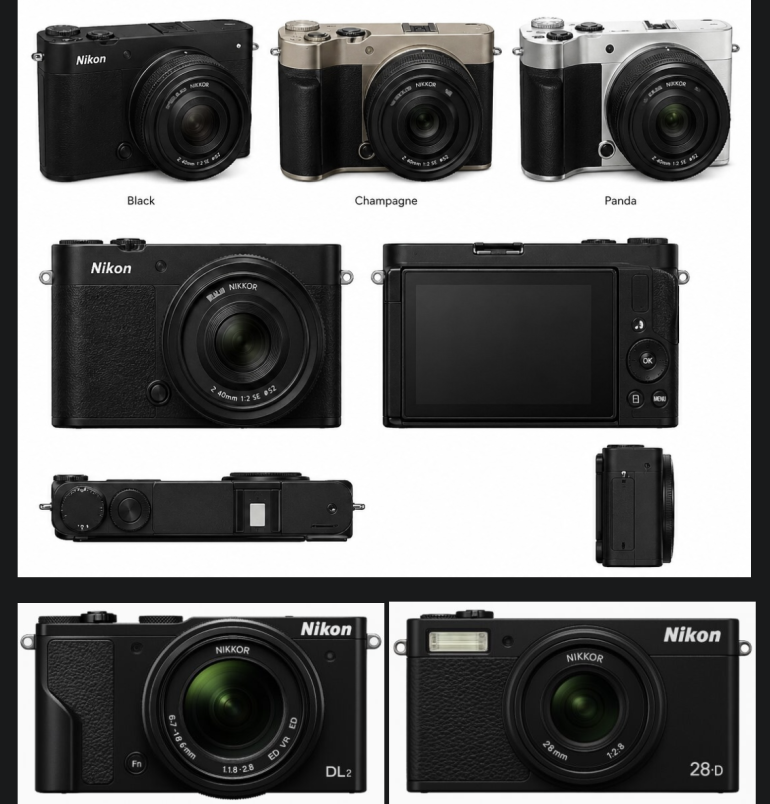
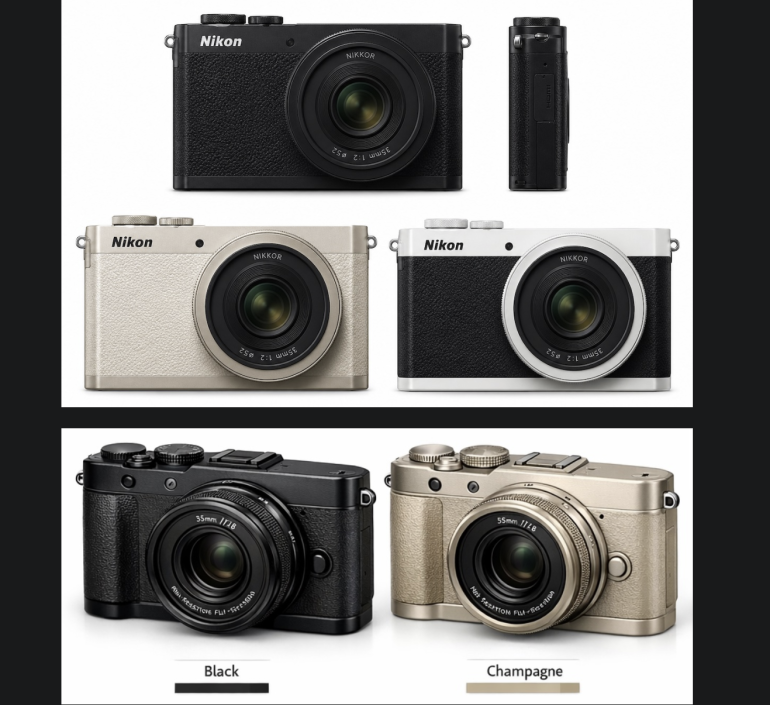
The decision not to include video is certainly odd especially considering how much they’ve turned into total fangirls for it like it’s the newest anime that none of their friends have seen yet. But when Nikon is specifically releasing cameras to cater to the needs of videographers and filmmakers, a camera built purely for photography seems just about right. This philosophy was otherwise seen in the Fujifilm X100 series until the launch of the X100VI, which is designed for content creators. Where the philosophy is holistically embraced is with the Leica M series of cameras.
The 22-25mm thickness is pretty impressive, especially given that the GR IV is just 34.7mm deep, and is an APS-C camera. A full frame camera of this range will be extremely thin, which raises the question of how Nikon intends to handle the lens at this depth. Furthermore, will it even be practical since full frame cameras tend to have slightly larger bodies?

The answer to this has probably been seen already. Nikon has a 26mm f2.8 pancake lens for Z mount that, when mounted to the camera, goes even deeper into the camera body. We know this because we’ve tried to put the lens on a camera an in-camera sensor filter — and it wouldn’t mount because the lens needed to go deeper.
The Booming Compact Market
The timing of the news is pretty impressive. Fixed-lens cameras have seen a seen surge over the years, so much so that it has baffled most people. A quick look at the column below showcases how compacts have been selling so well.
| Year | Units Shipped | YoY Growth |
| 2021 | 1.28 million | — |
| 2022 | 1.57 million | +22.7% |
| 2023 | 1.72 million | +9.6% |
| 2024 | 1.88 million | +9.3% |
| 2025 | 2.44 million | +49.0% |
| 2026 (forecast) | 2.77 million | +13.6% |
The January-March 2026 (CIPA) quarter alone has seen 480,711 units shipped, which is up 103.9% year-on-year. March alone recorded 165,103 units shipped, which is also up 114.4% month-on-month. China has seen a 50.5% rise in 2025, followed by Asia (minus China) at 37.6%, the Americas at 25.6%, Europe at 24.8%, and Japan at 19.7%. In fact, the dramatic shift is driven by social media, a desire for a camera separate from one’s smartphone, and better image quality with a decent zoom lens. Models such as Canon’s 740 HS have also sold incredibly well on eBay, thanks to the video features and zoom lens.
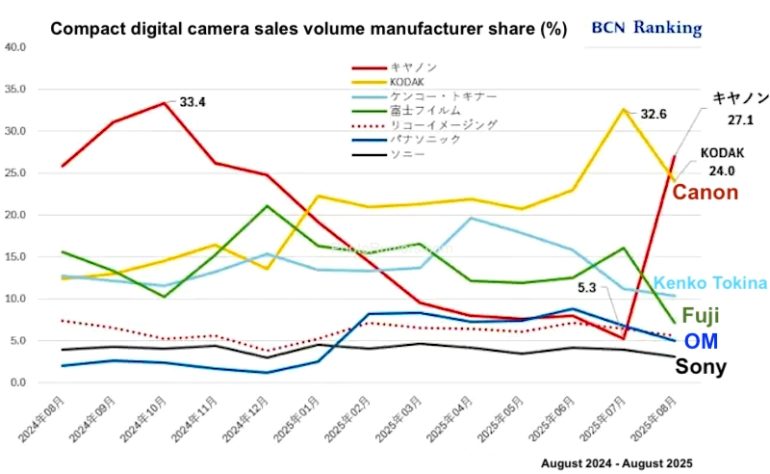
If you look at the success of the X100VI, you’ll notice why many companies are re-releasing compact models. The Canon PowerShot V1 is an example of just that. Ricoh GR IV is another series that targets street photographers, and their no-video philosophy has worked for them. Leica, on the other hand, releases compact cameras that are premium with the Q series. There is also Sony, who recently launched RX1R Mk III, a premium compact camera with a 61MP full frame sensor. Like Nikon, Canon is also said to be targeting the compact market again with an$800 to $1,000 price range offering. Panasonic has the Lumix S9, but that is an interchangeable compact model.
Why Does it Matter Now?
Since everyone in the market is working on something, and Nikon recently introduced the P1100, it only makes sense that they explore this further. The company’s DL lineup was one example where they tried to launch premium cameras, but before any unit was shipped, the company pulled back the line due to an earthquake damaging their component suppliers.
Nikon is re-introducing a new camera, one with a higher resolution, slimmer body, which will only compete against Fujifilm and Ricoh’s offering. If Canon manages to make it price sensitive, then Nikon will also have to offer something that costs less than Leica and Sony’s premium cameras. For all we know, this is a rebranded DL series that is finally seeing the light of day.
Either way, Nikon users, too, want a compact model. The Coolpix A was one such model, introduced in 2013, and since then, we have yet to see something great from them. The data backs up the debate as well. It’s just how Nikon plans it out remains to be seen.
Get rid of the ads!
Did you enjoy reading this article as much as we enjoyed writing it? There's a way to support us and our reporting, getting ad-free navigation and more as a bonus. Subscribe to us for less than a coffee per month —just $3.99— or take advantage of our yearly subscription with a hefty discount for only $25.- An ad-free experience
- A free mystery box for Lightroom or Capture One
- All the books in our store
- 20% discount on Capture One
- 30% discount on Imalume Photo Theft Protection
- 20% off Herbs and Kettle Tea Company.
- 20% off your order from MPIX printing services.
- 5% off Viltrox Products via their eCommerce store.
- 10% off all film developing, printing and scanning services from Blue Moon Camera and Machine
- 15% off 7Artisans products: The lens and accessory maker is offering a sweet discount for Phoblographer's readers.