

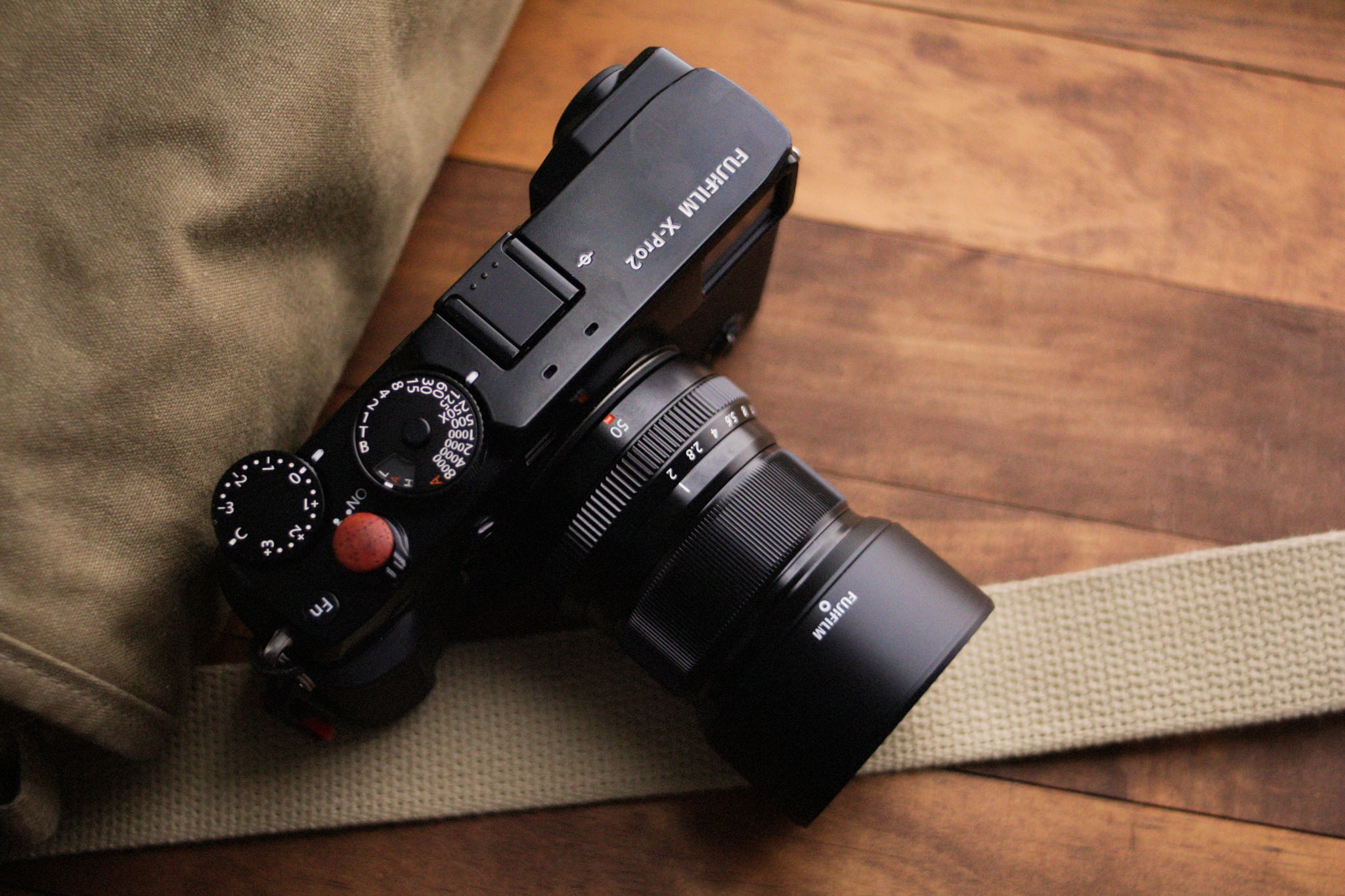
When it comes to vintage lenses, one often looks at European companies like Zeiss or Leica. While they have paved the way for many photographers, their Japanese contemporaries are not too far apart. Canon and Nikon may have introduced some iconic lenses decades ago, but Fujifilm, which has gained momentum now, is not too far away either. Here’s a look at the Fujifilm lens that is doing better than most in the resale market.
A quick look at eBay, you’ll see one Fujifilm lens is commending a high price: the Fujinon 50mm f1.2 LTM. The lens was created at a time when people were racing to launch the fastest aperture lens. Introduced in 1954, the 50mm was designed for Leica’s LTM screw mount, as well as Nikon S cameras. The former had about 800 pieces produced, while the latter was just 50.
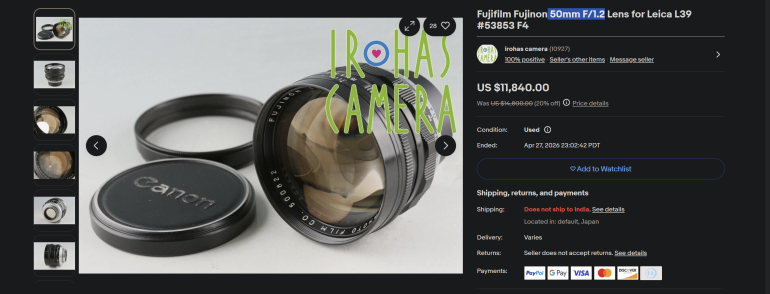
The Leica screw mount predates all electronic contacts, and was introduced in the 1930s. Its all-manual optics help to deliver creamy bokeh, which is revered by many. The Leica screw mount relies on precise helicoids and coatings for lenses. The Fujifilm version was perhaps a cost-effective solution at that time, but due to how rare the lens is, it helped to spike its prices. In fact, the lens works better with older Leica cameras, as well as modern bodies, but with an adapter. Moreover, the screw-mount lenses are known for their sturdy brass construction and aberration-free performance.
L39-to-M adapter or complete conversion will allow the Fujifilm lens to be used with Leica M cameras such as the M10 or the M11. This also helps to unlock infinity focus, which helps to expand the usability of vintage cameras. The Fujifilm 50mm features a 12-bladed aperture, which will further help to make the images look smooth and dreamy.
With more photographers looking to purchase vintage cameras for their needs, the demand for such lenses will also see a rise. The price is still less than most vintage Leica lenses, and that’s one of the reasons why people will opt for Fujifilm’s 50mm.
Given that photographers, including professionals, are looking for ways to find an authentic experience with their devices, the demand for vintage cameras and lenses will unlikely to go down. And it proves that the gear helps to enhance the experience in ways one can’t imagine.
Get rid of the ads!
Did you enjoy reading this article as much as we enjoyed writing it? There's a way to support us and our reporting, getting ad-free navigation and more as a bonus. Subscribe to us for less than a coffee per month —just $3.99— or take advantage of our yearly subscription with a hefty discount for only $25.- An ad-free experience
- A free mystery box for Lightroom or Capture One
- All the books in our store
- 20% discount on Capture One
- 30% discount on Imalume Photo Theft Protection
- 20% off Herbs and Kettle Tea Company.
- 20% off your order from MPIX printing services.
- 5% off Viltrox Products via their eCommerce store.
- 10% off all film developing, printing and scanning services from Blue Moon Camera and Machine
- 15% off 7Artisans products: The lens and accessory maker is offering a sweet discount for Phoblographer's readers.