


Every era in photography has seen its share of standard camera designs. For instance, film cameras were rangefinder-style, offering a more or less the same set of built-in buttons. The DSLR era changed that, with newer modern DSLRs having the best of both bulky and smaller designs. Then came mirrorless, a system that is known for its compactness and form factor. But while most camera designers were looking at sharp edges and neat cuts, there was one person who dreamed of being different: Luigi Colani. Here is a look at how his designs, despite being controversial, remain both strange and imaginative at the same time.
Man Meets the Machine
Colani was born in Berlin in 1928 and spent his life resisting modern industrial design. For him, curves took precedence over straight lines, as he deeply believed that nature was the best blueprint for the human hand. His bio-design philosophy, a guiding principle that shaped his career, was evident in everything he created, including cars, airplanes, furniture, and even cameras.
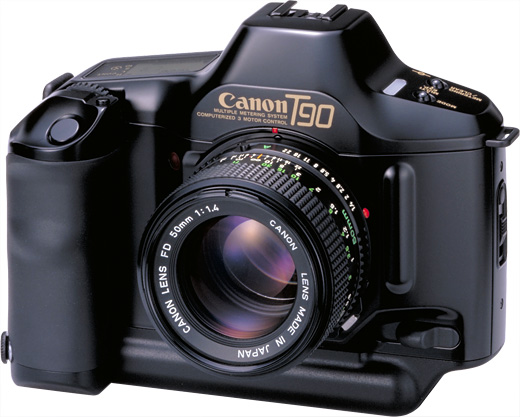
What made his work stand out is that he sculpted each camera on his own. He wanted to create cameras that were a natural extension of one’s hand, ones that can also follow the body’s natural lines. One of his camera ideas also showcased a design that resembled an organic pod, with no straight lines. In another instance, his influence was seen on the Canon T90, where he was hired by Canon to work with their team. Ultimately, Colani’s design was incorporated into the model, which later became a huge success. The softer edges made the SLR fit into one’s hand with ease, and made shooting with the device seem far natural.
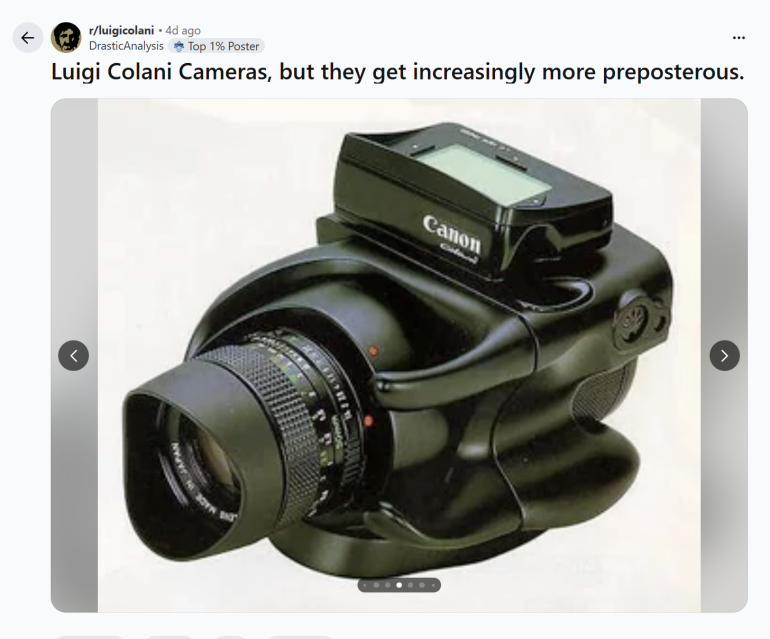
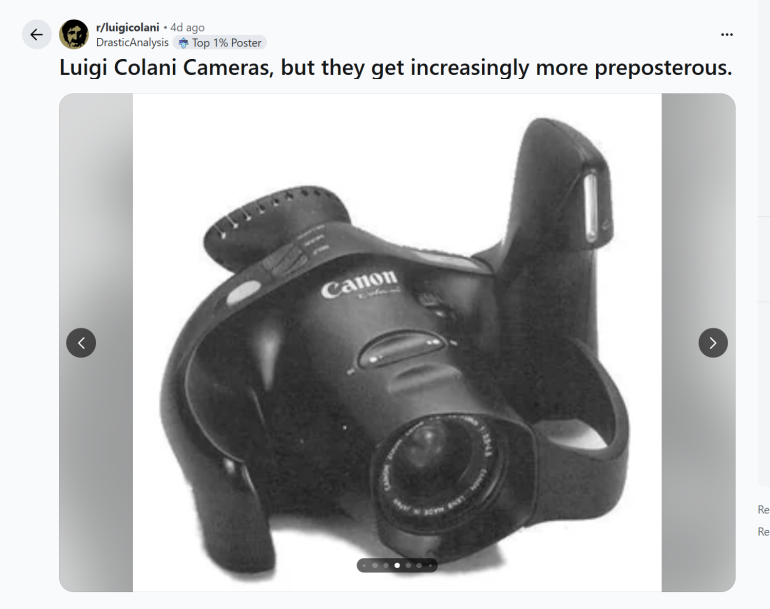
Colani’s intent is what made his designs so compelling. In his world, photography was organic, not mechanical. The idea that a design is tough of form, touch, and motion before anyone else is what made his legacy endure.
Not Everyone Appreciated His Genius
The T90 was an exception, but like any other creative, Luigi Colani’s designs largely remained as prototypes. His designs were admired, but they were also considered impractical. For instance, in one Reddit post, someone referred to them as “preposteros.” There was also a demand for new models and materials to create Colani’s cameras, which meant abandoning the familiar design used by companies at that time.
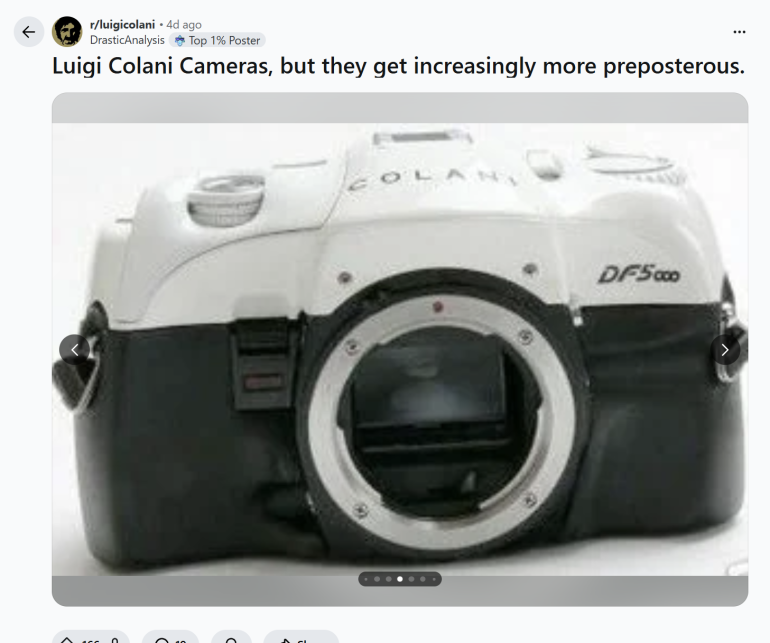
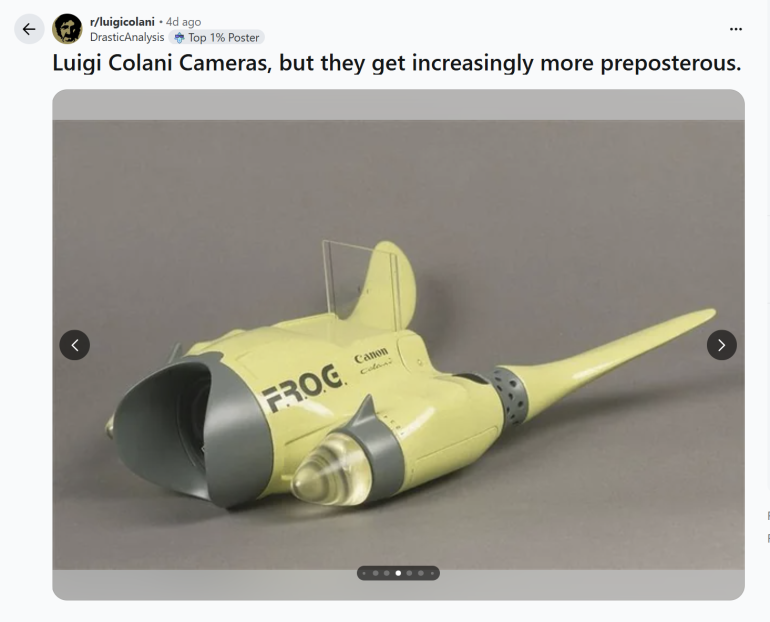
One could say that Colani was not wrong, just an eccentric person who was way ahead of his time. Modern mirrorless cameras showcase ergonomics that include sculpted grips and curved thumb rests, echoing the principles he established over three decades ago.
As our industry pushes boundaries with new modular designs and VR systems, Colani’s work seems more contemporary than a thing of the past. He encouraged one to ask what a camera could be, rather than what it has always been. As we strive for more minimalism, Luigi Colani’s camera designs remind us of how he envisioned a future that he wished existed.
Get rid of the ads!
Did you enjoy reading this article as much as we enjoyed writing it? There's a way to support us and our reporting, getting ad-free navigation and more as a bonus. Subscribe to us for less than a coffee per month —just $3.99— or take advantage of our yearly subscription with a hefty discount for only $25.- An ad-free experience
- A free mystery box for Lightroom or Capture One
- All the books in our store
- 20% discount on Capture One
- 30% discount on Imalume Photo Theft Protection
- 20% off Herbs and Kettle Tea Company.
- 20% off your order from MPIX printing services.
- 5% off Viltrox Products via their eCommerce store.
- 10% off all film developing, printing and scanning services from Blue Moon Camera and Machine
- 15% off 7Artisans products: The lens and accessory maker is offering a sweet discount for Phoblographer's readers.