

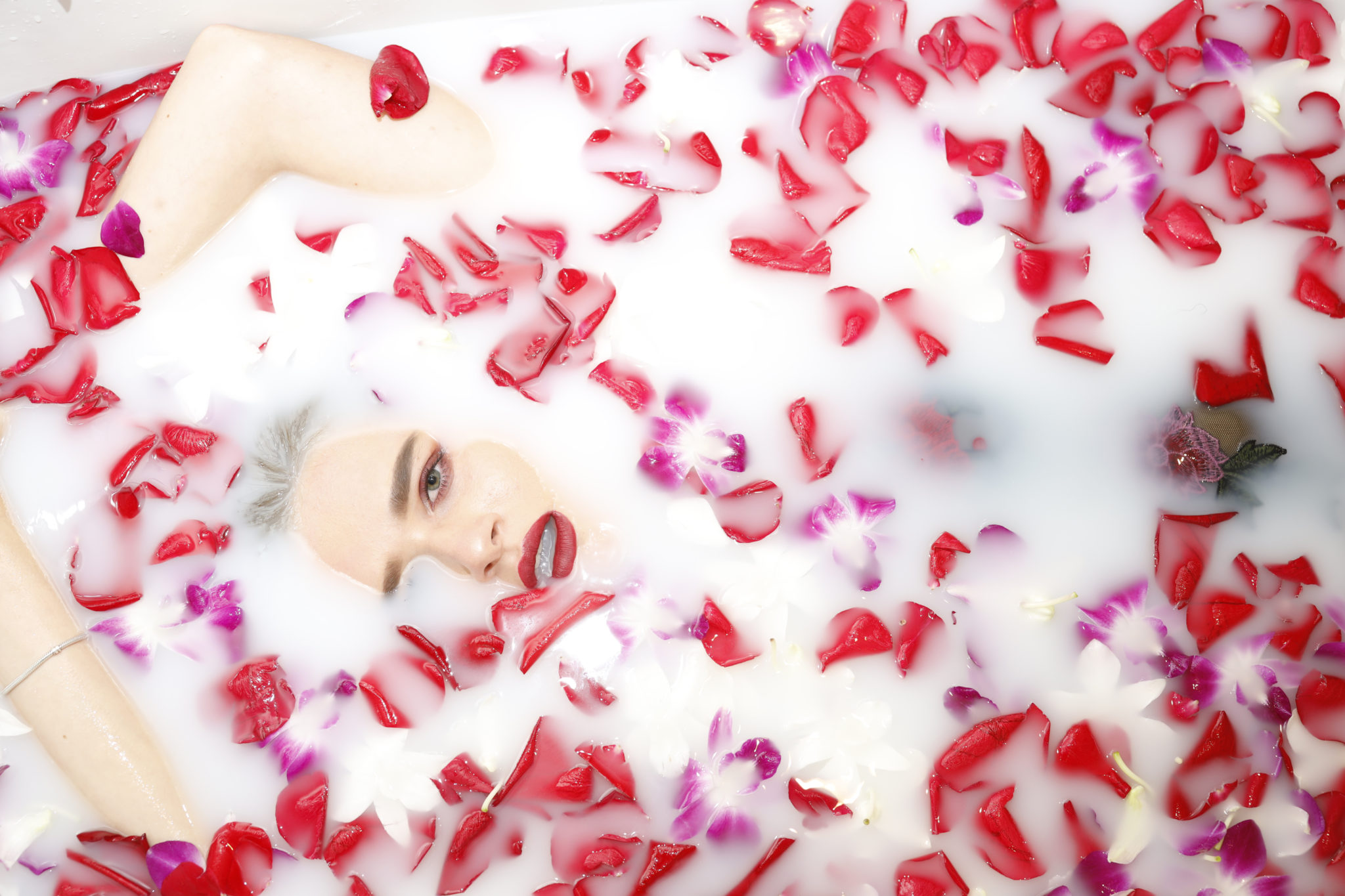
Portrait photography is quite unique, and over the years, many photographers have given their unique twist to the genre. One such exception is David LaChapelle, whose colorful portraits of celebrities have been quite the talk of the town. While his sets are massive and enchanting, what stands out is the playfulness in his images. If you are someone who is keen to follow in his footsteps in the world of photography and fashion photography, we have a few useful tips to help you get started.
Want more tips for beginner and amateur photography? Click here.
The Set-Up
- A controlled world: David LaChappelle works inside a studio for most of his shoots. One way to get started is to look for an empty space: a garage, warehouse, or a loft can be helpful. If you can make space in your room, nothing like it.
- Background: The next step is to find a background. If you are shooting close-ups, only a small part will be visible. You can rely on chart paper instead of using full-blown background stands. You can hand-paint on paper, get embroidered cloth, use gels, or use fairy lights. The choice is yours.
- Props: This depends on the story. If you want to create a series for a makeup brand, keep props in your story. Use additional props for the story. If it is cherry shade lipstick, use cherries creatively in the short. Or, you can also build your own, like a cutout of cherries. The sky is the limit here.
- Color is the key: David LaChappelle is a master of understanding color theory. Use this to your advantage. For instance, Cyan backlight and magenta fill can make the skin pop. Complementary colors can help to highlight your story.
The Gear
- Lights are your best friend: What makes LaChapelle’s work stand out is the use of various lights, which add to the sharpness of the image. You can use softboxes with Profoto studio lights or rely on a torch and a flash. In fact, you can also use colored gels to tint the portrait. If you are shooting outdoors, then a reflector and soft light can be helpful, depending on your vision.
- Lenses: David LaChapelle uses extreme wide-angle lenses as well as telephotos, depending on what he is photographing. However, he doesn’t shy away from lens distortion. For instance, for a group portrait of the Back Street Boys, the photographer relied on fish-eye lenses to showcase the crowd surrounding them. Similarly, for a mid-length portrait, you can use a 70-200mm or an 85mm lens.
- Go manual: Since you are working with lights, your ISO will naturally be low. However, to get ‘hyperrealistic’ detail, you won’t shoot wide open but around f8 or f11. In that regard, keep your ISO between 200 and 300 and ensure that your highlights do not get blown up. Similarly, your shutter speed will be in tandem with the flash synch and enough to ‘freeze’ the movement. Ideally, it should be not lower than 1/125 second. As for the focus, always set it manually and put a mark on the floor so your subject doesn’t move. Focus on the eye to get the sharpness. Make a few quick test images to fix the highlight and shadow, and then go ahead to make your images.
- Post-production: If you shot in RAW, then you can play around with the colors in post-production. Similarly, you can depend on Photoshop LUTs to give your images a look and feel you like. Selective Color setting can help you to push cyan and red in the portrait, if the need arises.
Get rid of the ads!
Did you enjoy reading this article as much as we enjoyed writing it? There's a way to support us and our reporting, getting ad-free navigation and more as a bonus. Subscribe to us for less than a coffee per month —just $3.99— or take advantage of our yearly subscription with a hefty discount for only $25.- An ad-free experience
- A free mystery box for Lightroom or Capture One
- All the books in our store
- 20% discount on Capture One
- 30% discount on Imalume Photo Theft Protection
- 20% off Herbs and Kettle Tea Company.
- 20% off your order from MPIX printing services.
- 5% off Viltrox Products via their eCommerce store.
- 10% off all film developing, printing and scanning services from Blue Moon Camera and Machine
- 15% off 7Artisans products: The lens and accessory maker is offering a sweet discount for Phoblographer's readers.