


Tamron is one of the few companies that has evolved impressively over the years. There was a time when one would not consider purchasing a third-party lens, as it was not often considered “the best” by many photographers. However, this did not dissuade Tamron from stopping itself from reaching professional success. Instead, they worked hard, and the results today say it all. While we have loved the direction the Japanese company has taken over the years, we do feel there is one thing they are unable to get past: more prime lenses with a bright aperture.
A Look at Tamron Lenses
A quick glance at Tamron’s website showcases how the company’s current catalog features 18 zoom lenses while its prime lenses stand at five. This includes wide-angle, standard, macro, and all-in-one lenses. One of the reasons could be that many photographers who opt for Tamron are into travel photography, dabble with genres like wildlife, or are serious enthusiasts who want cost-effective offers. In fact, the company has been a favorite among wildlife, bird, and macro photographers, with Tamron itself running a photo competition that showcases the talent of its users and the optical quality of the lenses.
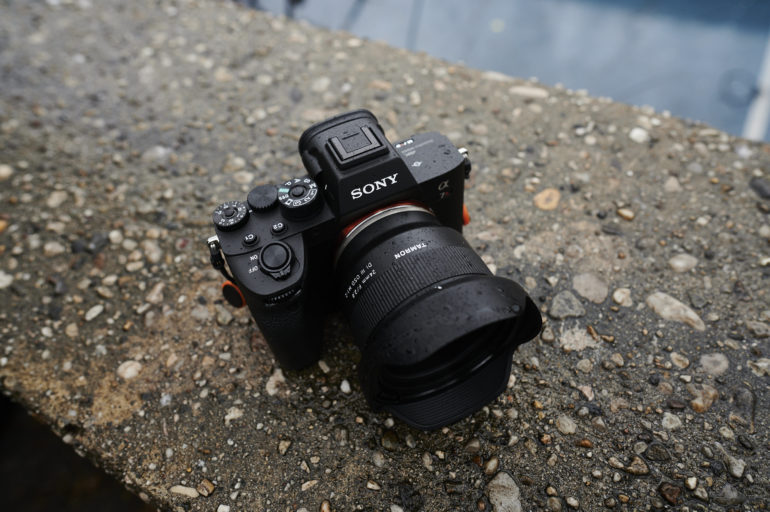
However, while we are happy with how amazing their mirrorless lens lineup is, we do feel the pinch when we look at their prime lens series. So far, the company is only producing the following primes, which are available on their websites: 20mm f2.8, 24mm f2.8, 35mm f1.4, 35mm f2.8, and 90mm f2.8. The first two can be a great choice for landscape or astrophotographers, while the 35mm is perfect for street photography. As for the 90mm, it is designed for macro photographers and portrait photographers who know how to command a macro lens.
The Phoblographer has been Tamron lenses since the start of this website, and in fact, we have created the ultimate guide for those who want a lens that can meet their demands of bright aperture. In fact, in our review of the 35mm f1.4, we had specifically mentioned that the lens should have been created for mirrorless cameras, as it is an absolute waste on a DSLR. Why? The lens was launched in 2020, an era when mirrorless cameras were seeing a sharp increase in sales despite the pandemic lockdown.
Why a Prime Lens Over a Zoom
If you are wondering why we are so hell-bent on Tamron getting more prime options, then look at the list below for better clarity:
- They are the best option for low-light performance. A zoom lens does not always have a constant aperture, meaning the more to the tele end of the lens, the higher the aperture goes. This is why a zoom can’t be ideal for hand-held shots at night. In some situations, one can’t even employ a tripod, so you are left with the only option: flash.
- Faster autofocus is another reason some choose a prime over a zoom, as the latter has more elements and takes a few seconds to move and fix the autofocus.

- Due to the aperture they offer, prime lenses also offer better, creamy bokeh, which many love for portraits. For instance, the 90mm f2.8 we reviewed offered stunning circular bokeh and starburst effects. This is particularly great for portrait and, sometimes, still-life photography.
- Weight is one of the few things that make a prime so important. A zoom lens, whether on a DSRL or a mirrorless, tends to weigh in kgs. However, a prime will weigh a quarter of its telephoto counterpart.
- A prime can be used for various genres, and due to a fast aperture, they can become an important choice for many.
- A prime will also push photographers to think differently, urging them to arrange themselves on the spot instead of simply moving the lens to get a picture. Furthermore, it pushes you to become a thinking photographer rather than someone who relies on extra reach.
Looking at all the aspects, Tamron has the best opportunity to offer fast prices at affordable rates, which many people can’t purchase from first-party manufacturers. Furthermore, Tamron has another advantage: brand loyalty. People who have used it over Sigma know what Tamron can do. However, they must ensure that the new lenses they create manage to stand out from their Chinese competitors. If they don’t innovate, they just may have to start from square one.
Get rid of the ads!
Did you enjoy reading this article as much as we enjoyed writing it? There's a way to support us and our reporting, getting ad-free navigation and more as a bonus. Subscribe to us for less than a coffee per month —just $3.99— or take advantage of our yearly subscription with a hefty discount for only $25.- An ad-free experience
- A free mystery box for Lightroom or Capture One
- All the books in our store
- 20% discount on Capture One
- 30% discount on Imalume Photo Theft Protection
- 20% off Herbs and Kettle Tea Company.
- 20% off your order from MPIX printing services.
- 5% off Viltrox Products via their eCommerce store.
- 10% off all film developing, printing and scanning services from Blue Moon Camera and Machine
- 15% off 7Artisans products: The lens and accessory maker is offering a sweet discount for Phoblographer's readers.