

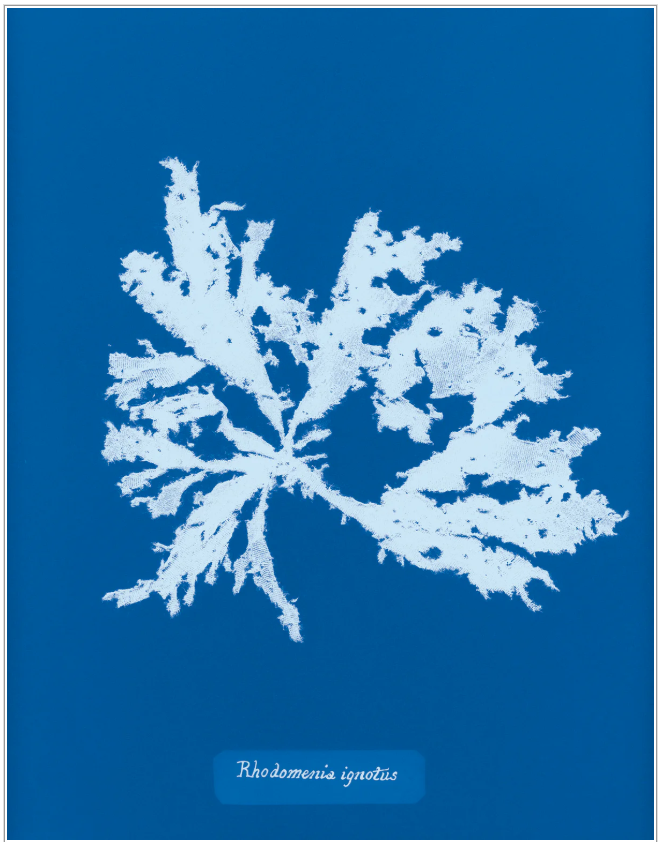
The year was 1843 when Anna Atkins, a 40-year-old woman photographer, reached the milestone of becoming the first individual to publish a photo book. While the credit for the achievement is often given to William Henry Fox Talbot, the inventor of photography, it was actually Anna who beat him to it by mere weeks. However, those who know her story will remember how her legacy was recently bought back from oblivion. To honor her legacy, a new photo book offers a contemporary perspective on the traditional art form. Here’s why this is a must-have for lense-less photography enthusiasts.
The pioneer behind the upcoming book Photographs of British Algae: Cyanotype Imperfections is Mandy Barker, who highlights the impact of marine plastic debris. With a career that spans over a decade, Barker has gained international recognition, especially in publications and organizations such as National Geographic, TIME, The Guardian, Financial Times, Smithsonian, New Scientist, The Explorer’s Journal, UNESCO, British Journal of Photography, VOGUE, and the World Wildlife Fund.
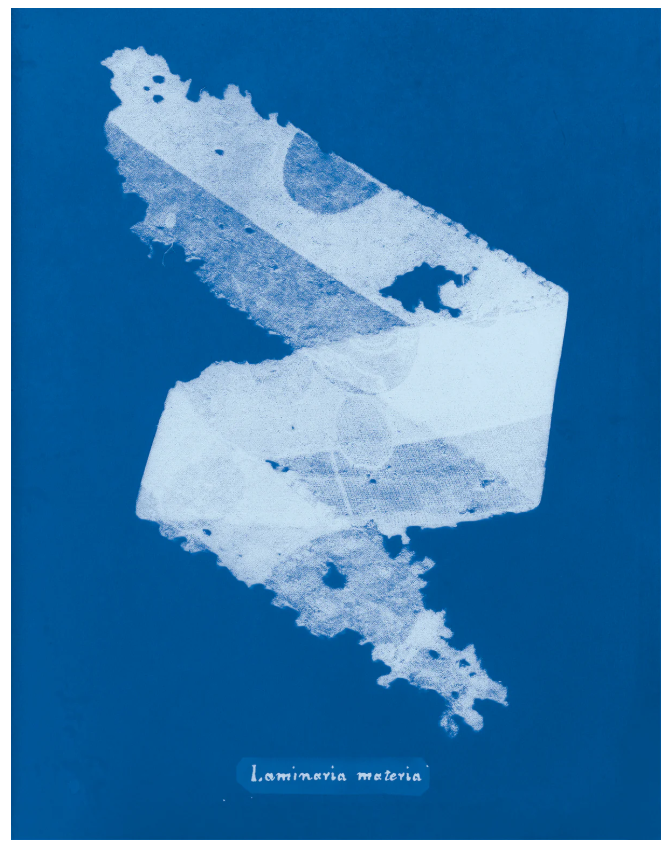
“In 2012, I found a piece of material in a rock pool that changed my life,” she said about the inception of the photo book. “Mistaking this moving piece of cloth for seaweed started the recovery of synthetic clothing from around the coastline of Britain for the next ten years.” Today, the work is a typology of discarded clothing fragments found in the United Kingdom. As a homage, the photo book imitates the cyanotype images created by Atkins and also depicts the different species of marine algae found in waters in the UK. However, today, this work is not only limited to scientific research but also aims to spread awareness around ast fashion, synthetic clothes, and the harmful effects of microfibres in the oceans.


I see this book as a discussion point, a call to action, and by publishing the work to circulate and share will reach a wider audience. Whether it ends up on a coffee table, bookshelf, or with someone with the power to implement change, it is my intention that conversation around ‘Photographs of British Algae: Cyanotype Imperfections’ will lead to action and a shift within the fashion industry, with the aim of achieving an impact that will go on to change the world.
Created over the past decade, the photo book showcases over 200 ‘specimens’ of clothing, which have been found on 121 beaches from Scotland to the South of England. These include objects such as jackets, dressing-up outfits, wigs, trainers, football shirts, and even underwear that were discovered from the sea. The work, thus, showcases how, despite the millions of clothes being manufactured every year, there is no proper way to discard them. They either end up in landfills or in the ocean. Furthermore, the research also found that the fashion industry produces more greenhouse gas emissions than all international flights and container ships combined.


Photographs of British Algae show photograms of clothing fragments created using the cyanotype process for the blue color. Like Atkin’s work, the images may appear like depictions of botanical specimens at first, but you begin to see what’s actually in the frame at a closer look. “Seeing the potential to re-create new work similarly, I realized I could engage how people view science today, and in connection with the present-day consequences of climate change,” Baker states.
The photo book coincides with the 180th anniversary of Atkin’s publication and is a replica of the original work. It has 202 illustrations, each with a caption tag to identify the garment, just like Atkin’s did with the specimen. There is already so much to like about this work. It is one of the best tributes to the creator; it offers a new perspective and cause in the contemporary context and takes photography’s technical aspect to the next level. Sometimes, even the most seasoned photographers are unable to pull it off together.
If you are keen on purchasing the photo book, head to GOST’s website.
Get rid of the ads!
Did you enjoy reading this article as much as we enjoyed writing it? There's a way to support us and our reporting, getting ad-free navigation and more as a bonus. Subscribe to us for less than a coffee per month —just $3.99— or take advantage of our yearly subscription with a hefty discount for only $25.- An ad-free experience
- A free mystery box for Lightroom or Capture One
- All the books in our store
- 20% discount on Capture One
- 30% discount on Imalume Photo Theft Protection
- 20% off Herbs and Kettle Tea Company.
- 20% off your order from MPIX printing services.
- 5% off Viltrox Products via their eCommerce store.
- 10% off all film developing, printing and scanning services from Blue Moon Camera and Machine
- 15% off 7Artisans products: The lens and accessory maker is offering a sweet discount for Phoblographer's readers.
- 15% off a VSCO One subscription: Get a bunch of great tools with their all-in-one package.