

Last Updated on 10/11/2024 by Nilofer Khan
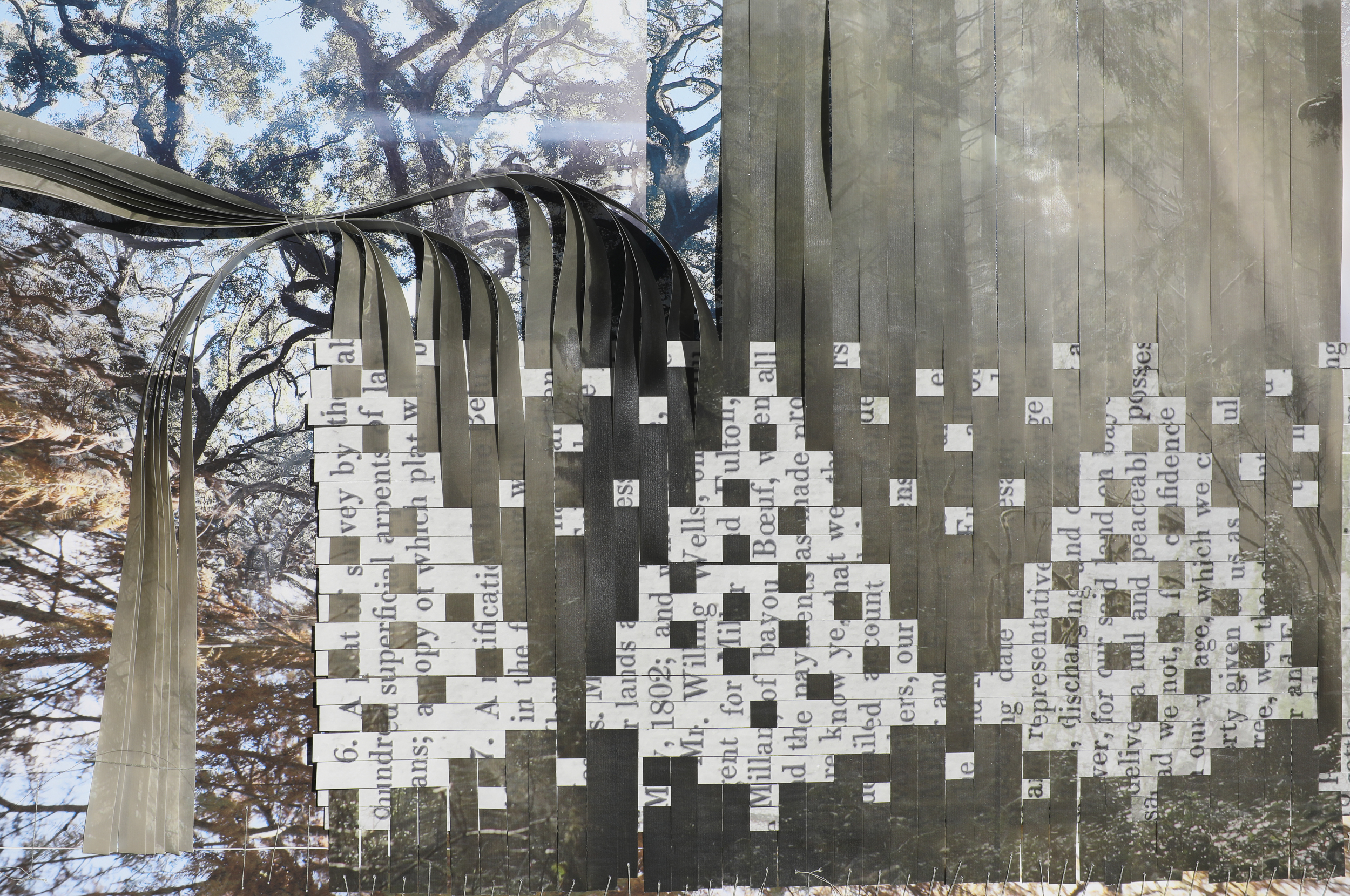
Some of the greatest ideas have been explored when one combines photography with another art form. Whether you agree or disagree, mixed-media photography is an exceptional way to capture a moment and experience its three-dimensionality wherever you go. And that is a gift many can’t recreate. This is why it brings us great joy to share with you an excellent photography exhibition, Sarah Sense’s I Want to Hold You Longer, currently taking place at Bruce Silverstein Gallery in New York.
The lead image courtesy of the artist and Bruce Silverstein Gallery. All images are used with permission.
Sarah Sense And Her Journey To Claim Her Heritage
A little bit about Sarah first. The photographer was raised in Sacramento, California, and is of Choctaw and Chitimacha descent. Sarah began her journey as an artist with the help of her grandmother, who taught her weaving and the creation of baskets. With the Chitimacha Tribe’s chairman’s approval, Sarah began her graduate studies at Parsons School of Design, where she began to explore the use of traditional methods. From there on, she expanded her practice, where she also began to utilize photography and weaving to speak about larger narratives.
Upon her visit to museums, such as the Montclair Art Museum, the Brooklyn Museum, and the Worcester Art Museum, Sense shares her personal experience of holding historical baskets created by her ancestors. “When I held the baskets, I felt the emotions of the weaver,” she reflects. “The hands that wove the basket seem to be touching mine. I hold it longer and feel the words, ‘I want to hold you longer.’” This, one could say, marked the genesis of a poignant series.
A Poignant Photography Exhibition
In Sense’s photography exhibition, you will witness over 20 hand-woven cultural photographs emphasizing the rich history of Indigenous basket-making and collecting, specifically the Chitimacha and Choctaw weaving traditions. The photographs are of her ancestral land, which is woven alongside colonial documents and maps from the American Antiquarian Society, the British Library, and the Choctaw Cultural Center.


What you witness is the past and present interwoven together. One side of the sculpture features violence, dispossession, and the community’s survival, while the other side celebrates their liberation and joy. I Want to Hold You Longer archives such stark contrasts through individual memories and the community’s heritage. Each sculpture in the photography exhibition carries the complex ancestry of the Choctaw and Chitimacha tribes while also expressing longing and the desire for connection.
The showcase also includes eleven sculptures, which are categorized as “studies.” These baskets were created from collections from the museums Sarah visited. However, while weaving, Sense channels the spirits of her great-great-grandmother Delphine, her grandmother Chillie, and her great-aunt Faye. As a result, the objects seem alive from the memories and stories of those who developed them.
How This Exhibit is Different?
In the Western world, the histories and narratives of Indigenous communities have often been marginalized. Anyone who is not white does not get the opportunity to share the pains and challenges their ancestors faced due to segregation. As a result, complex but significant stories of the marginalized always remain at the fringes of important discourse about history, thanks to the colonial mindset.


In that regard, Sense’s photography exhibition offers a unique way forward. Using her traditions and creativity, Sense urges people to confront the brutalities faced by the indigenous tribes and ensures that her community’s histories are not glossed over in Western media. While she challenges them to own their violent past, she also urges them ways to connect and heal.
I Want to Hold You Longer began on September 19 and will continue until November 23. For more information about the photography exhibition, visit Bruce Silver Stein’s website.
Get rid of the ads!
Did you enjoy reading this article as much as we enjoyed writing it? There's a way to support us and our reporting, getting ad-free navigation and more as a bonus. Subscribe to us for less than a coffee per month —just $3.99— or take advantage of our yearly subscription with a hefty discount for only $25.- An ad-free experience
- A free mystery box for Lightroom or Capture One
- All the books in our store
- 20% discount on Capture One
- 30% discount on Imalume Photo Theft Protection
- 20% off Herbs and Kettle Tea Company.
- 20% off your order from MPIX printing services.
- 5% off Viltrox Products via their eCommerce store.
- 10% off all film developing, printing and scanning services from Blue Moon Camera and Machine
- 15% off 7Artisans products: The lens and accessory maker is offering a sweet discount for Phoblographer's readers.