


How does one train their eyes to see? This question has hung over the heads of many individuals—including me—who dabble with the medium. While there are myriad ways to hone the art form, one of them undoubtedly will transform your life: being able to read photographs. In the literal sense of the term, a frame is a boundary that either portrays a sliver of truth or can be a lie. Before you disagree with me, here are five reasons reading photographs paves the route to triumph.
The Fundamentals of Photography
Reading photographs as an active viewer lets you notice details you may otherwise miss. Henri-Cartier Bresson‘s— the father of ‘decisive moment’—image Place de l’Europe Gare, Saint Lazare, is a prime example of this. Initially, your gaze is on the cloaked, leaping figure, and his reflection is in the puddle of water. But only after you study the image—soaking in all the details—do you acknowledge a poster mimicking the identical moves in the backdrop. Similarly, his other works are so layered that one can effortlessly peel back new details the more one looks at them.
André Kertész’s still-life photographs are exceptional, as they guide you on utilizing light and shapes to form a visual symphony. His image of a fork in a bowl is perhaps one of his most widely recognized images because of this. The stark contrast divides the picture into yin and yang while depicting the magnificence of ‘ordinary’ subjects. It also reminds you that photographs of the mundane do not necessarily need to be boring compositions. Naturally, the more you look at different photographers’ works, the more you learn to notice the nuances they try to capture.
It Transforms Your Standpoint of the World
Photographers travel far and wide, and so do their images. Assignments on the rural villages of India or stories nestled in the arms of the Amazon in Africa can easily be witnessed by individuals around the globe, changing one’s world views. To paint a better example, look at the works of Steve McCurry. His most renowned portrait of an Afghan girl and his picture of a boy running in the narrow lanes of Rajasthan has garnered appreciation from viewers of various nationalities and ethnicities. Although the photographs depict the photographer’s Western perception of the region, they are, nonetheless, crucial for those who are new to the medium.
Like him, there are many photographers whose pictures have impacted the world. For instance, Nick Ut‘s picture of the Napalm Girl—captured during the Vietnam War—was so shocking that the then-president, Richard Nixon, assumed it had been fabricated. While the photo may not have single-handled stopped warfare then, it left a lasting impact on the viewers, especially those who had little knowledge about the ground realities in Vietnam. Today, it is one of the most defining images from the war that continues to be used to enlighten the younger generation. This proves the more you read photographs, the more you comprehend the intricate layers making up that place or community.
Discovering The Works of Master Photographers
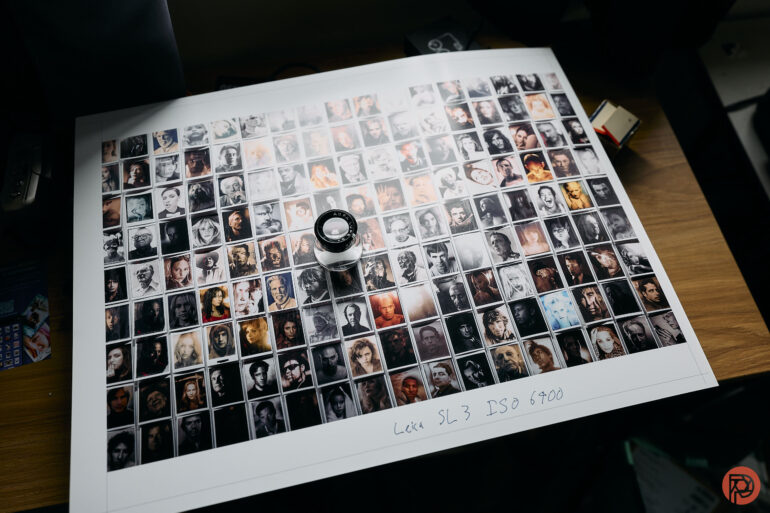
The most significant takeaway is that you always gather knowledge from the best. It is why many photography schools or mentors ask you to learn from those who came before you. Thus, you distinguish what constitutes a ‘good photograph’ and how those rules can be broken when the time comes. Moreover, the more you read photographs, the more you mimic them. At least, that’s the case at the commencement of your journey. After making multiple errors and learning from them, you start to grasp what elements should or should not be a part of your composition. Look at Magnum Contact Sheets, an exceptional book that teaches you how photographers ruthlessly cull their work to get that picture that will live in the annals of history. This practice also guides you to discover your vision and style.
Liberating Yourself From Expectations
We all feel the weight of expectations when making a good photograph, especially the need to satisfy everyone on social media. We are bound to the shackles of dopamine addiction that a ‘like’ garners on our pictures. One way to overcome this sentiment is by re-visiting the works of great masters who loved the subjects so dearly. For instance, Eugène Atget, known for capturing old Paris, primarily survived in poverty. The challenging circumstances did not dissuade him from documenting the disappearance of his city’s architecture and traditions. By the end of his life, Atget created 8,000 negatives, which Man Ray and Berenice Abbott rescued from obscurity. Someone can accomplish such faithfulness if they are willing to relinquish the expectations that others may have of them.
Rekindling Your Passion For the Medium
Lastly, reading photographs is a great practice, especially when you lack the motivation to shoot or want to break a photography block. The more you examine, observe, feel, and comprehend, the more you will fall in love with the world all over again.
Get rid of the ads!
Did you enjoy reading this article as much as we enjoyed writing it? There's a way to support us and our reporting, getting ad-free navigation and more as a bonus. Subscribe to us for less than a coffee per month —just $3.99— or take advantage of our yearly subscription with a hefty discount for only $25.- An ad-free experience
- A free mystery box for Lightroom or Capture One
- All the books in our store
- 20% discount on Capture One
- 30% discount on Imalume Photo Theft Protection
- 20% off Herbs and Kettle Tea Company.
- 20% off your order from MPIX printing services.
- 5% off Viltrox Products via their eCommerce store.
- 10% off all film developing, printing and scanning services from Blue Moon Camera and Machine
- 15% off 7Artisans products: The lens and accessory maker is offering a sweet discount for Phoblographer's readers.