

Women have been muses for famed male artists throughout history. Kiki de Montparnasse, photographed by Man Ray, to Patti Smith, who inspired Robert Mapplethorpe, to Georgia O’Keeffe, who posed for Alfred Stieglitz; the depiction of women by men is endless. While each photographer tried to highlight the subject, their images are often deeply rooted in one dimension—that of a stunning muse. However, such instances are not limited to art, where women are often subjected to one role throughout their entire lives—friend, lover, wife, mother, source of inspiration, or attractive stranger. Even in what is deemed to be more progressive careers, such as politics, business, law, sports, human rights, and more, women have consistently fought to be seen and recognized without being subjected to one box. While patriarchy still continues to subvert the success and brilliance of women, one photographer has been enthusiastically trying to portray them as “human beings”: Annie Lebovitz.
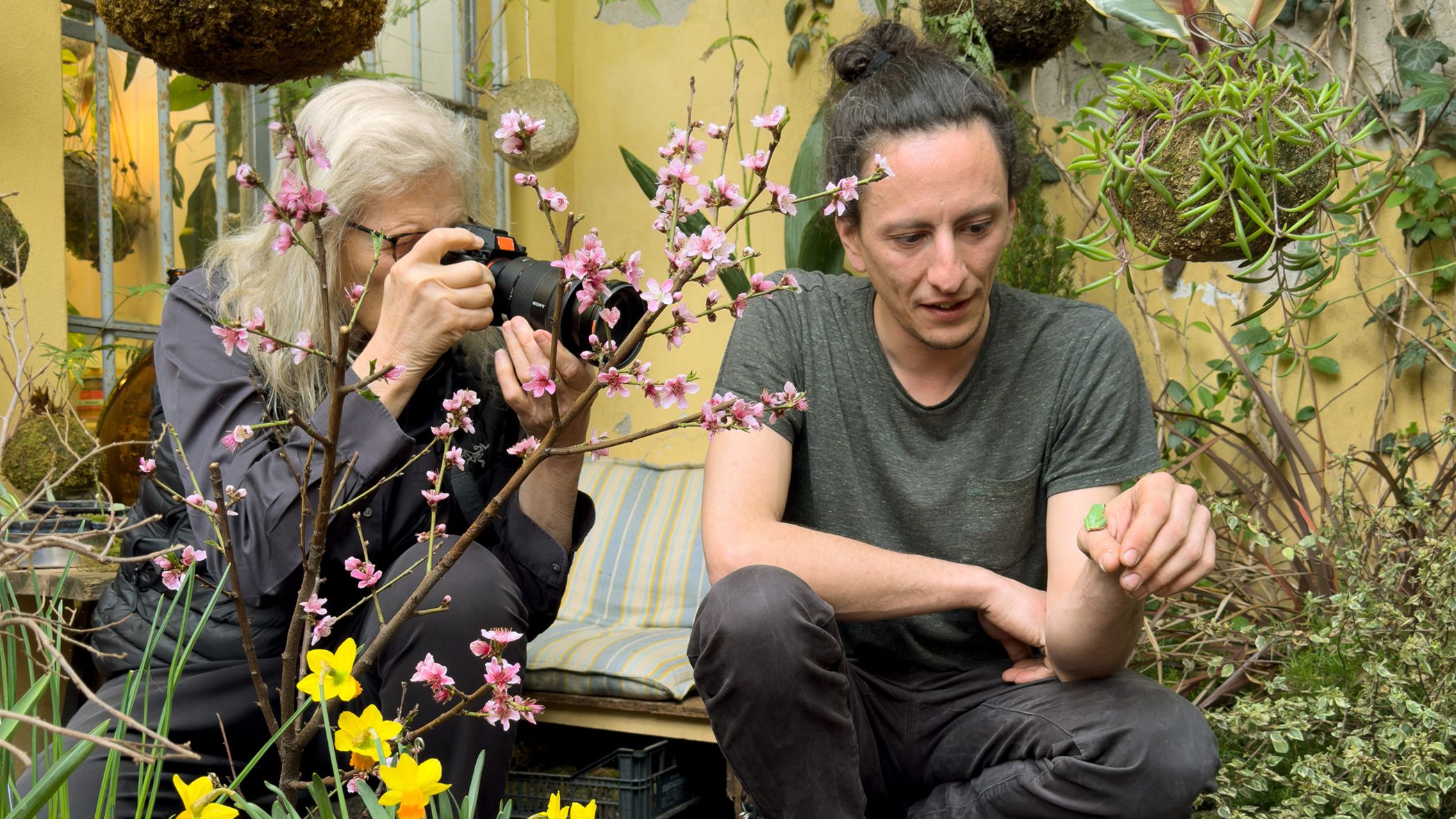
The lead image is from our original coverage of Annie Leibovitz working with IKEA.
The Making of a Phenomenal Photo Book
One of the few renowned women photographers of the 21st century, Annie Lebovitz has built her remarkable career with international magazines such as Vanity Fair, Harper’s Bazaar, Vogue, and Rolling Stone. In the past 45 years as an artist and an influential icon, Lebovitz has been applauded for capturing never-seen sides of celebrities. For instance, the famed photograph of Yoko Ono and John Lennon seized the attention of the world following Lenon’s assassination. More recently, she also photographed the controversial portrait of Ukrainian president Volodymyr Zelenskyy and his wife and first lady Olena Zelenska following Russia’s invasion of the country. However, despite Lebovitz’s photographs having often been a topic of hot debate, one of her seminal works, created with the late author and close friend Susan Sontag in 1999, continues to portray powerful and influential individuals with the dignity they deserve: Women.
As the story goes, Sontag, one of the most revered writers in the photography community and a keen observer, initially proposed the idea of the book. Lebovitz and Sontag had grown close since their first meeting a decade before Women and were often said to have inspired each other in their careers. It was one such conversation when Sontag suggested Lebovitz work on a personal series in all its complexities. “I knew that if I was going to be involved with Susan Sontag, I was going to have to be better — be a better photographer, be a better person,” explained Lebovitz to The New York Times about their collaboration. Then came the inspiration from August Sander’s documentation of people from “all walks of life,” allowing Lebovitz to embark on a journey that continues to defy traditions.
Women And It’s Lasting Impact
Annie Lebovitz’s project featured “hundred and seventy women,” including the likes of Meryl Streep, Salma Hayek, Hilary Clinton, Cindy Sherman, and Patti Smith. In the thought-provoking essay at the beginning of the photo book, Sontag notes the harsh reality of being dominated by one’s biological sex. “Women are judged by their appearance as men are not, and women are punished more than men are by the changes brought about by aging. Ideals of appearance such as youthfulness and slimness are in large part now created and enforced by photographic images,” she wrote. And when you examine these words again today, you realize very little has changed in the world.

Soon after its release, Women became an instant hit. It was The New York Times that noted the significance of having a photo book that looks at women in their entirety. “The haunting images in this mesmerizing book show women in such astonishing variety that no cliche or generalization about the sex will ever again suffice,” said the article. However, the Lebovitz project did more than this. It became a critical historical record of a generation where women’s achievements were no less than men’s. The photo book remains an encyclopedia of female icons of an ever-evolving world. As Sontag herself wrote, these women will looked at by other women as “models of beauty, models of self-esteem, models of strength, models of transgressiveness, models of victimhood, models of false consciousness, models of successful aging.”
However, as with a vast and complex series like Women, Lebovitz’s work was “never done.” She added, “It’s not one of those projects that will ever have an ending.” In 2016, the photographer released a new exhibition, Women: New Portraits. For this edition, Lebovitz focused on instrumental women who left a mark on our world: Gloria Steinem, Adele, Serena and Venus Williams, Queen Elizabeth, and more. When asked why she returned to the series, Lebovitz explained: “The imagery of women has to catch up with the imagery of men.”
“There have not been representations of women that show them as whole human beings, so this is remedial,” said Steinem, a feminist writer, told The Guardian about the project’s value. “Yes, men can be denied their full humanity, but not as much. Each one of these photographs is a novel; it is so amazing, there is a complete human story in every photograph.”
Annie Lebovitz’s Women series is a legacy in the making. With two different sets of photographs, the project reminds us of women who defied the norm every few decades and built on the success and confidence of those who came before them. Women, in this regard, is not only an excellent photographic oeuvre but one of those photoo books that unite the past and the future unlike any other.
If you want to get your hands on the first autographed edition of Annie Lebovitz’s Women, visit Bauman Rare Books.
Get rid of the ads!
Did you enjoy reading this article as much as we enjoyed writing it? There's a way to support us and our reporting, getting ad-free navigation and more as a bonus. Subscribe to us for less than a coffee per month —just $3.99— or take advantage of our yearly subscription with a hefty discount for only $25.- An ad-free experience
- A free mystery box for Lightroom or Capture One
- All the books in our store
- 20% discount on Capture One
- 30% discount on Imalume Photo Theft Protection
- 20% off Herbs and Kettle Tea Company.
- 20% off your order from MPIX printing services.
- 5% off Viltrox Products via their eCommerce store.
- 10% off all film developing, printing and scanning services from Blue Moon Camera and Machine
- 15% off 7Artisans products: The lens and accessory maker is offering a sweet discount for Phoblographer's readers.