Review: Nikon D3200

by Gevon Servo on 07/31/2012

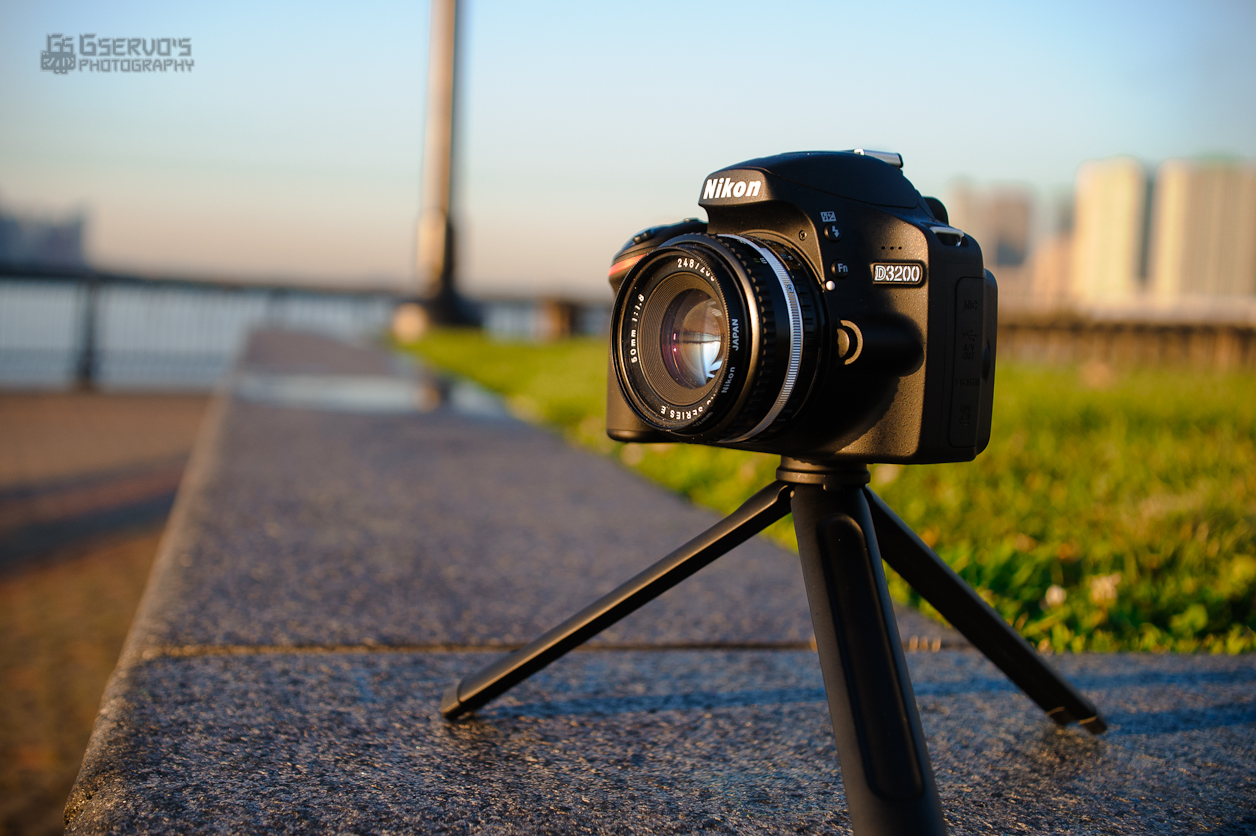
This is the Nikon D3200 and initially, I did not like it. The camera, though, turned out to be better than I thought. The update to the D3100, the D3200 is the new entry level Nikon. It is not bad. In terms of practicality, it does everything it needs to at a decent price. Under the hood, an updated sensor makes the camera shine. Despite not warming up to the camera initially, it grew on me. There were enough improvements from its predecessor, but like the Nikon D800, I think its marketed wrong and should have another name.

 Gear Used

 Tech Specs
Tech Specs pulled from the B&H Photo listing.

Imaging
Camera Type Digital SLR with Interchangeable lenses
Lens Mount Nikon F
Camera Format DX / (1.5x Crop Factor)
Resolution Actual Pixels: 24.2 Megapixels
Max Resolution: 24.2 MP: 6016 x 4000
Aspect Ratio 3:2
Sensor Type / Size CMOS, 23.2 x 15.4 mm
File Formats Still Images: JPEG, RAW
Movies: MPEG-4 AVC/H.264, MOV
Audio: Linear PCM
Memory Card Type SD
SDHC
SDXC
Focus Control
Focus Type Auto & Manual
Focus Mode Single-servo AF (S), Continuous-servo AF (C), Manual Focus (M) , Focus Lock AF Area Mode
Autofocus Points 11
Viewfinder/Display
Viewfinder Type Pentamirror, LCD Display
Viewfinder Coverage 95%
Viewfinder Magnification Approx. 0.8x
Diopter Adjustment - -1.7 to +0.5 m
Display Screen 3.0″ Rear Screen   LCD (921000)
Screen Coverage 100%
Live View Yes
Exposure Control
ISO Sensitivity 100-6400 (High Sensitivity Mode: 100-12800)
Shutter Type: Electronic
Speed: 1/4000 – 30 sec
Remote Control ML-L3 (Optional)
Metering Method Spot metering, Center-weighted average metering, 3D Color Matrix Metering
Exposure Modes Modes: Aperture Priority, Auto, Manual, Programmed Auto, Shutter Priority
Compensation: -5 EV to +5 EV (in 1/3 EV steps)
White Balance Modes Auto, Cloudy, Daylight, Flash, Fluorescent, Incandescent, Preset Manual, Shade
Flash
Built-in Flash Yes: Auto, Auto/Red-eye Reduction, Off, Second-curtain Sync, Slow Sync, Slow Sync./Red-eye Reduction
Max Sync Speed 1 / 200 sec
Continuous Shooting Up to 4 fps
Dedicated Flash System iTTL
External Flash Connection Hot Shoe
AV Recording
Video Recording Yes, NTSC/PAL
Audio Recording With Video, Stereo, Via Optional External Mic
Performance
In-Camera Image Editing Color Balance, Color Outline, Distortion Control, Edit Movie, Filter Effects, Fisheye, Image Overlay, Miniature Effect, Monochrome, NEF (RAW) Processing, Perspective Control, Quick Retouch, Red-eye Correction, Straighten, Trim
Self Timer 2 sec, 5 sec, 10 sec, 20 sec
Connectivity HDMI C (Mini), USB 2.0
Wi-Fi Capable (With Optional Transmitter) Yes
Power
Battery 1x EN-EL14  Rechargeable Lithium-Ion Battery Pack, 7.4VDC, 1030mAh
AC Power Adapter EH-5b (Optional)
Operating/Storage Temperature Operating
32 to 104 °F (0 to 40 °C)
Physical
Dimensions (WxHxD) 5.0 x 3.8 x 3.1″ / 12.70 x 9.65 x 7.87 cm
Weight 1.0 lb / 0.45 kg
Kit Lens
Focal Length 18 – 55 mm
Aperture Maximum: f/3.5 – 5.6
Minimum: f/22 – 36
Angle of View 76° – 28°
Minimum Focus Distance 0.92′ (0.28 m)
Magnification 3x
Maximum Reproduction Ratio 1:3.2
Groups/Elements 8/11
Diaphragm Blades 7
Autofocus Yes
Image Stabilization Yes
Filter Thread 52 mm
Dimensions (DxL) Approx. 2.87 x 3.13″ (73 x 79.5 mm)
Weight 9.52 oz (0.27 kg)


Ergonomics

The grip says look at me and hold me. There is nothing much that has changed from the D3100. It is one of those moments where if it is not broke, do not fix it.
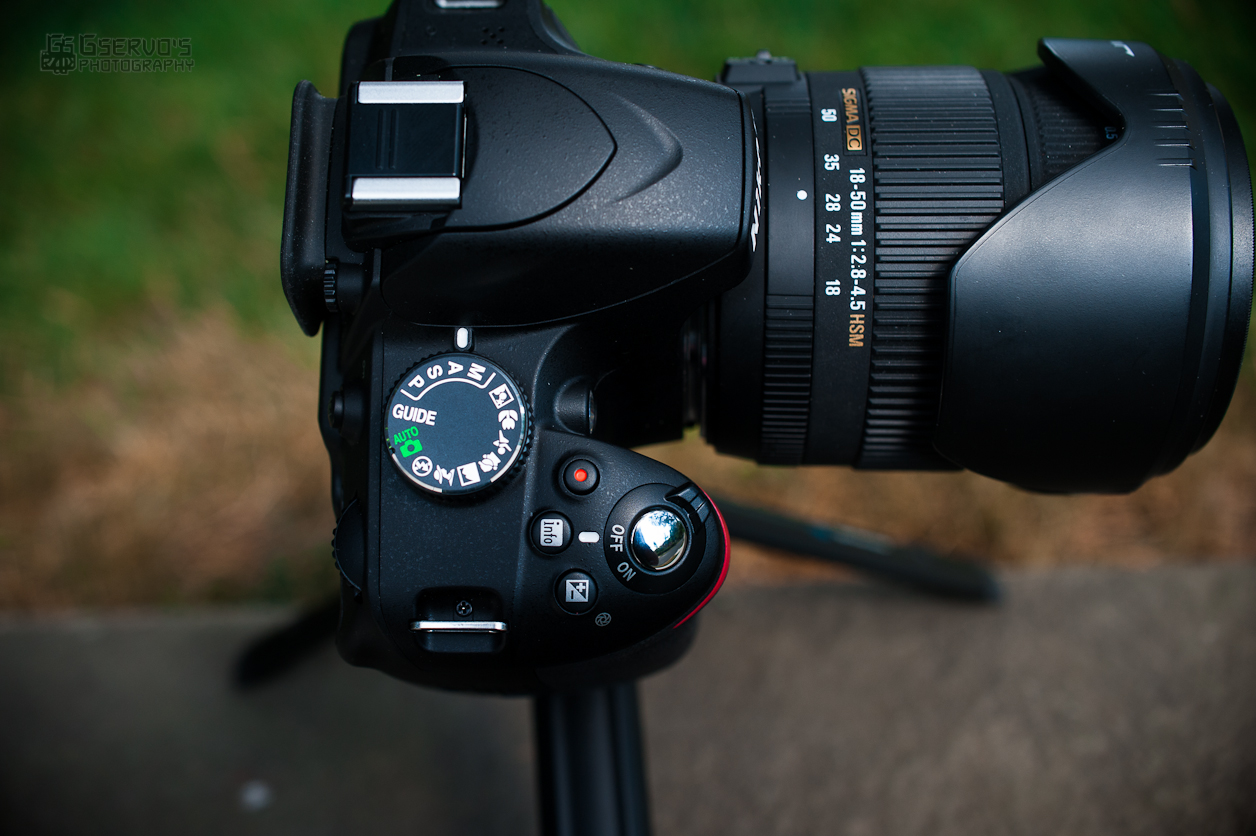
The buttons are nicely placed, easy to figure out and well spaced. I still wish they would put a dial in front to make manual shooting easier. I hate having to press a button to go between shutter speed and aperture

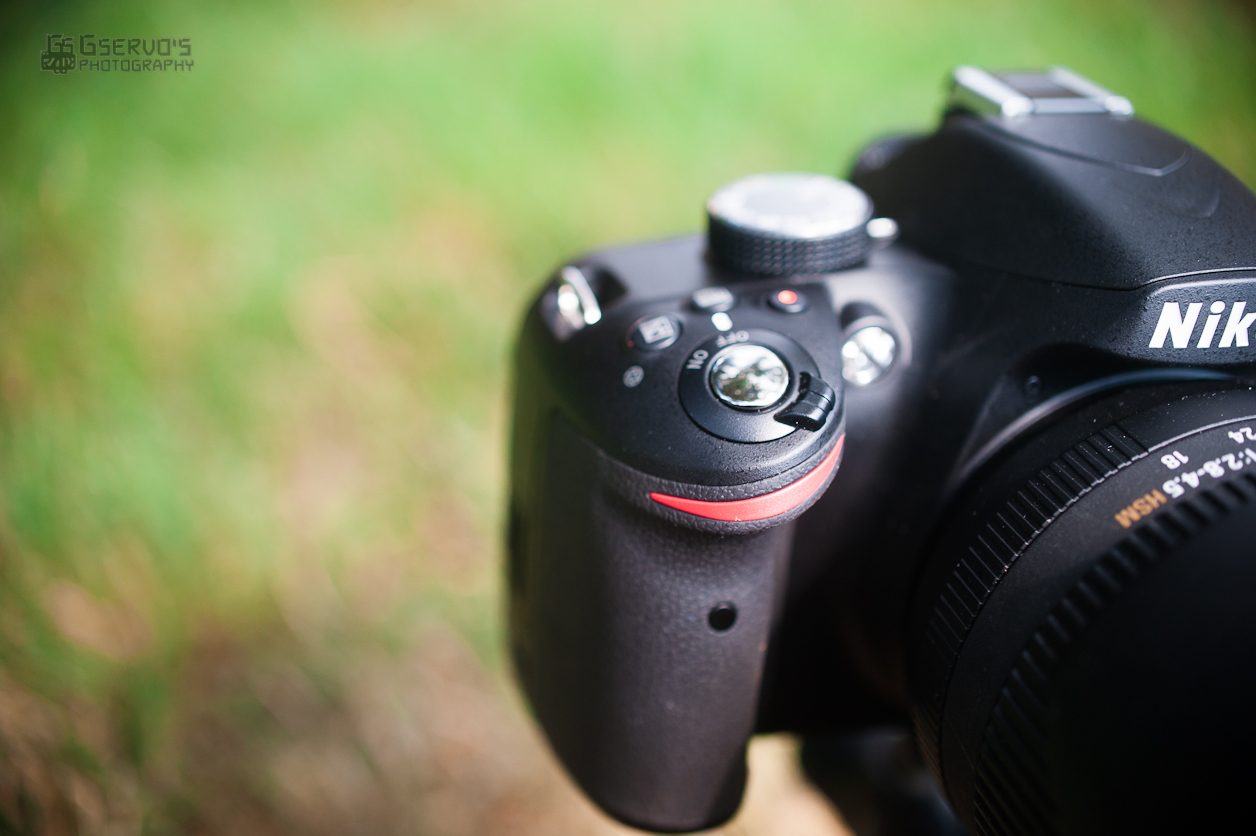
Here though you can see the dial for the different shooting modes. Additionally, the Info button, video record button, exposure compensation button, shutter release/power switch are all here.

.
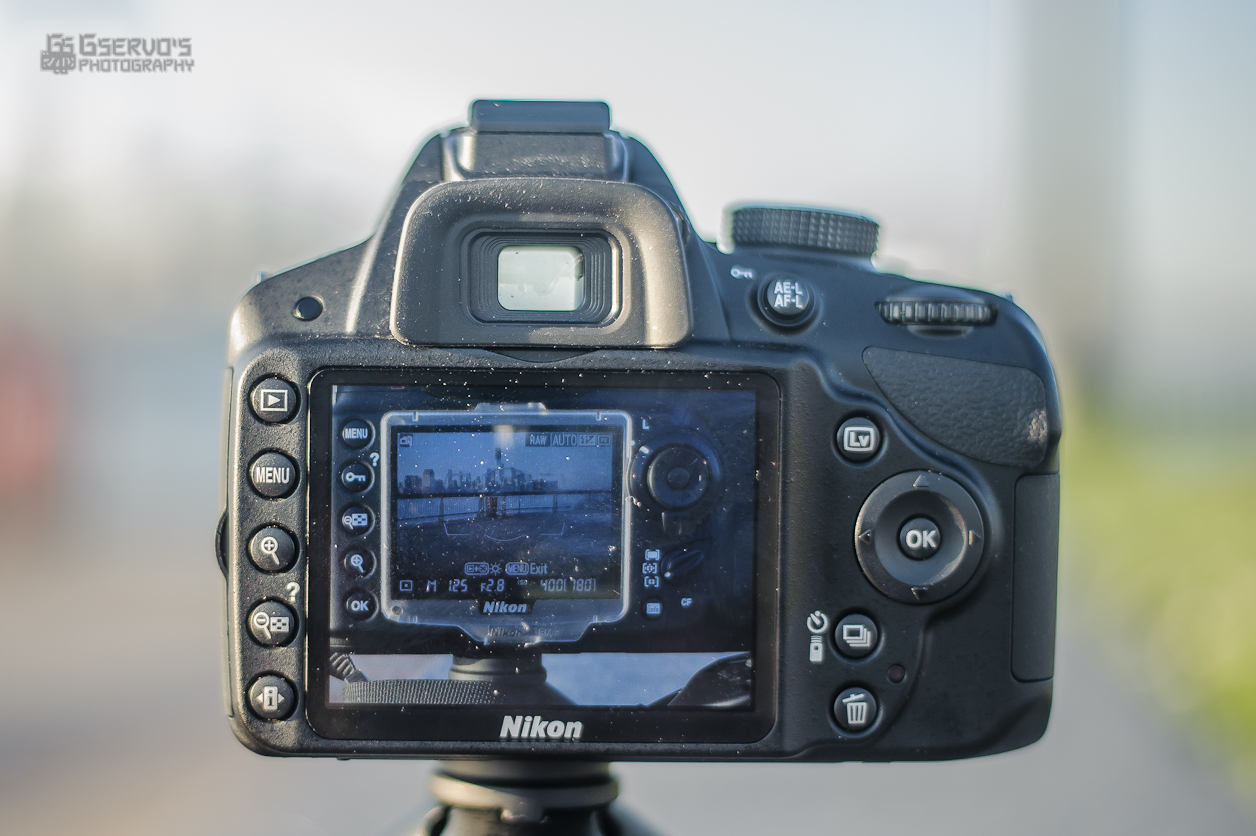
The back buttons are minimalistic at best and in good spots for an entry-level camera. The back finger grip is very small though.

Here there are full controls that will be more familiar to users of the higher end Nikon cameras. The drive button, directional functionality buttons, live view, and trash buttons are all on the right. If you’re in one of the more automatic traditional modes, you can also utilize the back focus/expose button.

The left of the screen houses the playback button, menu button, zoom in button, zoom out button, and Nikon’s other quick info button.
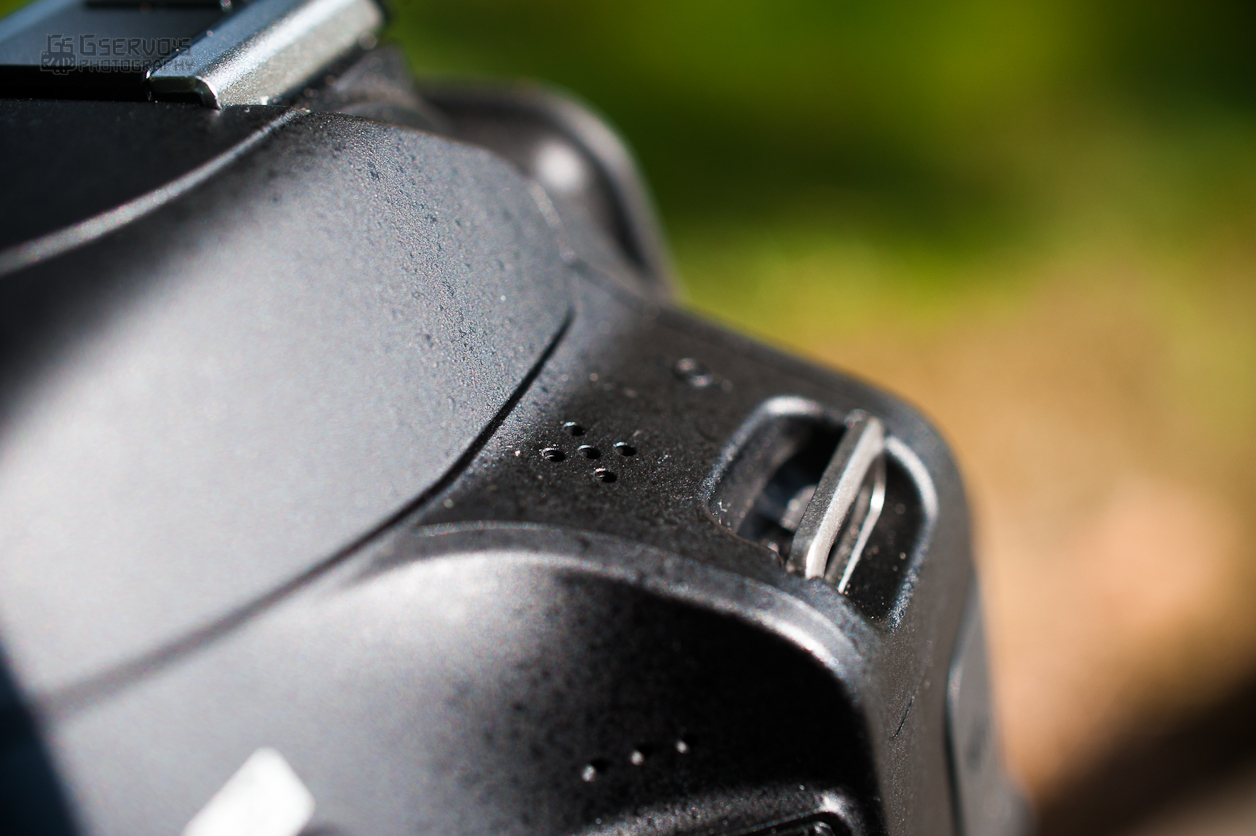
The microphone is placed away from your hand, so it is not covered by accident.
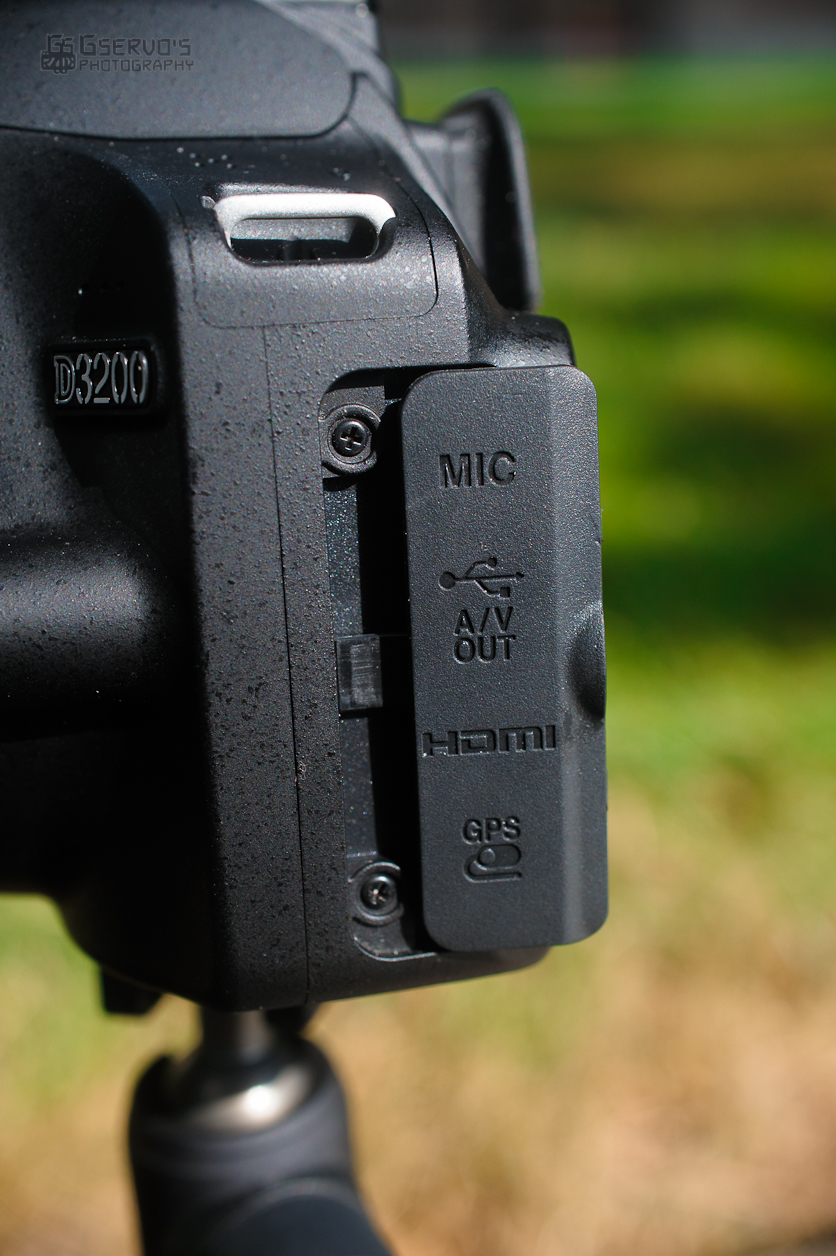
There is a microphone input as well as the usual connectors on the left of the camera.
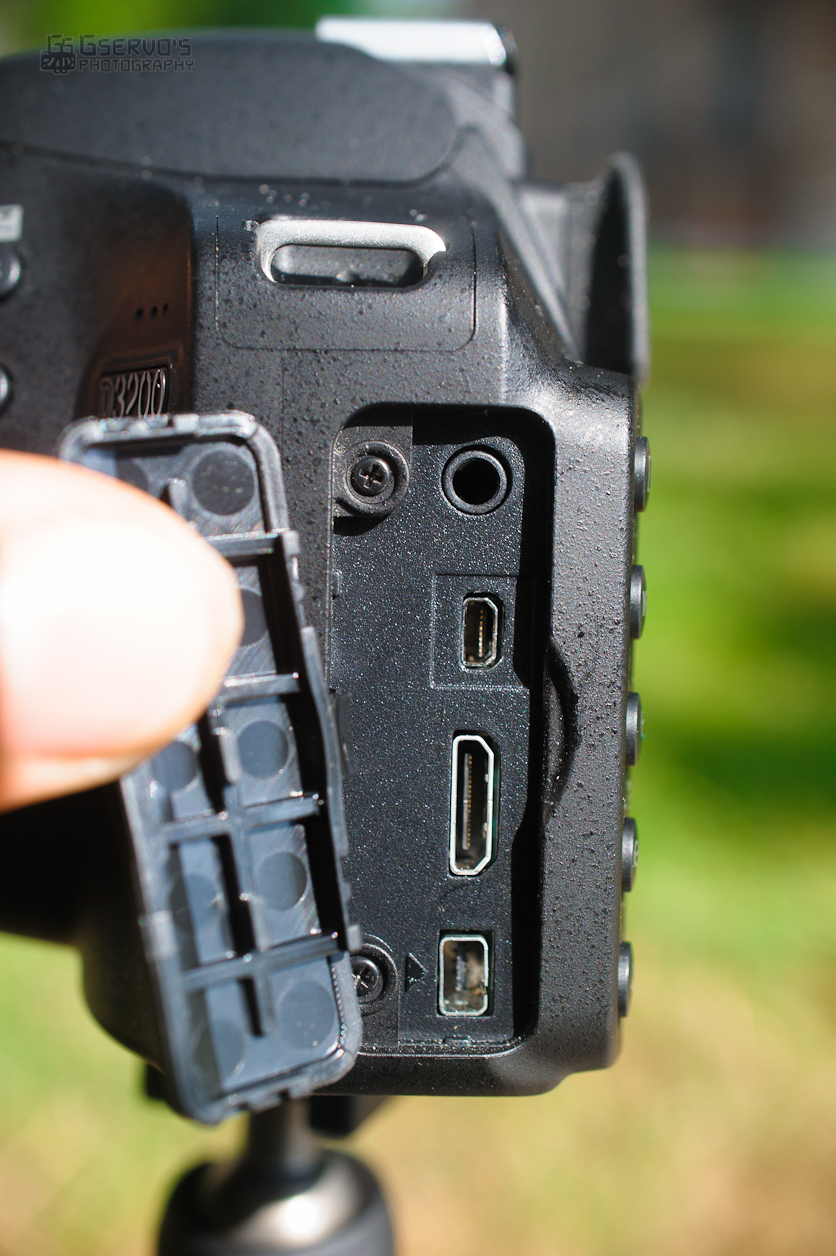
The connectors are all well spaced. Basically it is a simple, clean, and functional design.

Ease of Use
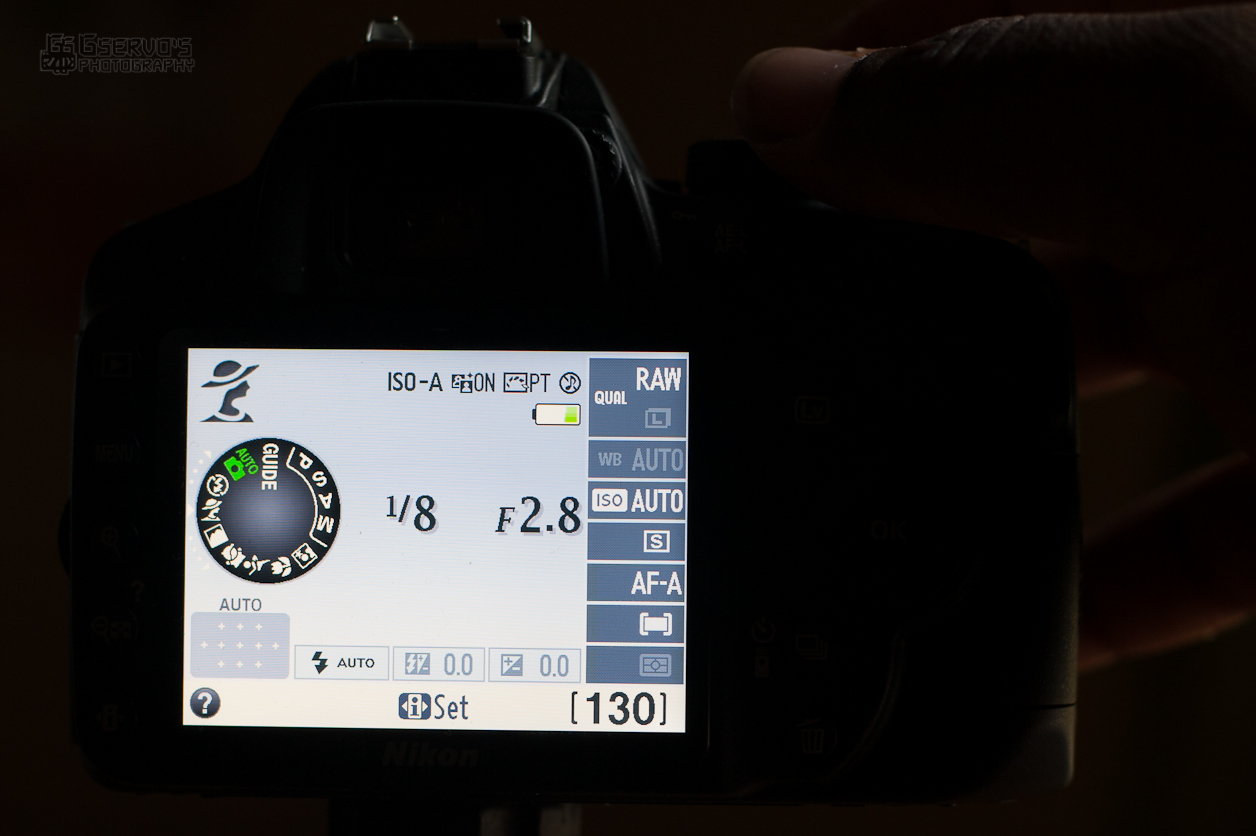
The camera was very easy to use. With the D3200 being an entry-level camera, I would expect no less. Primarily most setting could be controlled by hitting the info butting and you really never had to go into the menus. Making changes were easy, if you wanted to leave the auto settings on, the learning curve was not steep at all
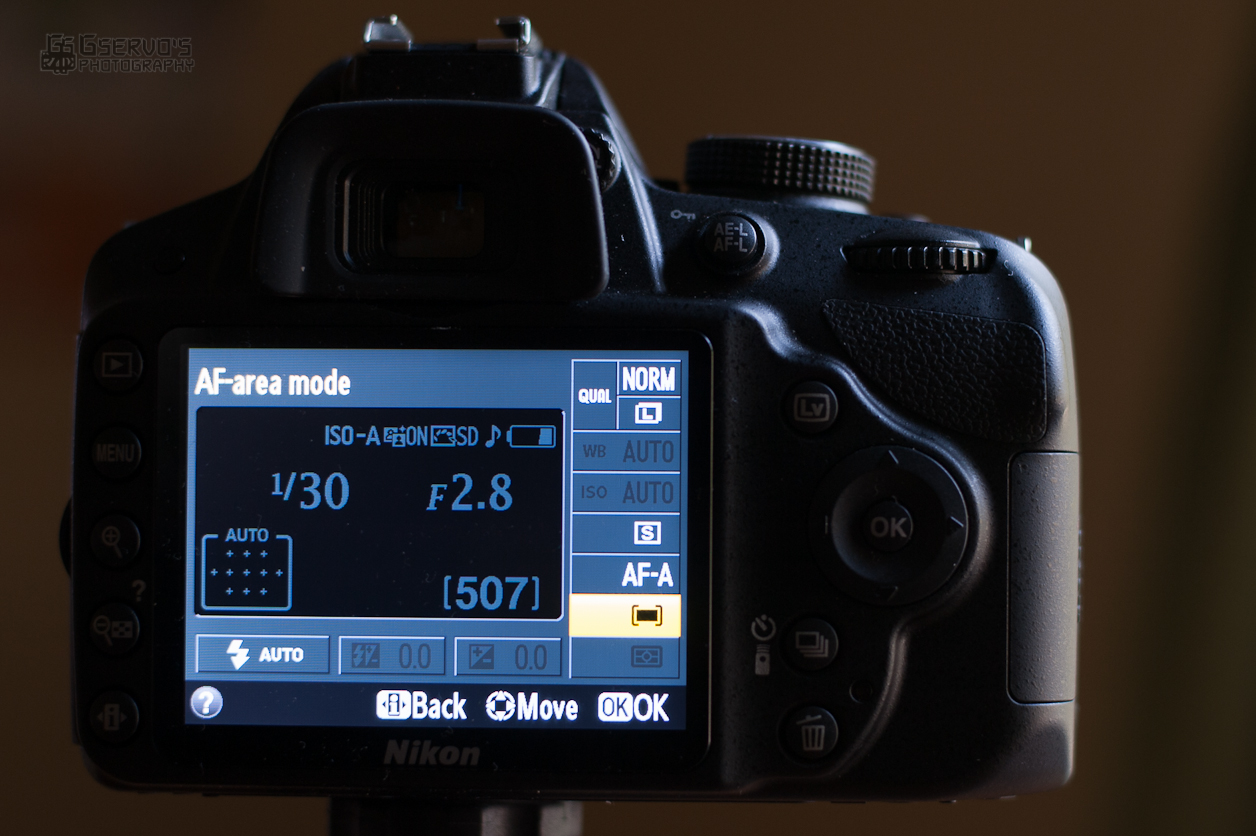
The secondary info menu let you change things like image quality, metering, and your auto focus area. It was very easy to use.

The “Guide Mode” is very useful for those really new to photography. It’s also a good way to learn the camera.
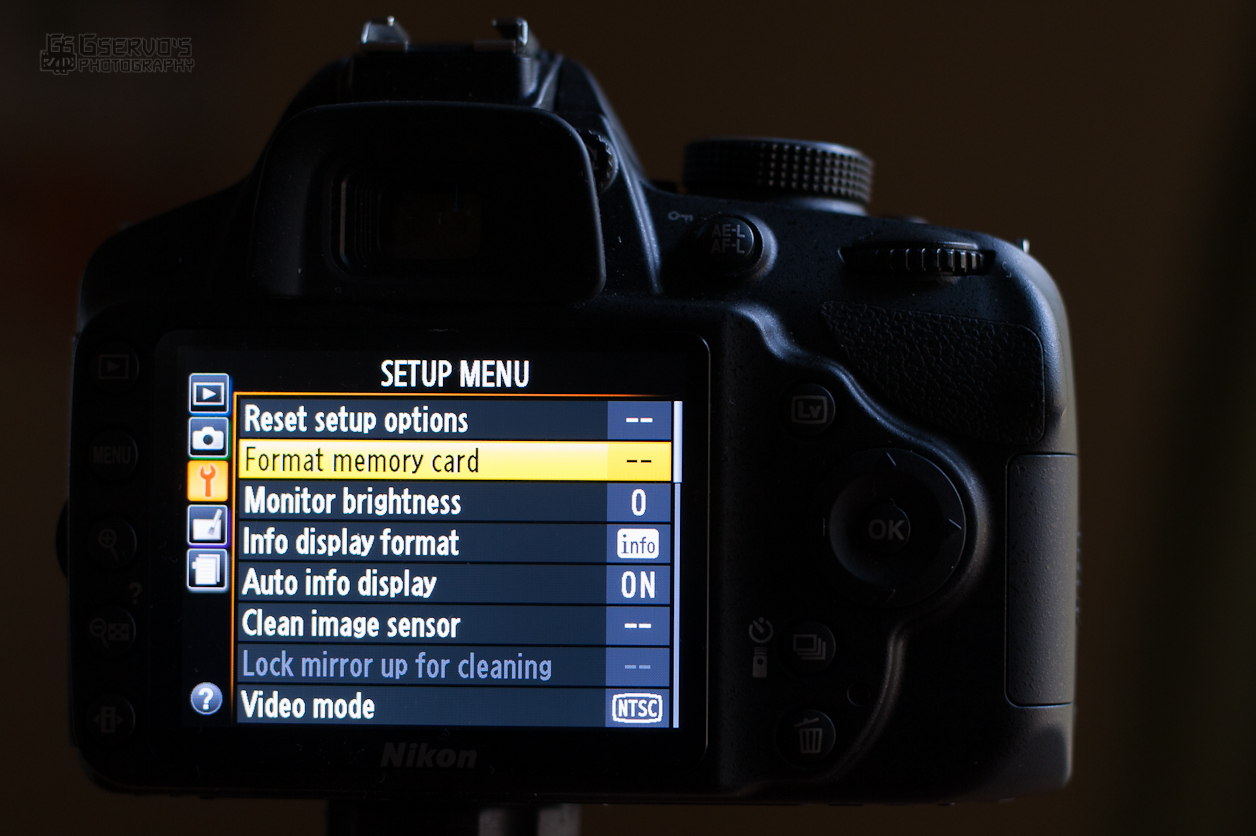
The standard menus are basic and do whats needed. I wish Nikon would update their user interface.
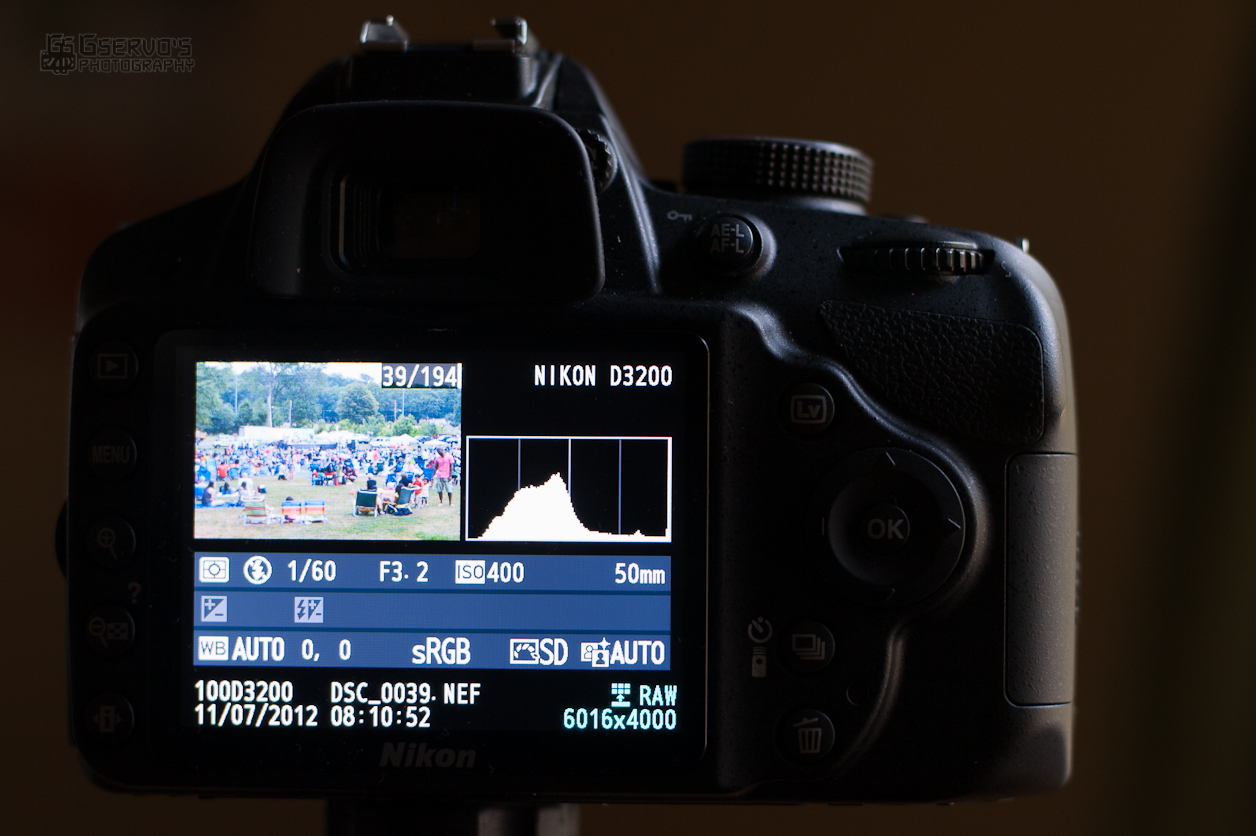
The image views have not change much at all. Nikon decided to play off the the, “if its not broke, don’t fix it” mentality.

Autofocus
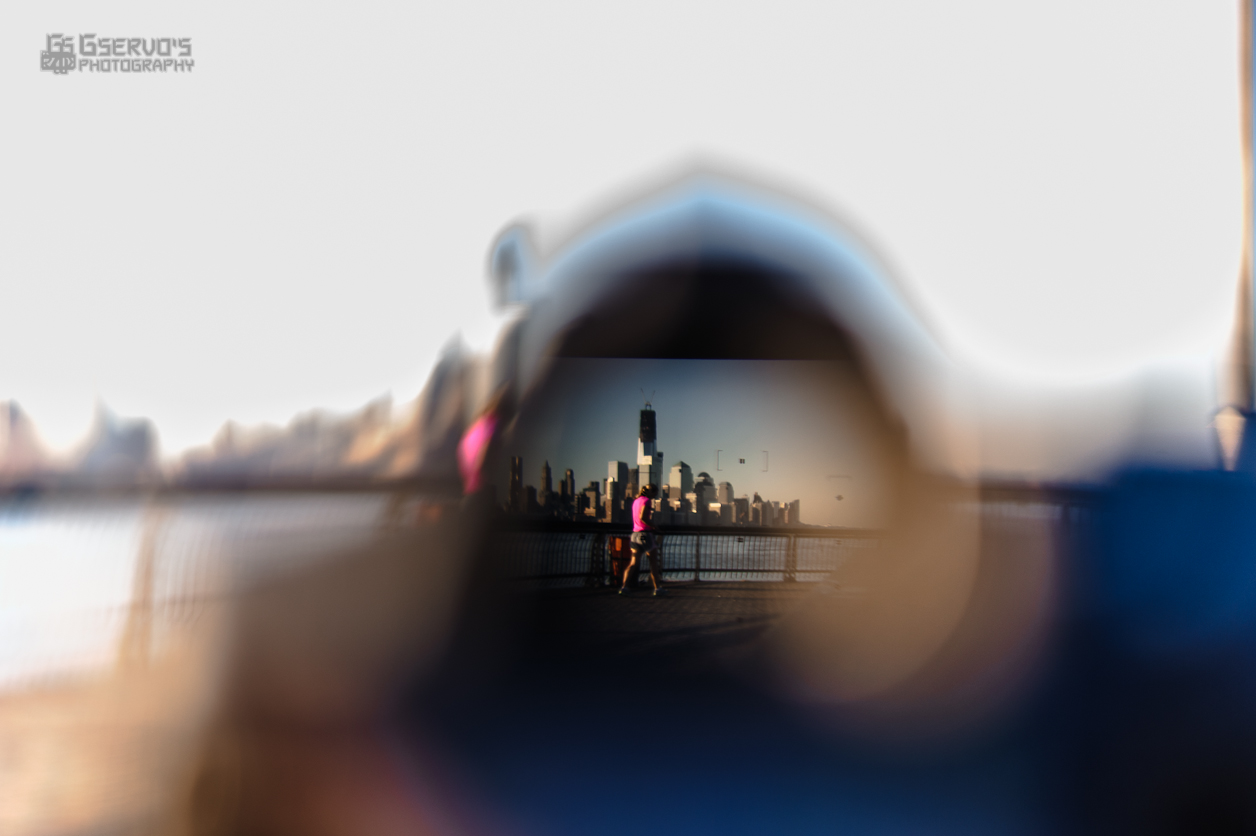

This was much of the same. It has an 11 point system like the one present in the D3100. It worked well. At night, the autofocus hunted a little no matter which lens I used. Using a lens that had a screw type auto focus or was manual, the focus assist worked well. I had no issues with the autofocus over all. The camera has AF, A (auto), S (single) and C (continuous).The AF-A setting, which is the default of the camera, was fine. I never felt the need to change. The Single point focus and dynamic area was fine, worked, as it should. The Auto area picked subjects nicely. I somehow expected it to be better. With the better sensor, the D3200 could use a better auto focus in my opinion.

Image Quality

The image quality from the Nikon D3200 was fantastic. Image files were nice and big. The images had a lot of detail. The color was nice when the image was properly exposed. The bokeh was smooth. The sensor dealt with depth of field nicely. The 24 megapixel really shines, building it bigger really paid off.

High ISO
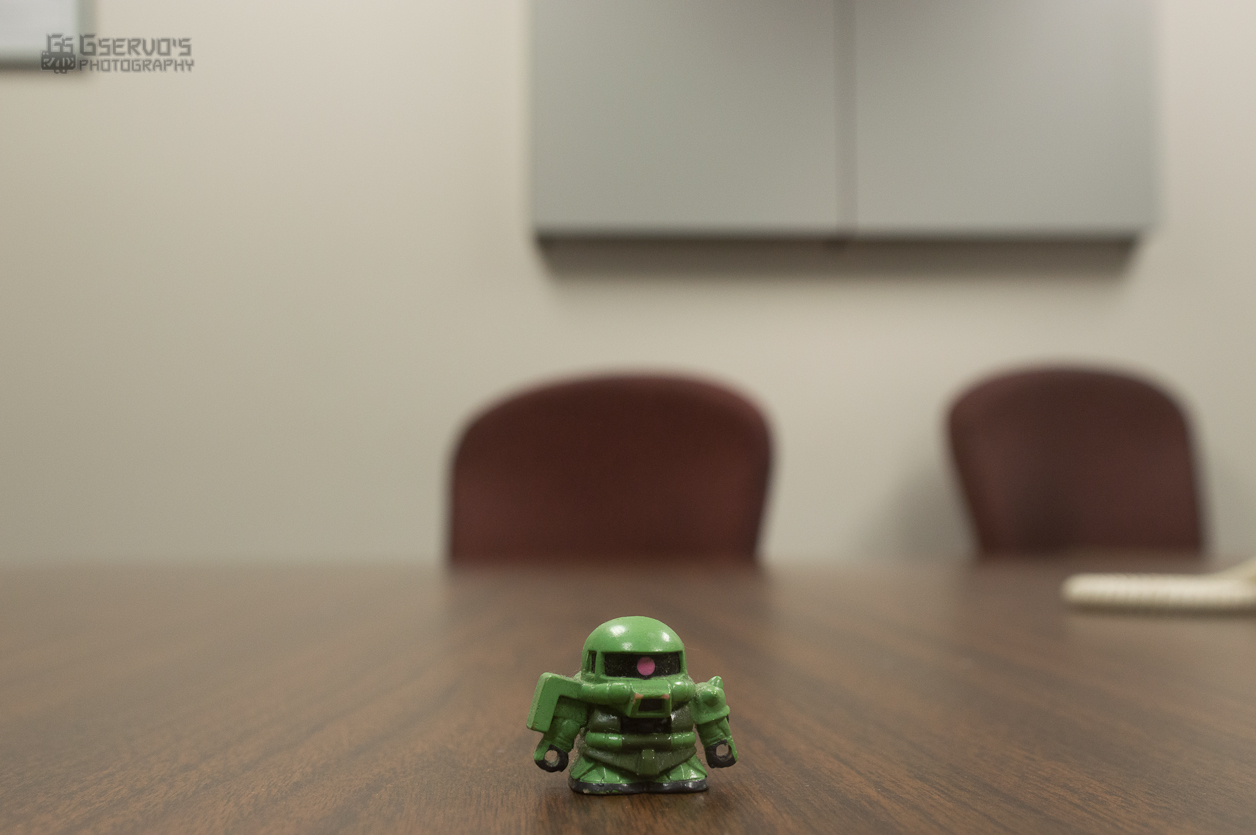
ISO-800

I must admit, I was not that impressed here. After shooting with the Pentax K-01, I rather expected the D3200 to perform better, but it did not. It was not bad, though, up to ISO 1600 and 6400 was usable.
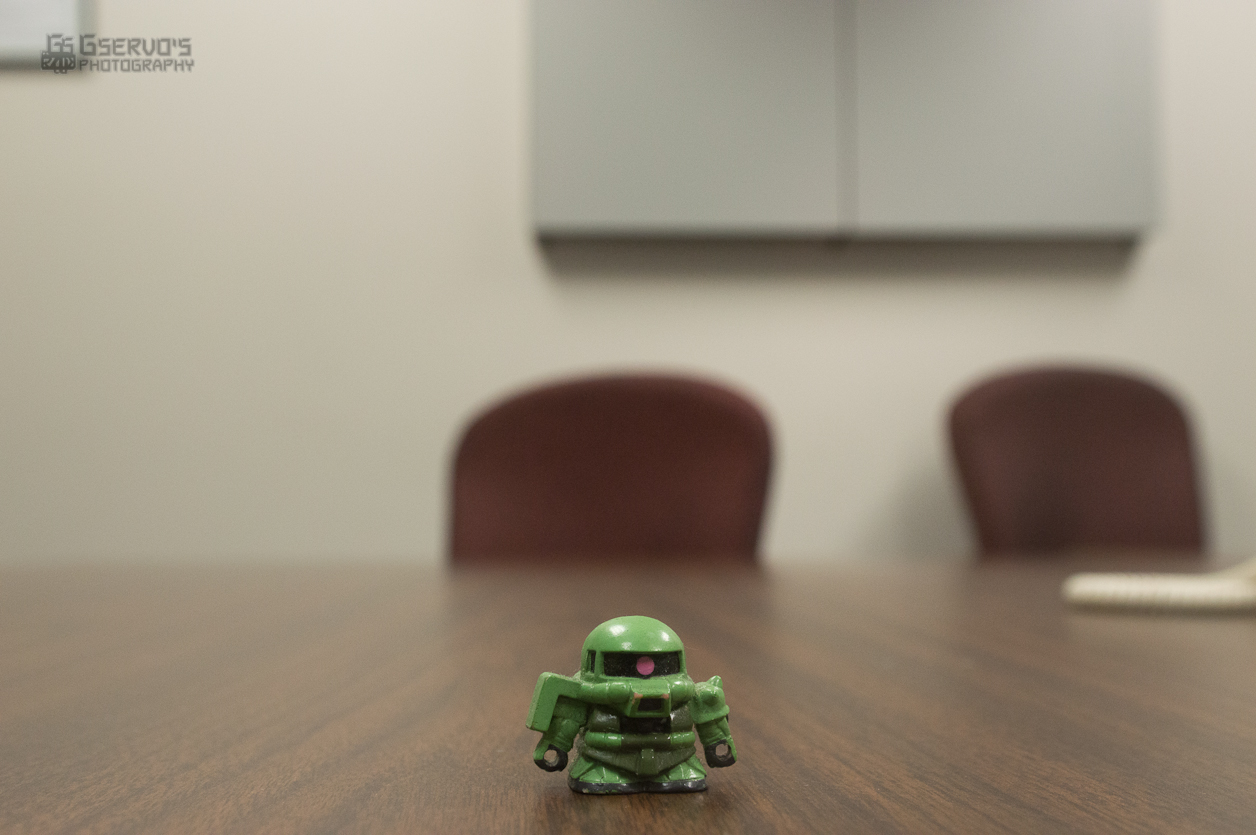
ISO-1600

The image is usable and light room could easily clean this up.
ISO-6400

Noisy but not too bad.

ISO-12800

There is a lot of noise here but its still not too bad. The image can be used.

Metering

The D3200 metered light very well. It was spot on most of the time, especially in matrix metering. Center weighted metering worked, as it should. In low light, the camera seemed to work best with matrix metering.

Compared
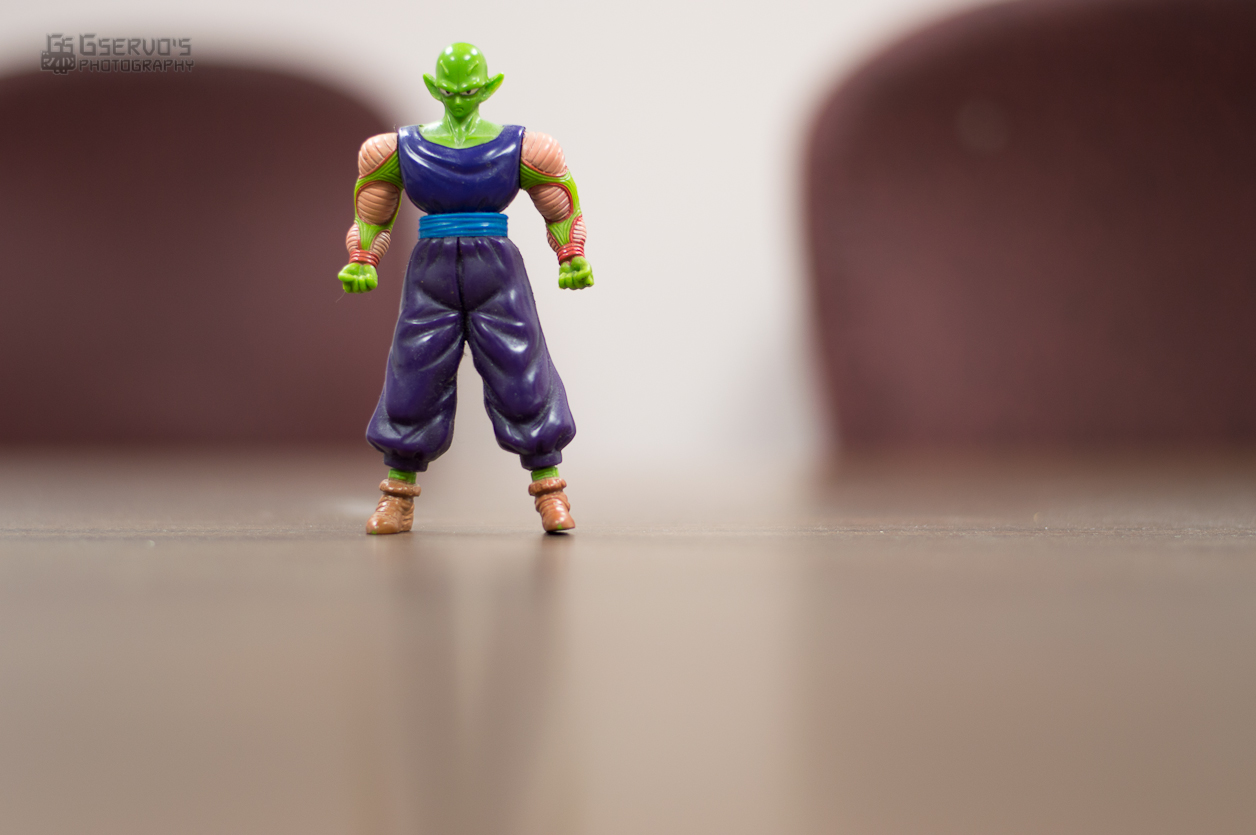
From the D3200

Compared to the D3100, on the outside, it is mostly the same. The menus are mostly the same. The sensor is want really makes the difference, as well as the improvements in video. Taking this camera, putting it side by side to my D700 all using the 50 1.8g, the images are clear, and not bad.
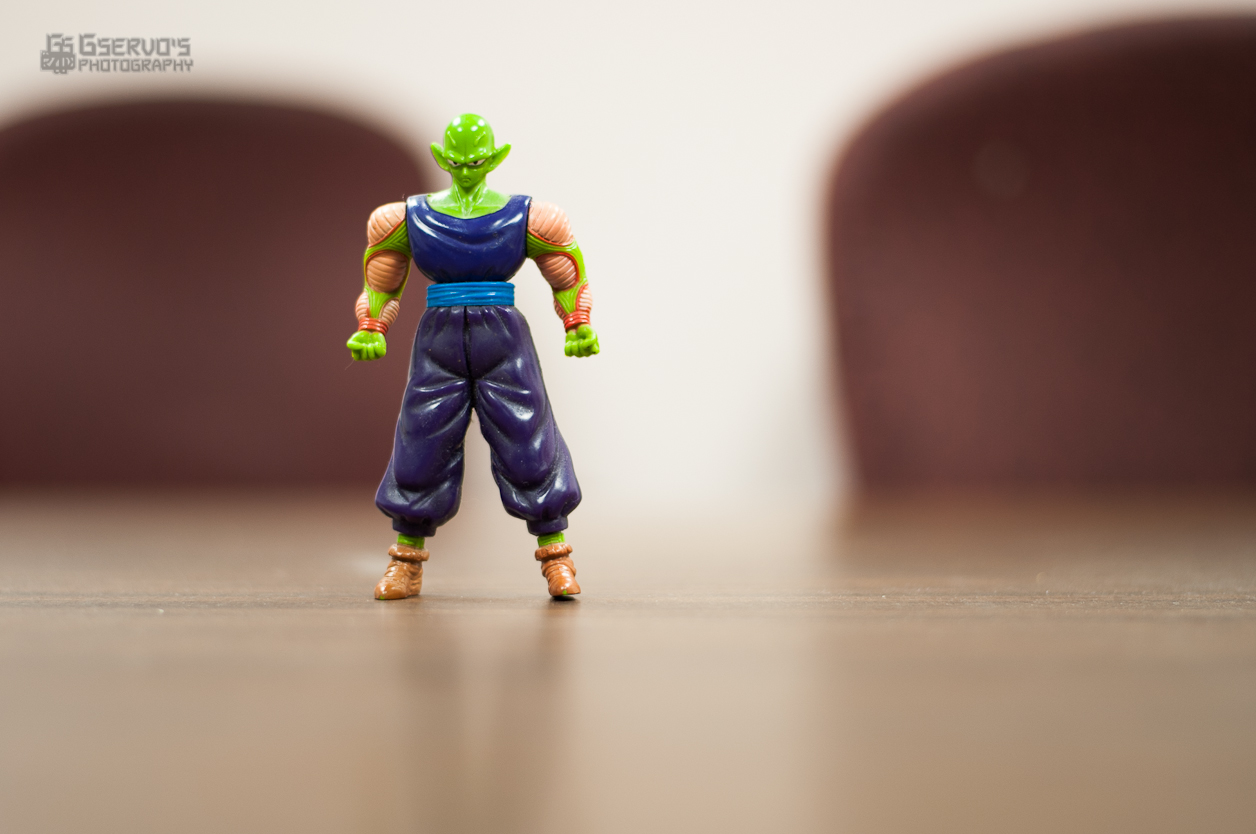
From D700 in DX mode

It does not always matter about the sensor, it’s like painting, you can have the best canvas is the world, but if your paint and brushes are crap you might not get the best results. Over all the D3200 is very good.

Style

This camera worked well for every style. Shooting macro with the Nikon 40mm yielded nicely details images.

Portraits were effortless and face detection worked very well.
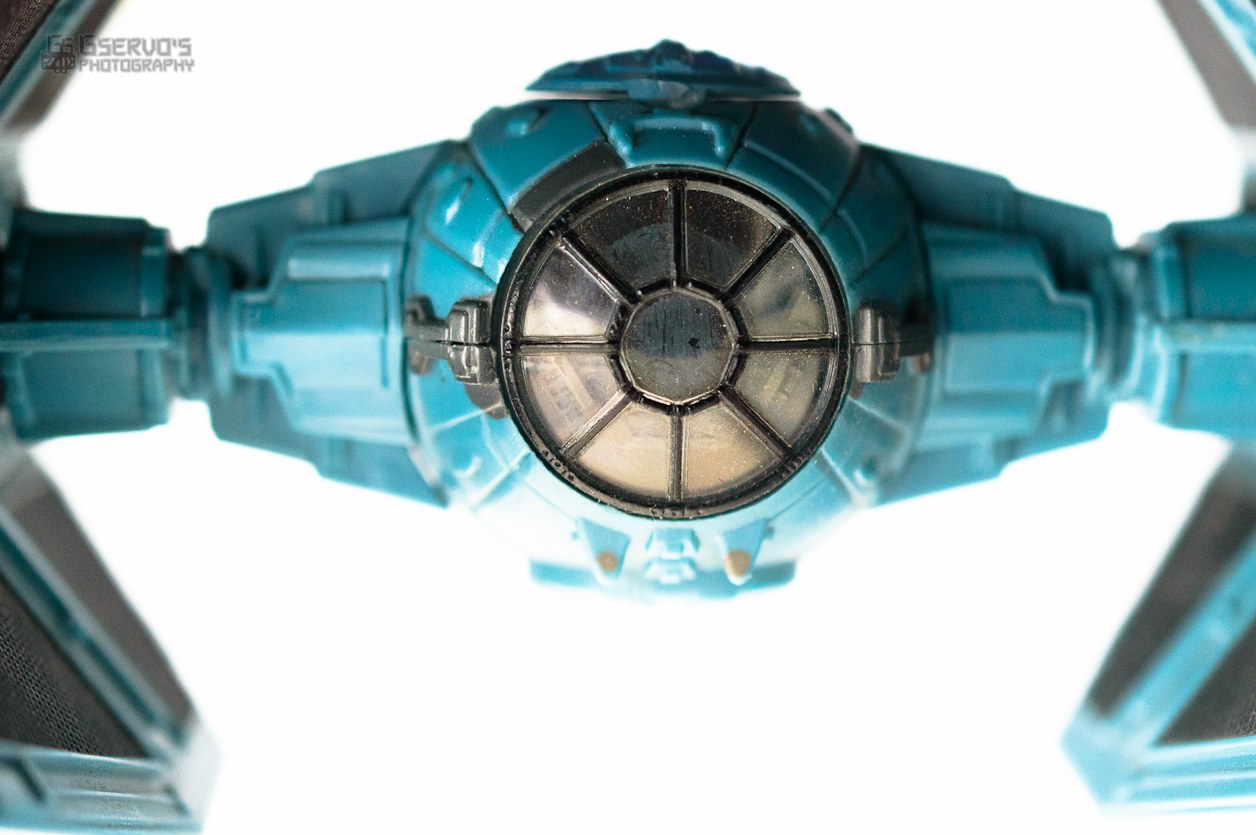
Product images came out nice and any small business owner who had to do their own product photography could use this camera with ease. The resolution on the camera is nice. It brings out decent details.

Food photography worked well because of the camera size. It could easily be put away. The Nikon D3200 did not take up a lot of room.

Landscapes and photo walking were cool because the camera is light, nimble and walking long distances with it was easy.

Continuous Shooting
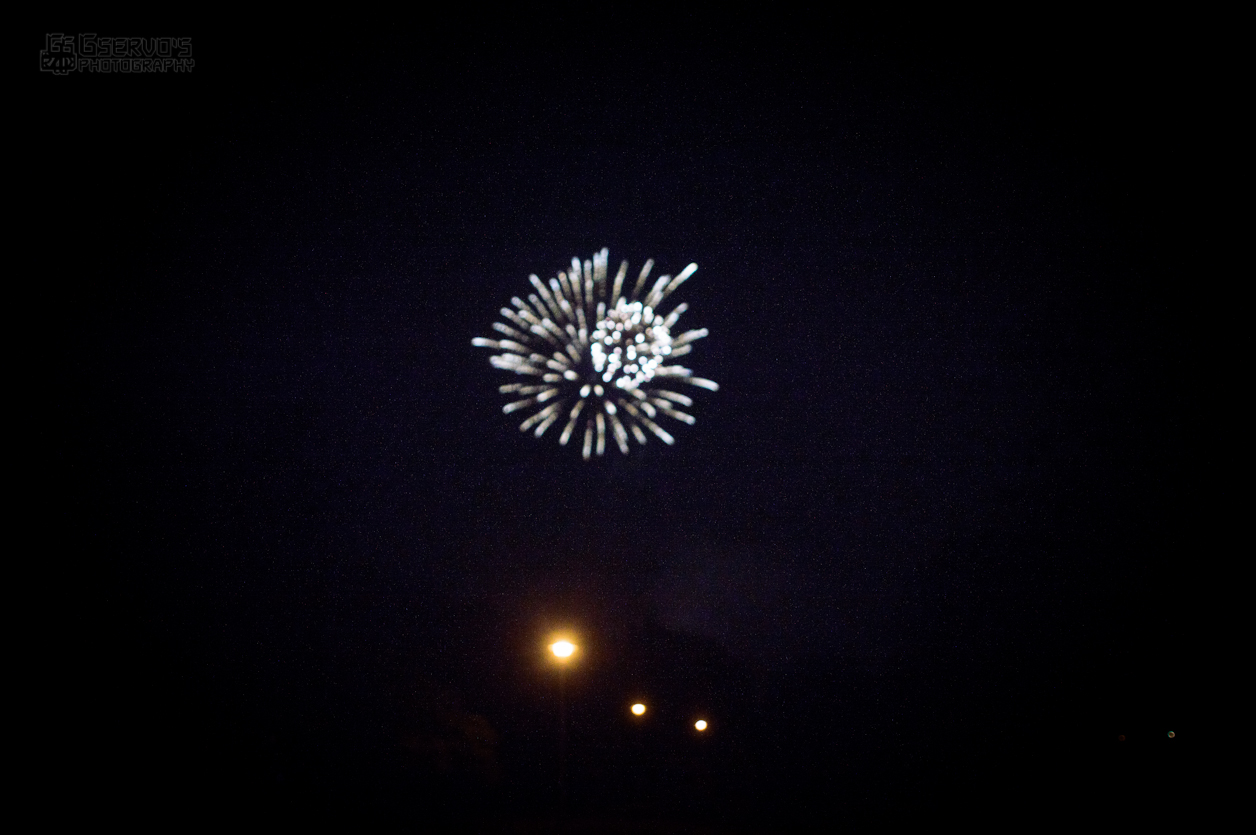
The camera would ban out the shots as fast as it could. 4 fps is decent and it good for most quick action shots. Getting fireworks or kids for the matter is easy.

Flash

The Nikon D3200 comes with a decent popup flash and a standard ISO hot shoe. Compatible with the Nikon creative lighting system , it is pretty much the same as the D3100. Its basic and I do recommend a Garry Fong puffer with it. If you are a student and want to learn how to use a flash like the SB700 or any of the available flash out there, this camera will not let you down.

Shooting video

There is a simple fact. The video on the Nikon D3200 is simple and clean for consumer use. I would recommend a microphone with it though. I played with a zoom lens and the camera maintains focus.

Issues
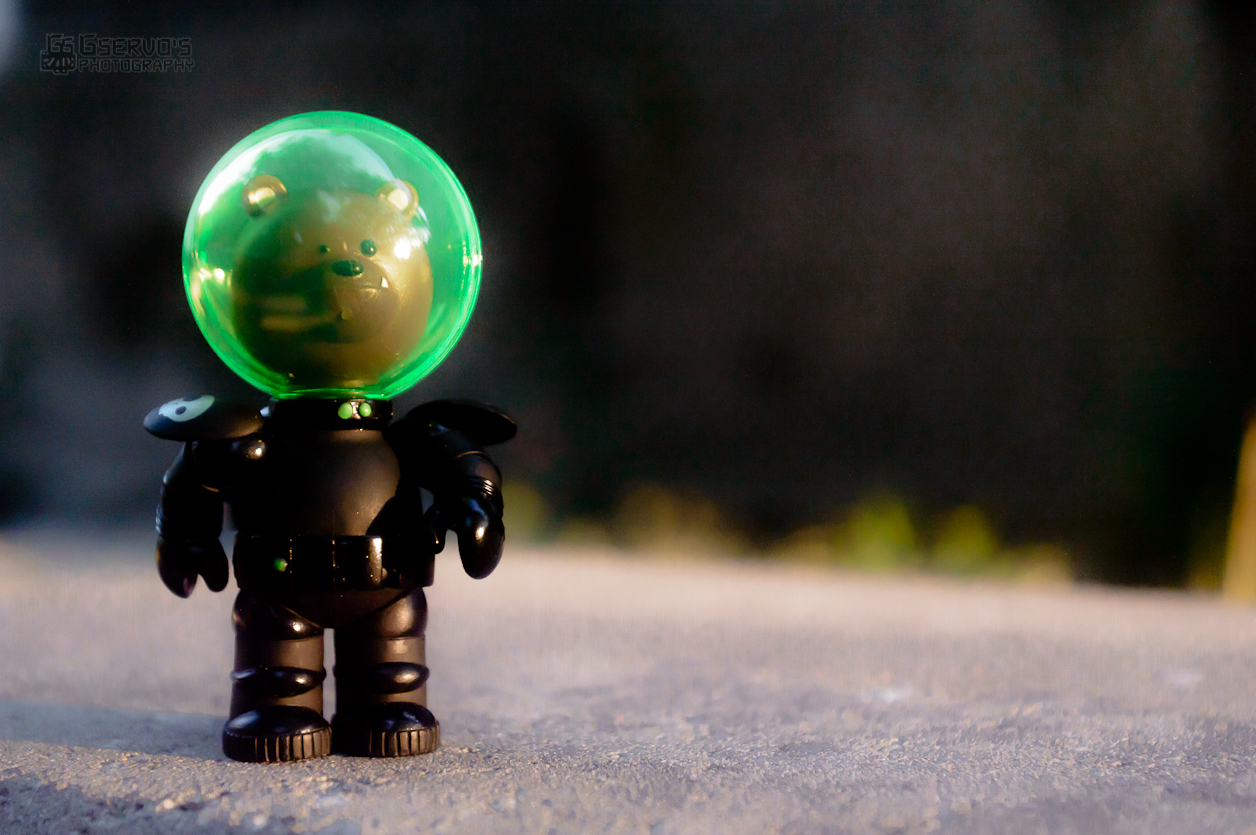
The files are nice and big shooting in raw, luckily, it does not matter much though, and most people using the camera will be shooting in JPEG. The D3200 gets warm heavy shooting and video. It does not burn your hands,however  it is noticeable. The manual setting bars, seemed backwards, but that is only and issue because I have used many Nikon DSLRs, to most beginners this will not be an issue.

Who is it for?

Nikon missed the marketing mark with this camera. It, basically, should have been “Meet the D 3200 the new Nikon EM. Ultra easy to use, compact and friendly to small hands.  It transforms the DSLR experience to an easy one while maintaining standard DSLR options.” That is how this camera should have been marketed. I put the D3200 in my brides hand and she thought it was great. This camera is great for beginners actually, while the controls are not that easy at times, using the camera a lot, they will become second nature. Parents, who want the feel of a DSLR and never really plan on taking out of auto, will really find this camera appealing.

Anyone can take good pictures with D3200. It is very easy. The images do get better with experience though. If this camera were in the hand of other Phoblographer staff members like Chris or Sander, the images would probably be 10xs better due to their richer experience in photography. Therefore, if a more seasoned photographer wants an easy small secondary camera, it is a decent choice. Lenses from your other Nikon DSLR, this can work for you.

Nikon 1 or D3200 for Consumer Use?

I would choose the D3200 over the Nikon 1 any day. It is cheaper, not too much bigger. It also has a better sensor. Moreover, it can use a good amount of older Nikon lenses without an adapter. If a person is willing to focus manually, there is a huge amount of used lenses available.

In the end
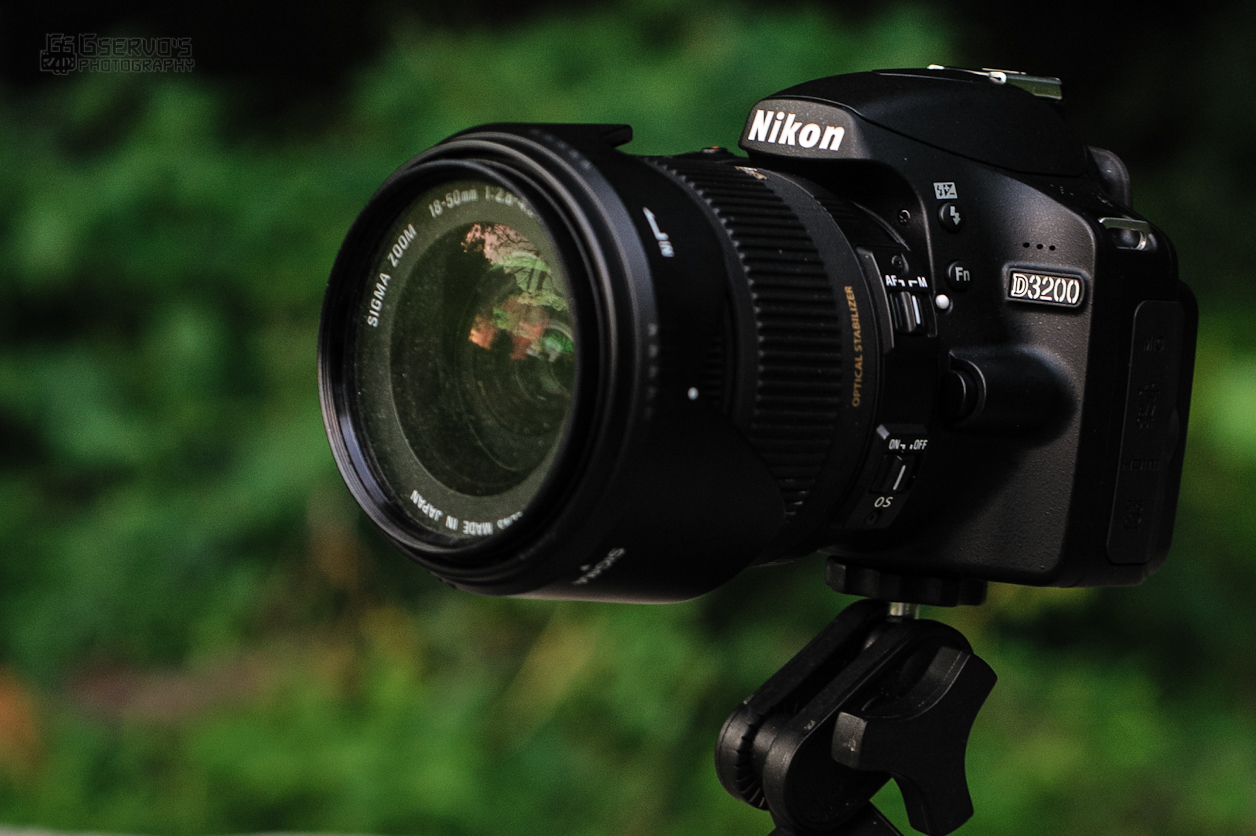
I did meet this camera with cynicism at first. The Nikon D3200 is an ascetically interesting camera. The camera sensor was a nice improvement. The camera was decent over all. The new Nikon EM I mean D3200 is a great learning tool or an easy camera for parents and families. If I were a student, I would want to buy a D3100 instead, use the balance towards a prime lens like the Nikon 50mm f1.8g or the Nikon 35mm f1.8g.It does take pictures. It is light, nimble, and versatile and does a great job. The Nikon D3200 does transform the DSLR experience to an easy one for most while maintaining standard DSLR options.
 

Please Support The Phoblographer

We love to bring you guys the latest and greatest news and gear related stuff. However, we can’t keep doing that unless we have your continued support. If you would like to purchase any of the items mentioned, please do so by clicking our links first and then purchasing the items as we then get a small portion of the sale to help run the website.


  • PeFClic

    Could it measure the exposition (matrix, 3d etc) with AIS lenses ?
    Is it possible to change its focusing screen for one with split image ?

    • PeFClic

      After googling…no it’s not supported.

    • PeFClic

      Oups I’ve answered to my previous comment without knowing that you have already answered. I’ve found this information on the web : http://static.photo.net/attachments/bboard/00a/00aRn1-470625584.jpg

    • Gevon Servo

      The D3200 does work with AIS lenses, But only manual. They do meter correctly.

    • CGW

      Really? Thought the 3200 lacked the Ai tab found on upmarket bodies like the D7000 that relays aperture setting on manual lenses to the meter.

    • ChrisGampat

      Nikon’s website isn’t clear about it. But it doesn’t look like you can.

  • Orb Emmel

    Nice light review, I have a few comments, though, if you don’t mind a constructive opinion…

    When checking ISO performance, could you indicate what you consider as “good” and “usable”? i.e. ISO 1600 means you won’t see noise up to what view/print size? And you may also indicate that you were (I guess from the results) shooting JPEG and not RAW, with built-in noise reduction (i.e. that the images show the performance of the combo sensor + built-in noise reduction, not only sensor pert). I’m not criticizing: though I only shoot RAW, this is in my opinion a camera that is targeted at people who will, for their majority (not all, though) shoot JPEG, so your “test” would give a good idea of what results they would get.

    “(…) female friendly”… Can you be even more condescending to female photographers? Seriously?

    “bokeh was smooth (…) the senor dealt with DoF nicely”… These are characteristics of the lens for the most part, not the camera… Same goes with the “type” of photography, using a 40mm macro with any DX camera is the same, you don’t need to show food, coffee, etc… to show a ton of examples of where you carried the camera: we get it, it’s small and light ;) Mention it, then spend your time on more interesting stuff, your article will only get better, in my opinion.

    “With the better sensor, the D3200 could use a better auto focus in my opinion”… IMHO, you haven’t understood at all what the 24 Mpix are there for: marketing. For anything but very large prints (larger than 13″x19″), 12 Mpix is enough. The D3200 is targeted at people who will watch their pictures on a screen (computer or TV), and many will probably even shoot JPEG, and probably not even full-res because of the file size.

    Finally, this is a VERY light review… I mean, you could really use a little more details, not just say “yeah, image quality is nice, and the files are big”.

    • ChrisGampat

      A couple of points; and thank you for the insight:

      - We ALWAYS shoot raw.

      - Usable means without editing. Images from modern cameras and sensors (anything after 2009) can be easily fixed in Lightroom.

      - Gevon says this in reference to his wife. He doesn’t mean to be condescending, and a good half of our audience is comprised of females.
      - Sensors can have a bit to do with bokeh performance depending on how the pixels are designed.

      - Your point about the AF. Camera companies like Nikon and Canon have traditionally brought their more pro-end features down to the entry level cameras. One, in this case, could be Nikon’s autofocus. He is saying that the camera needs better autofocusing abilities. Marketing or not, it is still an issue.

      How many people with the Nikon D800 seriously use all of those 33MP? I’ve seen lots of people amazed by what was capable years ago with that camera.
      With that said though, thank you for your inquiry; we are always looking to improve our reviews.

      *-Chris Gampat*
      Editor in Chief, ThePhoBlographer.com
      Twitter.com/Phoblographer
      Facebook.com/ThePhoblographer

      • Micah

        whats the type of mini- tripod is that in the upper pic? looks very convenient.

      • Orb Emmel

        Chris,

        I know, noise can be treated in LR, CNX2, and other post software (fixed would be an overstatement, unfortunately)… My point is: it might be useful to say if you are showing RAW or JPEG shots (regardless of what you are doing. Seems like a minimum, for me.

        This being said, the MAIN market for this camera is people who will shoot JPEG, for the most part. Yes, I always shoot RAW, too, but IF I was interested in a D3200, I would likely be a JPEG shooter, and therefore interested in seeing the results I would have right out of the camera. Hence my point: show the performance of the combo sensor+in camera NR+JPEG compression. Yes, RAW perf is interesting, that’s what I’m interested in, but I’m not sure that’s what most D3200 shooters will be doing. So, it might be interesting for you to either do both, or to simply do one of the two and then… back to previous paragraph: say what you do, say why you do it. That way we know what we are looking at.

        You do not answer about the use of “usable”: what is usable without editing for a 600×400 blog post picture is not the same as what is usable for a 13″x19″ print. So: what do you consider usable?

        “A good half of (your) audience is comprised of females”: are you saying that the bad half is the males? I’m kidding ;) I still think that if it wasn’t intended to be offensive, the form of the statement could have and should have been improved.

        About bokeh: as I said, this is a characteristic of the lens. Don’t come and tell me that the sensor has any significant impact. Anyway, a review where you tell us “bokeh is nice”… this statement is absolutely useless. Guys, I want to help you here, so think about it.

        About AF, could you elaborate? My point is the following: assuming the AF of the D3100 was good enough, and assuming the AF of the D3200 isn’t worse, considering its use the AF of the D3200 is good enough. The fact that it has a 24Mpix sensor does not mean that it should have a D4-like AF. So, I’m still saying the same: unless the AF is worse than the AF of the D3100, you cannot say that 24Mpix means it should have a better AF. Period. Though when I read your statement, I seem to understand that the AF of the D3200 is problematic? Then if it is, it isn’t tackled in the review.

        About the D800, I couldn’t agree more, but that’s absolutely not comparable to the D3200 situation. It’s like saying that the D3200 should do 11 fps just because there are people stupid enough to buy a D4 for burst perf, even though they don’t need it. Are the two even remotely related? No, they’re not.

        Orb

  • Pingback: Nikon D3200 24.2 MP CMOS Digital | Lens compare

  • Pingback: Latest news Nikon Camera « Technology and Gadgets

  • Steff

    Good review. Could you elaborate more on why the d3100 would still be the choice for students? Do you mean students in general, or photo students?

  • http://khurtwilliams.com/ Khürt L. Williams

    I liked the review. I’m ready for a new camera to replace my aging D40. I don’t have too many lenses — the 35mm f/1.8, 50mm f/1.8 and 18-55 VR — so I’m not committed to buying another Nikon DSLR. Quite often at family gatherings or vacation I become the photographer but I lose out on not being in any photos. The average consumer is intimidated by the size of the DSLR. I’m considering a compact interchangeable lens systems — either a micro 4/3 like the E-PL5 or the APS-C size Fujifilm X-E1.

  • Emilio.

    As a video professional and amateur photographer, I am SERIOUSLY DISSAPOINTED at this camera.
    It is not, by ANY stretch of imagination, a good camera, and it has been built cheaply.

    As a still photography camera, it has many problems:

    -It has a SERIOUS back-focusing problem. On plain english, this means that if you use any lens other than the “kit” ones, you might find that your camera CANNOT FOCUS on your subject, no matter which focusing distance you set on the lens.

    -The autofocus features are unusable because they are too slow to be of any use on a moving subject, and “jump” constantly without keeping focus even for a second.

    -The battery life is SIGNIFICANTLY shorter than advertised, and it takes quite long to charge it. This is a deal-breaker on a set, but also a major nuisance for amateurs.

    -The control and menu design is downright idiotic, to the point that it will confuse the newbie and irritate the professional.

    -It has a serious noise problem on low lights.

    As a video camera (if such term might be applied to a dslr), it is almost unusable.

    - There is a noticeable amount of noise on low lights (0 to 10 ire), which flashes between frames making footage unusable, even when shooting at 200 iso. This is not a professional complaint. The image is unwatchable, and unsuitable even for amateur use.

    - It has the worse case of rolling shutter I have ever seen on ANY camera. Again, not just a professional complaint. My point and shoot pocket cameras are way better on this aspect.

    -If the autofocus on stills is bad, on video is 100% useless. The footage will be completely out of focus.

    -The camera heats up very fast when recording video. If you do not let it rest each 20 min (time limit for video recording) and make it record again right away, It will corrupt your flash media. I have lost an entire clip this way. Unacceptable.

    -The viewfinder is disabled during video recording (the mirror is up), but the back screen is too small to actually focus manually.

    Notice that I have not mentioned other problems such as incompatible lenses, no weather sealing, or the absence of a clean hdmi output, for considering them not pertinent to the price point.

    In a nutshell, this camera might (not will, just might) be an improvement for a complete amateur, which wants to use it as a still camera ONLY.
    Everyone else would just be wasting your money.

  • PicShy

    From what I have learned elsewhere the low budget Nikon DSLRs including this one don’t have CLS

Previous post:

Next post: