

Last Updated on 11/19/2012 by Chris Gampat
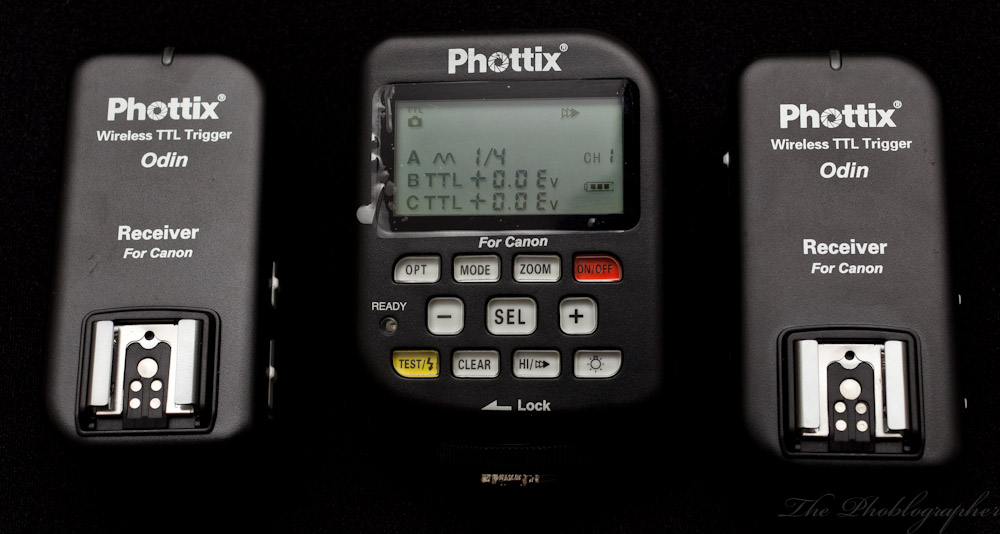
Previously, we did a hands on review of the Phottix Odin TTL Radio Triggers. After shooting different portrait sessions and two trade shows with the units, I’ve learned them backwards and front. Being marketed on the internet as a more user friendly option to Pocket Wizards but at a more affordable price, do the Odins really have what it takes to earn a place in your camera bag?
Gear Used
And of course, the Phottix Odin TTL Radio Triggers.
Tech Specs (from the hands on)
Details taken from Phottix’s website.
- Wireless 2.4GHz. TTL and Manual Flash Triggering
- Remote power control of groups in TTL with +/- EV adjustments (3 stops in 1/3 stop increments – 18 different levels.)
- Mix TTL and Manual flash – fire some groups in TTL, others as manual.
- Remote power control in A:B ratio modes with +/- EV adjustments
- High speed sync – shutter speeds up to 1/8000 sec.
- Second curtain sync functions
- Remote manual mode flash power control
- Remote flash head zoom adjustments – auto or manual
- Compatible with Phottix Strato 4-in1 and Phottix Strato II Multi 5-in-1 Wireless Triggers.
- Upgradeable via built-in USB ports.
Other specs
Frequency: 2.4 GHz
Distance: 100m+
Channels: 4 channels
Groups: 3 groups – A, B, C
Batteries: 2 x AA batteries (TCU and Receiver), 5V DC on receiver (external power port)
Max sync speed: 1/8000 sec*
Output: Hot shoe, 3.5 mm port (receiver)
Input: USB port (transmitter and receiver)
Attachment: 1/4 tripod lug, cold shoe (Receiver)
Input voltage:2.4-3.2V
Flash port voltage handling: 6V (transmitter) ≤300V(receiver)
Body dimensions: 94(L) x 66(W) x 35(H) mm, (transmitter), 90(L) x 45(W) x 40(H) mm (receiver)
Weight: 105g (transmitter), 66g (receiver) – without batteries
Operating temperature: -15—65 C
Storage temperature: -30—85 C
Compatible: Canon EOS Digital Cameras and Flashes. Some third party TTL flashes may function with the Phottix Odin. Due to the vast number of third party alternative Phottix will not test, support or troubleshoot third party flashes.
Ergonomics (Update to the hands on)
The Photix Odins will be familiar with most users that have used radio receivers already. The design and layout of the triggers is extremely straight forward and with some muscle memory and understanding, becomes easier to master.
The transmitter/commander unit features many buttons: an option button, mode button, zoom, on/off, down/-, select, up/+, a test button, clear, high speed flash synch, and an illumination light for the screen. These are how you can control the flashes when attached to the receiver. The nice thing is that you won’t need to dig through Canon’s menu system to change settings if needed.
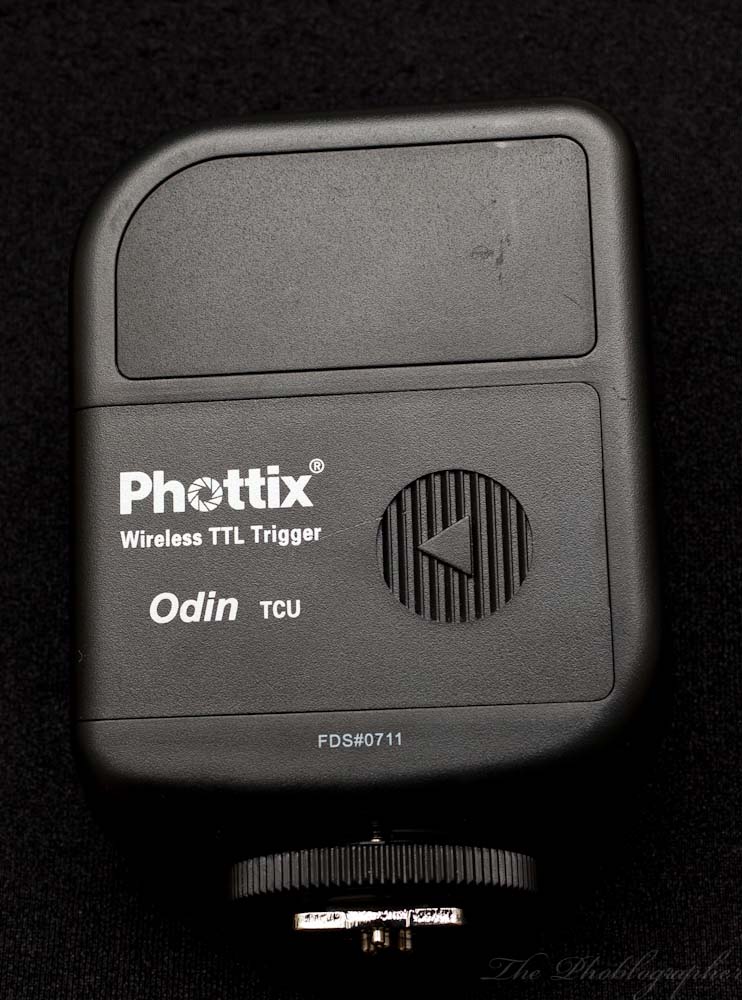
The back of the transmitter is also plain and simple: featuring the battery compartment. In the hand, the triggers don’t feel as solid as some other options I’ve played with such as PocketWizard Mini and Flex or the Impact PowerSyncs. Indeed, they feel a bit hollow. When I apply pressure on them, I feel as if there is nothing behind the plastic casing pushing back at me. With the other two competitors I mentioned, I feel as if I’m trying to squeeze a rock.
However, I’ve learned that in use they’re tough enough to last through most cases of abuse. Nor are they shoddily built.
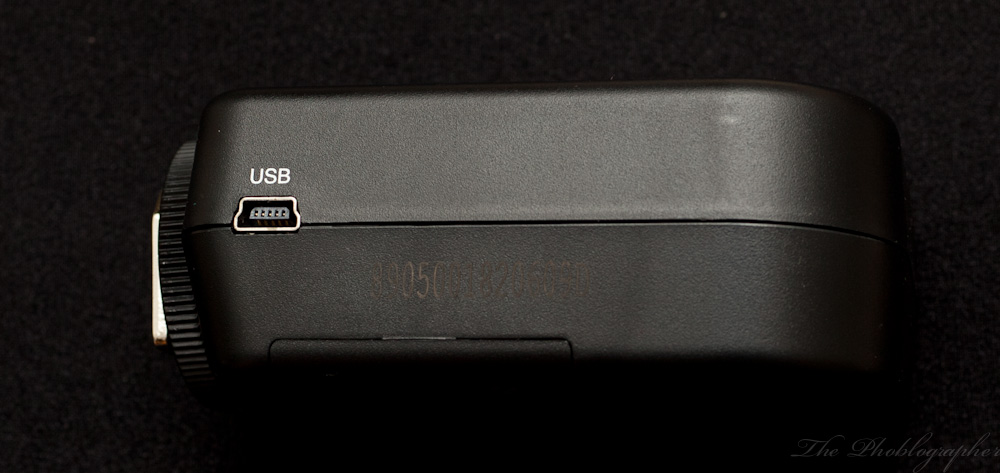
The transmitter also features a USB port for things such as firmware updates. You also get a small piece of software with the device. Admittedly, I haven’t even read the manual yet and have instead just tried to explore, so I’m not sure what the software does at the moment. This is how I figure out how intuitive the whole system is though.

The receivers have switches on both sides. On one side, the user can control the channels for your particular flash while on the other side the user has control over what group the flash is in.
Additionally, you have your standard on/off switch, USB port, and DC input.
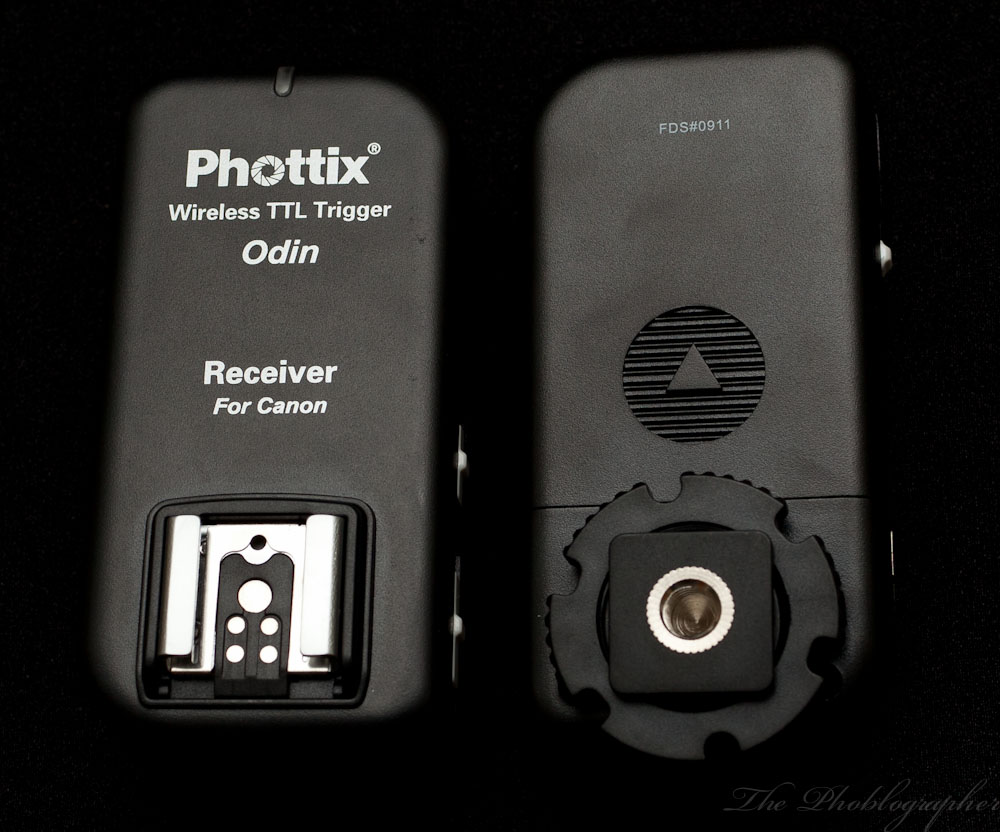
The tops of the receivers is very standard looking: it’s just a hot shoe to hold your flash. Meanwhile, the bottom features a locking mechanism if you’d like you attach it to something. Plus there is a tripod socket and your battery compartment.
Video Demo
Performance

Throughout my journey at NYC Comic Con and Photo Plus Expo 2011, I kept the Odins attached to my Canon 5D Mk II almost at all times. If I had a lighting assistant, sometimes I would switch out to the Canon Rebel T2i.
Battery Life
For the most part, the battery life of the Odins were exceptional. I received the units almost two weeks ago and have been using the Energizer batteries that came with the units. They’ve been doing very well and haven’t shown a sign of dying yet.
Throughout Comic Con, Matt and I would take the radio triggers off when not in use and only turn them on when needed. One of the reasons for this was because I was shooting in manual flash mode with my beauty dish, so I needed to preserve the battery life. My flash ended up dying first. At Photo Plus, I was so busy that I kept the units on the entire time. For the record I was at the show for a total of almost 20 hours. That’s a lot of battery life. The units seemed to also have put themselves to sleep, which also preserves the battery life.
I’m writing this the day after the show has ended, and they haven’t ceased to stop yet.
TTL Metering

I’ve used many different types of wireless flash setups: including the Canon Infrared system and various other radio triggers. Additionally, I’ve shown them off to co-workers, people on the show room floor, other journalists and other photographers.
Everyone agreed: the Phottix Odins have the best TTL metering with the flashes and cameras.
Hands down, I haven’t seen anything like it. Photographers that have complained about Canon’s E-TTL system not working out for them and instead switching over to manual flash need to give these a try and see just how wonderful, simple and worthwhile these are.
In fact, photographers that have been scared to use flash at all may also want to consider these. Even when the flash is directly pointed at a subject, the TTL metering still does a spectacular job at balancing the flash output with your camera’s exposure settings.
Though this may sound a bit over enthusiastic, it’s actually an extremely welcome sigh of relief.

They also did a terrific job in high speed flash sync mode. During a portrait session in Central Park, I wanted to balance the background out with my subject’s face. The problem is that if I exposed for Kathy’s face, then I would blow out the highlights in the background. But if I exposed for the background, Kathy’s face would be lost.
To save the situation, I used high speed flash sync and kept the triggers in TTL mode. They worked fairly well. What I could have done to have made this better would be to use exposure compensation to brighten her face more. However, the shot above is more than acceptable and didn’t require me to carry a reflector. Instead, I used a 580 EX II with a Rogue Flashbender. We love the Flash Benders by the way.
If you’d like more, I’ve written stories on Canon’s wireless flash system linked here and here.
Radio Communication
During my time at NYC Comic Con, the 580 EX II had no problems with communicating when attached to the receiver. However, the 430 EX II did. Later on in further tests/portrait sessions, I had no problems at all.
Vs PocketWizards
During Photo Plus Expo 2011, I walked into their booth with the Phottix triggers attached. Even they complimented how good they are, despite not liking the fact that I carried them.
My response, “They’re a review unit, I have to.”
While PocketWizards are the industry standard for a very good reason, they have some problems. They’re huge, the controls are very analog, and if the units are too close together they won’t fire. Believe it or not there are many times (especially for street photographers) when the flash units will be super close together. You can’t always afford failure of your units.
However, the PocketWizards are built better than the Phottix Odins. One of the technical reps joked that he liked to throw them across the office to show how tough they are.
He wasn’t joking…
Admittedly, I used to work for the MACGroup and I left on very good terms, so I have a bit of loyalty to them still. However, a better product is a better product. And for the price, the Odins are much better.
Vs Pixel Kings
We got a pair of Pixel Kings in the office at work and I was asked to play with them a bit and compare them against the Phottix units. After about an hour of testing, myself and a bunch of co-workers agreed that the Phottix units metered better and were easier to use.
However, for what they are, the Pixel Kings do a good job and at a more affordable price than PocketWizards.
Vs Impact Powersyncs
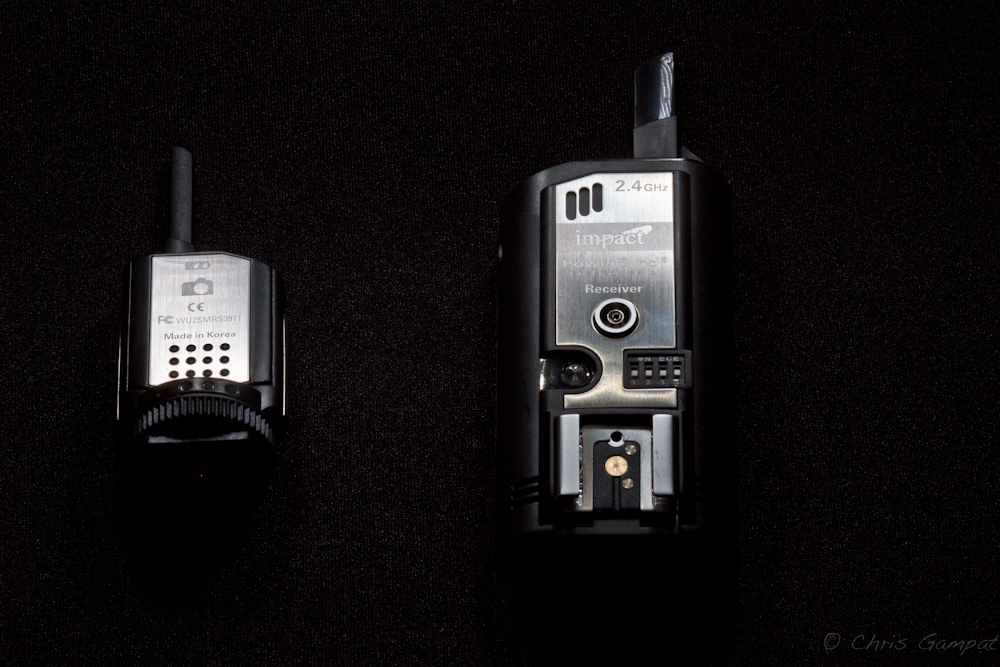
And now we come to the tanks of the review. The Impact Powersyncs are super small and extremely well built. Seriously, they have to be the best built wireless triggers on the market. However, they don’t do TTL and will only do high speed flash sync with a leaf shutter camera.
However, they’re also extremely affordable. Myself and Sander have both rated them very highly.
If you only shoot with manual flash settings and you don’t often want to do high speed flash sync, then these are for you. If you need high speed sync, make sure you have a camera with a leaf shutter.
Conclusion
At the end of the day, I can’t help but recommend the Phottix Odin TTL Wireless Triggers. Luckily, I get to keep these units. But even if I didn’t, I’d purchase them for many reasons:
– Decent build quality
– Exceptional battery life
– The best TTL metering I’ve seen (it’s like you’ve never taken the flash off the camera. And even then it sometimes meters better.)
– A price you really can’t beat: $330.00 for a Commander and Receiver at the time of writing this post. $130 for a receiver.
– Extremely easy to use.
– Very portable.
In fact, I give the Phottix Odin TTL Wireless Radio Transmitters for Canon DSLRs the Editor’s Choice award.
However, this isn’t the end of the test. There are other wireless transmitters on the horizon. And I know of two companies that will be coming out with their own wireless radio triggers soon. Stay tuned, because the photography and strobist market is about to get very interesting.
Please Support The Phoblographer
We love to bring you guys the latest and greatest news and gear related stuff. However, we can’t keep doing that unless we have your continued support. If you would like to purchase any of the items mentioned, please do so by clicking our links first and then purchasing the items as we then get a small portion of the sale to help run the website.