


Last Updated on 07/16/2026 by Chris Gampat
Nikon made history by being the first to push its cameras into space. After the success of Artemis II, it appears that Nikon’s Z9 has made another discovery that will help us understand our universe a bit better. In a photograph revealed by NASA, we have now learned that our Sun works a bit differently than we had imagined. Have a look.
The photo was shot during the Artemis II mission, in April, showcasing the eclipse. The Moon had eclipsed the Sun for an hour, which was far longer than any eclipse visible from Earth. The photo showcases the glowing F-corona (sunlight scattered off interplanetary dust) along with stars and even Saturn and Mars in the frame.
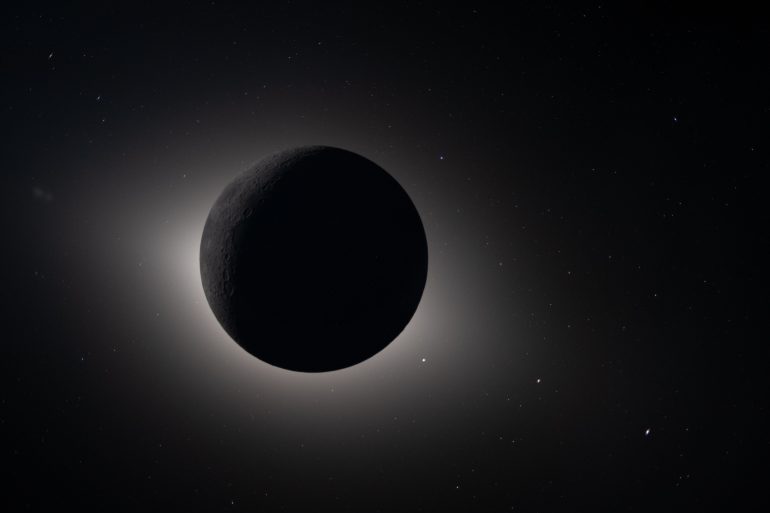
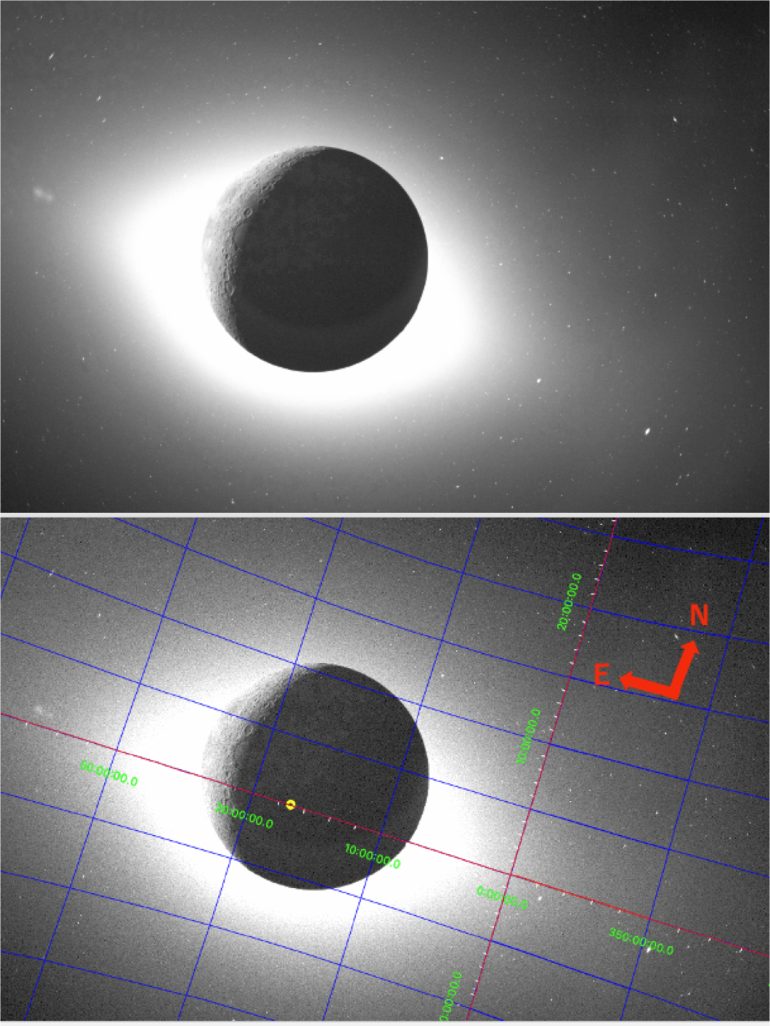
The settings showcase that the camera behind this was the Z9, along with an adapted Nikkor AF-D 35mm f2 lens, shot at f2, 2 seconds, ISO 1600, saved as an 8-bit RGB JPEG at 8256 x 5504 pixels. The article was first reported via Nikon Rumors, and published in the Astrophysical Journal Letters. It is titled “Large-scale Morphology of the Optical F-corona from a Total Solar Eclipse Observation during the Artemis II Lunar Flyby” and the researcher was conducted by Kohji Tsumura (Tokyo City University / Tohoku University) and Ko Arimatsu (National Astronomical Observatory of Japan)
The data was extracted from JPEG files by carefully correcting the camera’s gamma curve. The researchers then utilized the frame to confirm the sensor’s response was linear in non-saturated areas. Tsumura and Arimatsu aligned the photos against star positions, used the dark side of the Moon as a baseline. This masked out the Moon and bright stars, and compared brightness across the red, green, and blue channels.
As a result, the photo revealed the following:
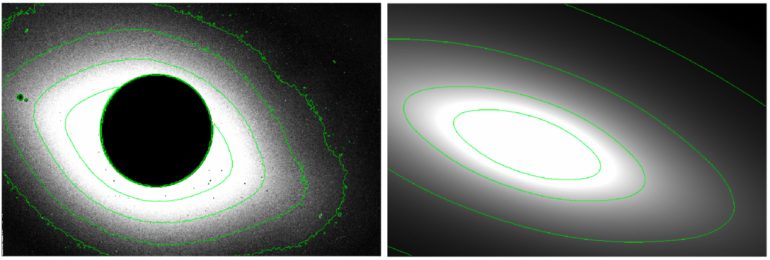
- The glow isn’t round, it’s flattened along the same plane the planets orbit in.
- It’s uneven. The north side glows a bit brighter than the south, and the west side a bit brighter than the east, which matches the angle we’re viewing the dust cloud from.
- The glow also fades faster than expected. The farther you look from the Sun, the quicker the glow dims, dropping off more steeply than earlier space measurements predicted. That points to the dust thinning out faster with distance than scientists previously thought.
- And there’s almost no real solar corona in the shot. The bright plasma streamers you’d normally see in eclipse photos are basically missing at these distances. What we’re actually looking at is sunlight bouncing off dust, not the corona itself.
An ordinary photo, shot handheld, showcases the universe in as perfect a manner as possible, without any special devices. The research is proof that casual images shot by the Artemis II crew can help us understand the dust and clouds around the sun.
Author Tsumura revealed that he was unsure how JPEG could be helpful for their research. However, it proves that consumer cameras are better than before, and amateur photos will keep turning up unexpected discoveries. In fact, Arimatsu added that the Nikon Z9 is more than a consumer camera, and such tools cn help document space better with the right calibration.
Hiroyuki Ikegami, the company’s Senior Executive Vice President and General Manager of its Imaging Business Group, called the moment a “profound honor.” He pointed out Nikon’s more than five-decade history supporting NASA missions from Apollo 15 to Artemis, while highlighting how Z9 is the best when it comes to resolution, dynamic range, and low-light performance.
It remains to be seen what researchers find in the future, but it proves that Nikon is way ahead in their camera market than most competitors.
Get rid of the ads!
Did you enjoy reading this article as much as we enjoyed writing it? There's a way to support us and our reporting, getting ad-free navigation and more as a bonus. Subscribe to us for less than a coffee per month —just $3.99— or take advantage of our yearly subscription with a hefty discount for only $25.- An ad-free experience
- A free mystery box for Lightroom or Capture One
- All the books in our store
- 20% discount on Capture One
- 30% discount on Imalume Photo Theft Protection
- 20% off Herbs and Kettle Tea Company.
- 20% off your order from MPIX printing services.
- 5% off Viltrox Products via their eCommerce store.
- 10% off all film developing, printing and scanning services from Blue Moon Camera and Machine
- 15% off 7Artisans products: The lens and accessory maker is offering a sweet discount for Phoblographer's readers.