


Given how Nikon has absolutely transformed these two cameras with each major firmware update, you might be hard-pressed to find what they can do to further improve the Nikon Z9 and Z8. However, there is at least one useful addition they could introduce that could majorly improve them. And no, it’s not something new – it’s actually a feature found in a decade-old DSLR of theirs.
An Unforgotten Legend

If you guessed the Nikon D850 is the DSLR I’m talking about, you’re spot on. Nikon’s D850 camera holds a special place in Nikon’s history. Nearly a decade after its launch, photographers still admire it greatly. Even those who’ve made the move to mirrorless Z cameras still speak highly one it. Our editor-in-chief Chris Gampat even bought one just a few months ago. One of the reasons it’s so highly regarded even today is how boldly it challenged the common compromise photographers had to deal with then. For years, professionals had to choose between high resolution for detail and cropping flexibility or high frame rates for sports and action in a DSLR. The D850 was the first Nikon camera to offer both, combining a 45-megapixel sensor with burst speeds capable of handling demanding action photography. When the camera came out, it felt like the best of everything Nikon had learned during its DSLR era. It honestly felt too good to be true. With excellent dynamic range, great high-ISO performance, and a level of responsiveness that made it suitable for both studio work and sports, it became the ultimate all-rounder camera. Even today, the D850 is arguably Nikon’s best DSLR.

My own experience with the D850 confirmed why it earned such a strong reputation. I used it to photograph a tennis tournament at night one day, and it more than held its own against my personal Nikon D4. The files from the D850 were impressive and allowed for quite some adjustments in post-processing. But it did all this despite being nearly 3 times the resolution of the D4, at a time when cameras that had anything more than 24mp resolution sensors were difficult to work with in low light. You can rightly say that the Nikon Z9 and Z8 are far more powerful and capable than the D850, but there’s one important feature the D850 has that they lack.
The D850 Is Unique For This Feature

One very useful feature of the D850 was its ability to shoot medium RAW (mRAW) and small RAW (sRAW) images. These formats gave photographers the full benefits of Nikon’s NEF RAW files while cutting down on file size, because of the drop in resolution they had. These weren’t compressed or lower quality RAW images – mRAW gave you about 25.5 megapixels while sRAW had just under 12 megapixels. This meant you could keep the flexibility of RAW editing – recovering highlights, precisely adjusting white balance, and fine-tuning exposure – without the cumbersome storage and workflow issues that came with the full-resolution 45-megapixel files back then. Is it a problem even now with faster computers and laptops? Yes, such large file sizes can fill up memory cards and SSDs much more quickly than you’d think.
This flexibility that an mRAW file can offer is a lot more crucial to pros than you might think. When dealing with challenging lighting, RAW files offer a safety net that JPEGs can’t match. Yes, there are moments when the full resolution isn’t needed, simply because it doesn’t make practical sense in such scenarios. Sports coverage, event photography, and other high-volume shoots focus on speed and efficiency. Having an option to capture a smaller RAW file allows photographers like me to maintain image quality and editing options while enjoying faster write speeds and more manageable file sizes. JPEG doesn’t always work in such scenarios, especially when the lighting is unpredictable.
Can This Come To The Nikon Z9 and Z8?

I’m quite surprised that this capability did not extend to Nikon’s mirrorless flagships, the Nikon Z9 and Z8, when they were launched. In many ways, the Z8 is a finer mirrorless version of the D850. It keeps the same resolution but adds a stacked sensor, greatly improved autofocus, more subject detection features, and an electronic shutter capable of incredible speeds. The Z9 takes this even further as Nikon’s top mirrorless model. Both cameras use Nikon’s EXPEED 7 processor, which is much more powerful than the D850’s EXPEED 5.
Can Nikon introduce this through a firmware upgrade? Given this leap in processing power, it seems possible for them to bring back mRAW and sRAW options easily this way. To be fair, Nikon has offered other solutions. Both models have efficient RAW compression formats and various JPEG size options. These options do save space, but don’t fully meet the need for smaller RAW files. There are many cases where JPEG is simply not enough. Some workflows often demand the flexibility that only RAW files can provide, but pros need faster buffer clearance and quicker card writing speeds. A medium-sized RAW file would be the ideal middle ground for all this. Action photography in challenging lighting conditions is where this would be ideal. Shooting long bursts of full-resolution RAW files can quickly fill buffers and slow down memory card writing, even with the fastest CFexpress cards. Having a medium RAW option would maintain burst performance while keeping the benefits of RAW capture.
What’s most reassuring for their users in recent years is that Nikon has shown a willingness to expand the features of its mirrorless cameras long after their launch. The Z8 and Z9 have received significant firmware updates that added entirely new features. This marks a big change from the DSLR era, when cameras rarely received major new features after launch. Because of this new approach, it’s reasonable to hope that Nikon could add mRAW and sRAW options via a firmware update. The hardware in them is clearly capable of catering to this.
Could We Also Get This, Please
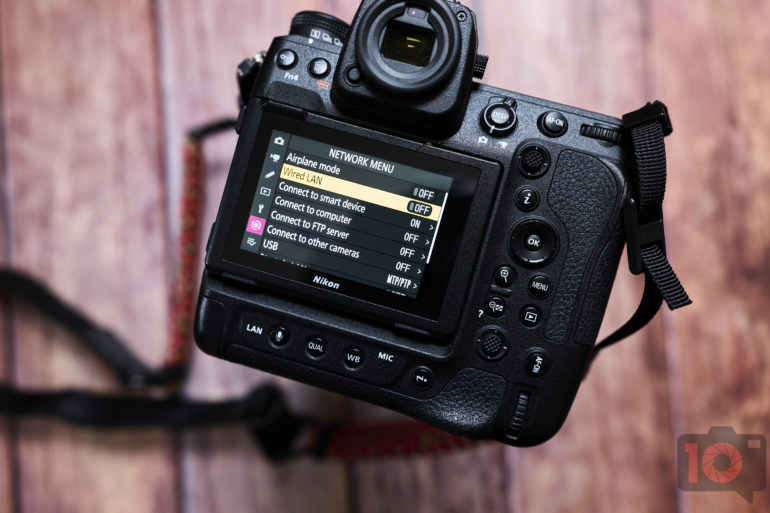
Another feature could greatly enhance usability as all Nikon mirrorless cameras continue to evolve – a menu search function. Firmware updates keep adding more features, and camera menus tend to grow more complex. Browsing through lines of settings to find a specific option, even for seasoned Nikon users like me, slows down shooting. We don’t always remember where things are. Sometimes they keep changing sub-menu positions in newer models. Often, something we expect to find in a sub-menu listing isn’t there. A simple search tool that lets users type in a keyword and quickly find a setting would make these powerful cameras even easier to use.
The Z8 and Z9 are already among the most advanced cameras Nikon has ever produced, and Nikon has been expanding their features with each major firmware release. Adding medium and small RAW options would not only honor the legacy of the D850 but also give photographers a practical tool that improves workflow efficiency without sacrificing image quality.
If Nikon truly wants the Z8 and Z9 to be the ultimate successors to its legendary DSLR, bringing back mRAW might be one of the most meaningful updates it could offer.
Get rid of the ads!
Did you enjoy reading this article as much as we enjoyed writing it? There's a way to support us and our reporting, getting ad-free navigation and more as a bonus. Subscribe to us for less than a coffee per month —just $3.99— or take advantage of our yearly subscription with a hefty discount for only $25.- An ad-free experience
- A free mystery box for Lightroom or Capture One
- All the books in our store
- 20% discount on Capture One
- 30% discount on Imalume Photo Theft Protection
- 20% off Herbs and Kettle Tea Company.
- 20% off your order from MPIX printing services.
- 5% off Viltrox Products via their eCommerce store.
- 10% off all film developing, printing and scanning services from Blue Moon Camera and Machine
- 15% off 7Artisans products: The lens and accessory maker is offering a sweet discount for Phoblographer's readers.