


The Zeiss 50mm f1.4 Otus ML is a long-awaited update to Zeiss’ Otus line, and for those of us who remember the original line of Otus lenses released for DSLRs over a decade ago, you can’t help but have high expectations for this refresh. When first introduced in 2013, the Otus line of lenses promised photographers uncompromising image quality in an exceptionally crafted housing. Today’s reiteration of the Otus ML 1.4/50 aims to deliver on those promises of old, except for the modern mirrorless cameras that professionals rely on. But a lot has changed in those 13 years since the Otus was first introduced, for starters, f1.4 aperture lenses are far more common and available at various price points, meaning there’s more competition than ever before. After spending a few weeks with Zeiss Otus ML 1.4/50, we set out to answer one question: Is this lens still worth the price of admission?
Table of Contents
The Big Picture: Zeiss 50mm f1.4 Otus ML Review Conclusions
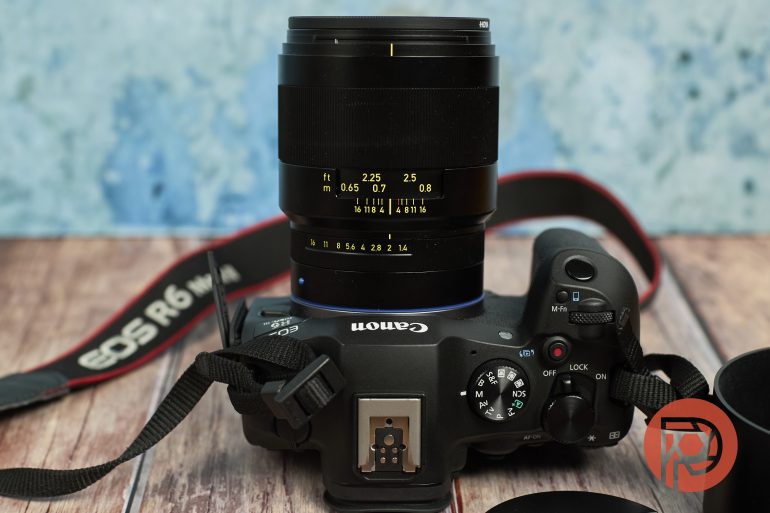
Let me just get this out of the way first: the Zeiss 50mm f1.4 Otus ML is unquestionably a professional, high-end optic with a character that can make modern cameras feel like they have soul again. This lens will pair well with higher-resolution cameras and will likely make any portraitist drool over the results they can achieve with it. But at $2500, and a spotty history of long-term repairability, it’s really hard to recommend this lens to anyone who isn’t looking for that Zeiss portrait look exclusively. Yes, this lens is built like a tank; it survived a snowstorm and freezing temps. Yes, it has character at f/1.4, and it’s at the perfect (if not a little boring) focal length for just about any kind of work. And a decade ago, this Zeiss lens would’ve been the one to beat, with few competitors even coming close to the level of image quality this lens can produce. In 2026, however, things are very different, with very capable and affordable options from Chinese manufacturers and Canon’s own autofocus fast 50mm primes; the Zeiss feels more like a luxury item than a dedicated tool. If we could see into the future and get some kind of guarantee that this lens would be repairable well into its post-purchase life, I’d score this higher, but knowing only what we know, it seems like a very risky gamble.
We’re giving the Zeiss Otus ML 1.4/50 a three out of five stars. Want to try one for yourself? Be sure to check it out on Amazon for around $2500 USD.
- Exceptional image quality
- A little boring when you stop down beyond f2.8
- Premium construction and excellent focus controls
- Weather-resistant construction was able to handle a snowstorm
- Very pricey, especially when considering the competition.
Experience
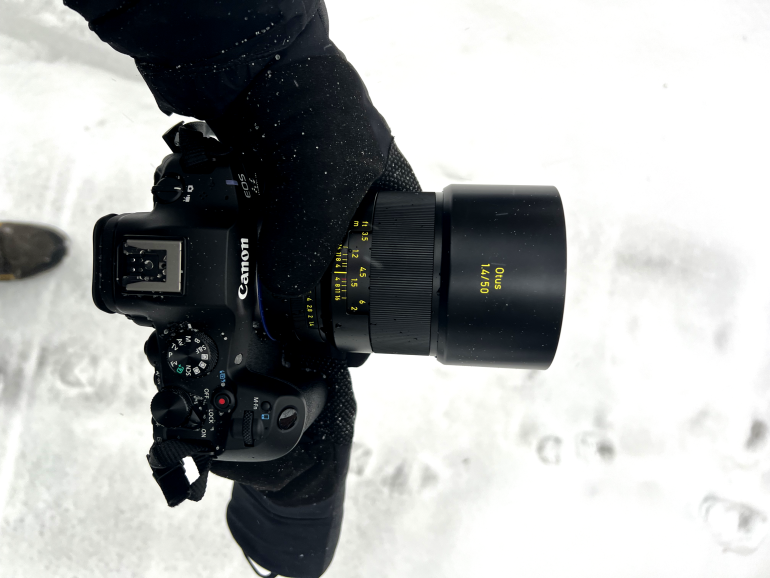
We tested the Zeiss Otus ML 1.4/50 for Canon RF with the Canon EOS R6 Mark III, Canon EOS R, the PolarPro Shortstache Shift Diopter and Center-Split Lens Filters, the Flashpoint XPLOR 100 Pro, and the Godox X3Pro Trigger. The Canon R6 Mark III and lens were on loan from LensRentals, and the Canon EOSR, PolarPro lens filters, and lighting equipment are ours.
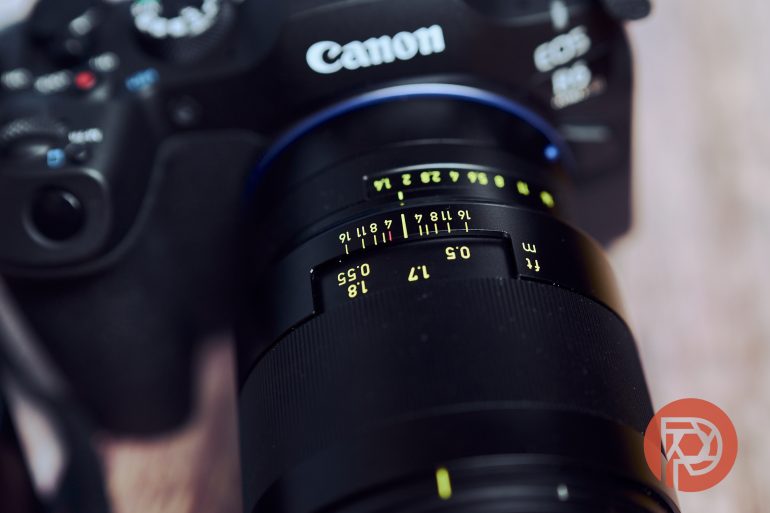
Today’s camera systems all boast about just how fast, accurate, and “intelligent” their autofocusing systems are, but what happens when you remove autofocus from the equation? The very nature of making photographs begins to change – from a run-and-gun style of photography that seems all too common on social media, to a far more intentional process. Yes, each shot will not be guaranteed – in fact, you’ll have to work for good shots most of the time, and to me, that’s a great thing. Focusing with the Otis ML 50mm f/1.4 feels intentional. Acquiring focus has a medium throw distance, giving you confidence that your focusing distances won’t jitter or be easily thrown off by slight movements around the focus ring (think setting focus, then moving your gloved hand off the lens barrel). The focus ring itself is a full-metal construction that feels premium without adding too much weight to the overall lens. The aperture ring is also full-metal and has a very muted click, which I appreciate. All in all, the Otus lens, like some of my favorite manual lenses, forces the photographer to slow down and embrace the moment they are capturing.
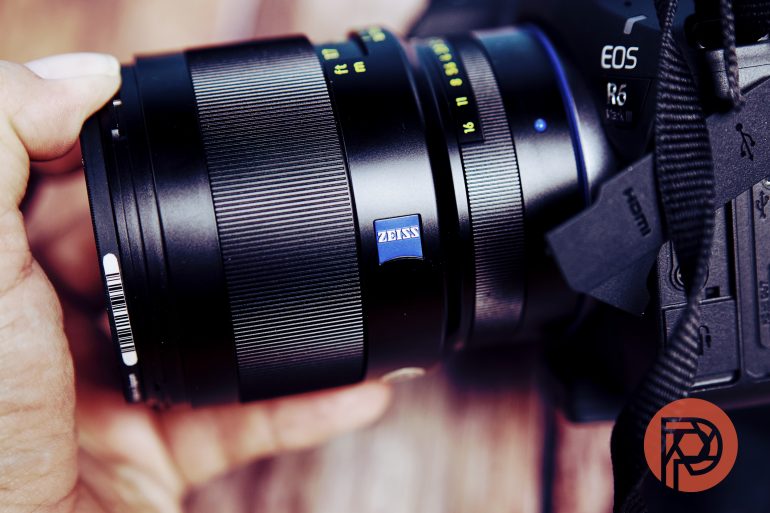
That said, the Zeiss 50mm f1.4 Otus ML isn’t perfect. The lens is still quite heavy (though lighter than the original), which might be a deal breaker for photographers looking for a carry-around lens. Additionally, the lens hood, while very sturdy, doesn’t allow you to access any lens filters while it’s on. This meant I was constantly having to choose between carrying the lens filters and using the hood. It sounds trivial, but when you’re working an event, you may not have the luxury of keeping your bag right next to you or the time to switch between the two options. When I shot the pastor’s induction ceremony this past January, I wanted to bring a couple of lens filters to create some unique images from the event, but not being familiar with the location I was shooting in, I opted for the lens hood instead – a little protection from potential bumps and something to cut down potential flaring from stage lights.
In terms of use, the Zeiss Otus 50mm ML is one of those lenses where its character really only shows up when shot wide open. I know that there’s a large contingent of photographers out there who will decry that if you buy a lens with an f1.4 aperture, you’re going to shoot at f1.4, and that’s fine, but once you stop down, the Zeiss loses a lot of the character that makes it unique. To me, that’s a shame considering how well it’s made and how good the images can be. The reality is that you can’t only shoot at your maximum aperture – it’s not only impractical but also a little lazy.
The Zeiss 50mm f1.4 Otus ML lens is the definition of an “investment lens.” At $2500 for the Canon RF-mount version, this is one of the pricier, fast 50mm primes you can buy. If you’re set on picking up an F1.4 50mm prime, Canon’s RF 50mm f1.4 L VCM can be had for $1000 less, and you can go one stop faster with the Canon RF 50mm F1.2 L USM for about the same price new (less if you’re okay with buying used – you should be). Both alternatives give you bright aperture 50mm lenses with autofocus, which really makes the Zeiss feel like adding restrictions for the sake of it.
Image Quality

As I had alluded to earlier, the Zeiss Otus ML 1.4/50 absolutely sings when shot wide open. The clarity and detail this lens can deliver with whatever Canon camera it’s paired with. Both the Canon EOS R and EOS R6 Mark III have the benefit of 30+ megapixel sensors, meaning you can eke out that much more resolution over 24-megapixel cameras, and the Otus 50mm F1.4 really makes those extra megapixels worth it. At times, I would look back at some of the images made with this lens and be in awe of how much detail it can bring out. In that sense, the Otus 50mm seems purpose-built for high-resolution cameras and pixel-peepers alike.

My biggest gripe with the Otus ML is that the lens’s soul is limited to shooting at F1.4 and F2.8. Again, for those photographers who intend to shoot only at these very large apertures, this might not be a dealbreaker at all, but it is a very high price of admission for the pleasure of doing so.
Below are some unedited images taken with the Zeiss 50mm f1.4 Otus ML:


Here are some edited images taken with the Zeiss Otus ML 1.4/50:


Zeiss 50mm f1.4 Otus ML Key Features
The following list of key features was taken from the Zeiss Otus ML 1.4/50 for Canon product page on LensRentals:
- Excellent choice for portraits
- True color rendition and micro contrast
- De-clickable aperture, manual focus only
- 260° focus throw
Declaration of Journalistic Intent
The Phoblographer is one of the last standing dedicated photography publications that speaks to both art and tech in our articles. We put declarations up front in our reviews to adhere to journalistic standards that several publications abide by. These help you understand a lot more about what we do:
- At the time of publishing this review, Zeiss isn’t running direct-sold advertising with the Phoblographer. This doesn’t affect our reviews anyway and it never has in our nearly two decades of publishing our articles. This article is in no way sponsored. None of the reviews on the Phoblographer are sponsored. That’s against FTC laws and we adhere to them just the same way that newspapers, magazines, and corporate publications do.
- Note that this isn’t necessarily our final review of the unit. It will be updated, and it’s more of an in-progress review than anything. In fact, almost all our reviews are like this.
- Lensrentals loaned the unit and accessories to the Phoblographer for review. There was no money exchange between us or their 3rd party partners and the Phoblographer for this to happen. Manufacturers trust the Phoblographer’s reviews, as they are incredibly blunt.
- Lensrentals knows that it cannot influence the site’s reviews. If we don’t like something or if we have issues with it, we’ll let our readers know.
- Lensrentals paid for shipping. At a later time, a unit will be shipped to the Phoblographer and, if they request it back, will be paying for the return shipment. This is a standard practice in the world of journalism. All travel and shooting expenses were paid for by the Phoblographer.
- The Phoblographer’s standards for reviewing products have become much stricter. After having the world’s largest database of real-world lens reviews, we choose not to review anything we don’t find innovative or unique, and in many cases, products that lack weather resistance. Unless something is very unique, we probably won’t touch it.
- At the time of publishing, the Phoblographer is the only photography publication that is a member of Adobe’s Content Authenticity Initiative. We champion human-made art and are frank with our audience. We are also the only photography publication that labels when an image is edited or not.
More can be found on our Disclaimers page.
Get rid of the ads!
Did you enjoy reading this article as much as we enjoyed writing it? There's a way to support us and our reporting, getting ad-free navigation and more as a bonus. Subscribe to us for less than a coffee per month —just $3.99— or take advantage of our yearly subscription with a hefty discount for only $25.- An ad-free experience
- A free mystery box for Lightroom or Capture One
- All the books in our store
- 20% discount on Capture One
- 30% discount on Imalume Photo Theft Protection
- 20% off Herbs and Kettle Tea Company.
- 20% off your order from MPIX printing services.
- 5% off Viltrox Products via their eCommerce store.
- 10% off all film developing, printing and scanning services from Blue Moon Camera and Machine