


Canon has always had an exceptional lens system. The company’s EF and RF ranges, for instance, offered a plethora of options. Examples such as the 85 mm f1.4, the 70-200mm f4, or the 100-400mm f5.6-8 are lenses often loved by users. It now appears the company is broadening its horizon with the development of a new tilt-shift lens. Have a look.
According to Asobinet, Canon has published patent number P2026017690, which showcases a lens resembling a 17mm f4 TS. This design seems specifically for mirrorless cameras. While Canon files many such patents every year, this one stands out because it focuses on a real, workable optical system. Moreover, such documents are relatively rare in the tilt-shift space.
The document reveals that Canon wants to create a small, light, and easy-to-handle lens without sacrificing much performance.
Example of the lens
- Focal length: 17.20
- F-number: 4.10
- Half angle of view: 51.52
- Image height: 21.64
- Total length: 146.51
- Back focus: 15.00
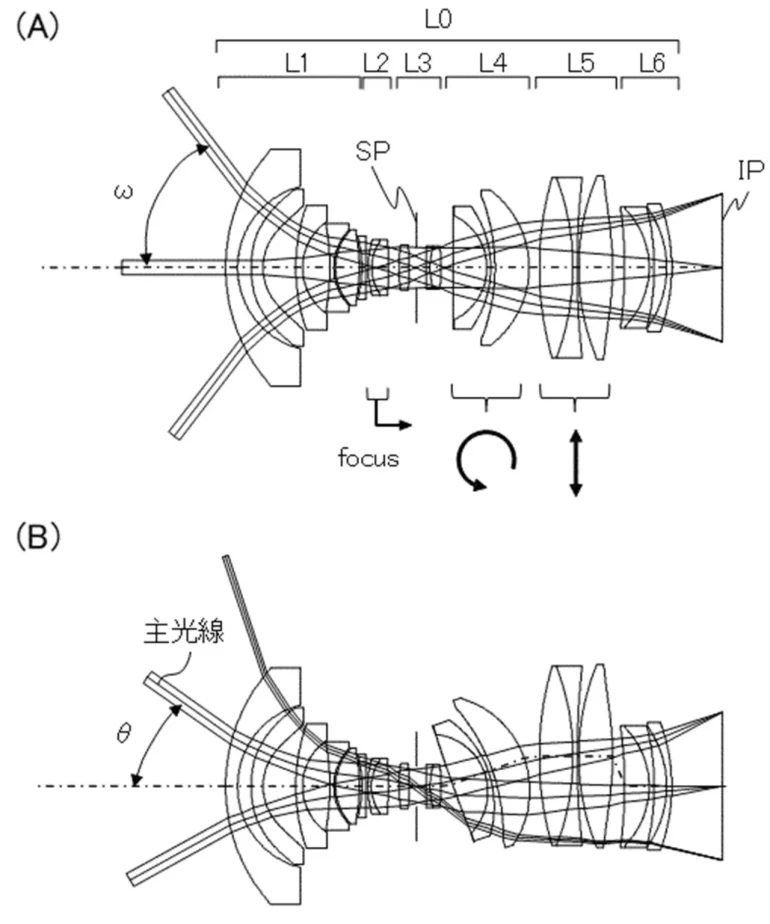
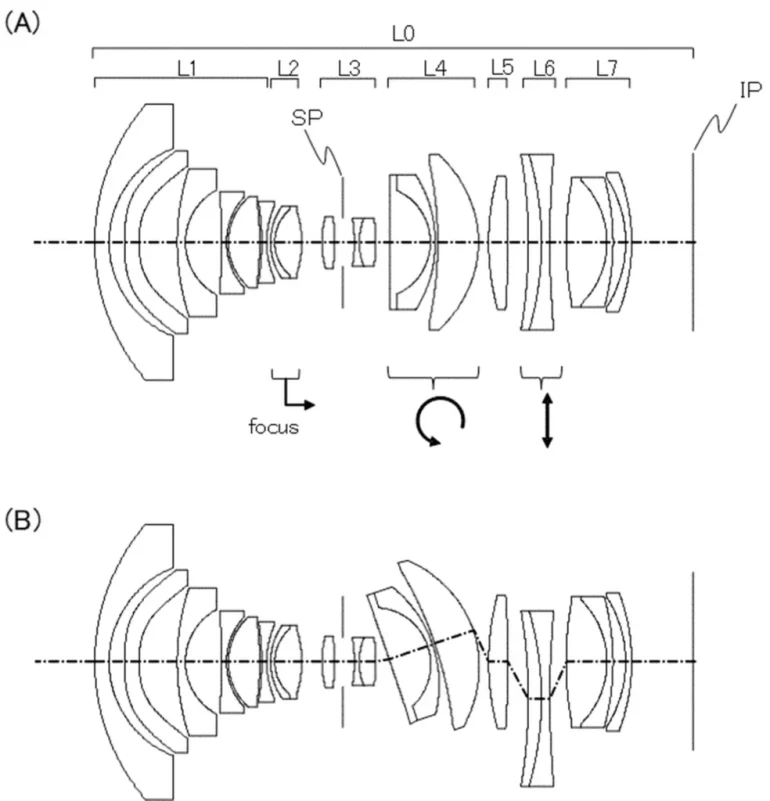
The biggest change compared to DSLR-era designs is how the tilting and the shifting take place. The TS-E series moved the front optical group, which results in bulky and complex lenses. But with mirrorless cameras, this will change, as the new patent takes advantage of the RF mount’s short flange distance.
Canon already introduced lenses such as TS-E 17mm f4L, TS-E 24mm f3.5L II, and TS-E 50mm, 90mm, and 135mm for the EF mount. The 135mm is one of our favorites. The 17mm has been quite popular amongst architecture and interior photographers, but for its manual lens. Now, RF shooters rely on adapters, which makes the setup a bit bulkier. With this patent, Canon will finally get a lens purpose-built for the mirrorless system.
Lest we forget, while Canon was being quiet on this front, third-party lens makers took over the scene. Models such as Laowa 15mm f4.5 Zero-D Shift and 20mm f4 Shift, or Samyang/Rokinon 24mm f3.5 TS have been reliable options. In fact, in our review of the 15mm, we said, “It’s mostly sharp, allows you to look at buildings and structures differently, and makes your cityscape photos look more professional by keeping all lines straight. Plus, it saves you a whole lot of time in post-production.” These lenses are fully manual, but that’s okay since all such lenses from Canon are so. However, the main difference is price: third-party lenses are far more affordable.
The third-party lenses don’t offer electronic communication, in-camera corrections, or the potential for future electronic tilt-shift control. That’s where Canon’s patent becomes especially interesting. If Canon can add electronic controls or automation to tilt-shift, it can revolutionize the lens. But the drawback remains of a possibly higher-priced lens.
If this patent is true, then architecture, real estate, and product photographers can rely on Canon’s version. One is also aware that nothing can be guaranteed, since a patent does not necessarily translate into an actual product. And with Canon introducing the fisheye lens, it seems like a matter of when.
Get rid of the ads!
Did you enjoy reading this article as much as we enjoyed writing it? There's a way to support us and our reporting, getting ad-free navigation and more as a bonus. Subscribe to us for less than a coffee per month —just $3.99— or take advantage of our yearly subscription with a hefty discount for only $25.- An ad-free experience
- A free mystery box for Lightroom or Capture One
- All the books in our store
- 20% discount on Capture One
- 30% discount on Imalume Photo Theft Protection
- 20% off Herbs and Kettle Tea Company.