


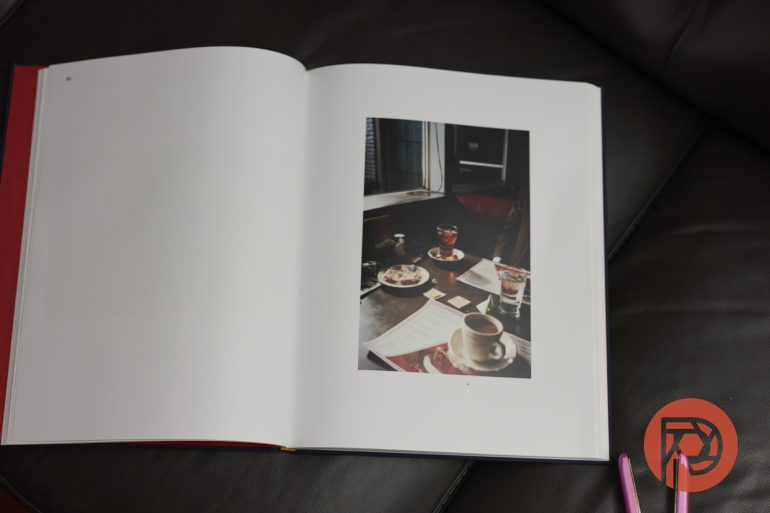
A simple scene of a soft drink on a diner table – it’s illuminated by the large window to the left of the frame. The wood veneer reminds me of a summer road trip stop on the way to Reading, PA. The glass, filled with what I imagine to be a frosty Coca-Cola with a lemon wedge on the side, seems surreal – you can see the gradient from dark brown to caramel, with a hint of red as the light dances with the drink’s bubbles. And that’s when it really hit me, this is what makes William Eggleston’s work so timeless, and ultimately so important. In the book The Last Days, we see the final images of a process that, unfortunately, has now become a relic of photography’s past. After spending a few weeks avoiding the frigid outdoors, The Last Dyes became a cozy companion and renewed my appreciation for the color of “mundane” life.
The Last of Their Kind, Literally
To truly appreciate the collection of work in The Last Dyes, you must understand how the dye-transfer process of printing photographs works. The process was first commercialized by Edward Sanger-Shepherd in the 1900s as a means for making color prints and projection slides for marketing kits. Later in the 1920s, Technicolor (yes, the same company used for color films and movies) used the dye-transfer process to improve on its colorization process. Then, in 1940, Jeannette Klute at Eastman Kodak popularized the process for use in graphic arts and printing for magazine advertisements. The process required three printing matrices from three color separation negatives made from a color transparency original. In all, it could take a skilled technician upwards of a full day to create a single print.
The effort was not lost. As each successive dyed film matrix “transfers” onto the photo-sensitive print paper, one color (cyan, magenta, and yellow) at a time, the end result is a beautiful, super-saturated image that cannot be made any other way. It is no surprise, then, that once William Eggleston discovered this process for his work, he would never print any other way again. Unfortunately, as of 1994, Kodak had stopped developing the materials needed for the process. The dyes themselves are deemed “spectrally pure,” meaning that each dye had excellent light and dark fastness – allowing for the resulting images to have a much larger color gamut than other kinds of processes. The combination of materials, dyes, and frankly, the hands of an artist like Eggleston, is what makes the dye-transfer process so magical.
Diving Into ‘The Last Dyes’
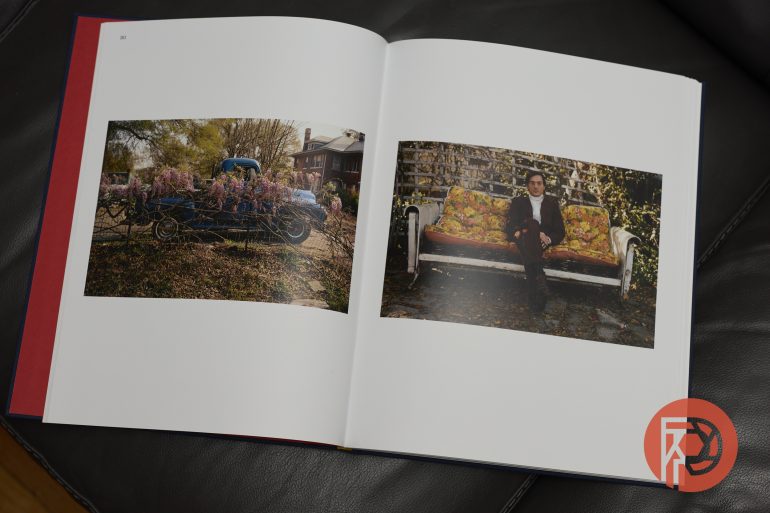
In The Last Dyes, we’re treated with a series of impossibly saturated images. It is no exaggeration to say that each subsequent page was a lesson in the power that great colors have on an image. The beauty and mystique of Eggleston’s work is in his otherwise mundane subject matter – a bale of hay on a roadside, two children sitting atop the hood of their family station wagon, a street scene of a woman smoking against a bus stop – that becomes a nearly mythical journey thanks to Eggleston’s master work as a printer.
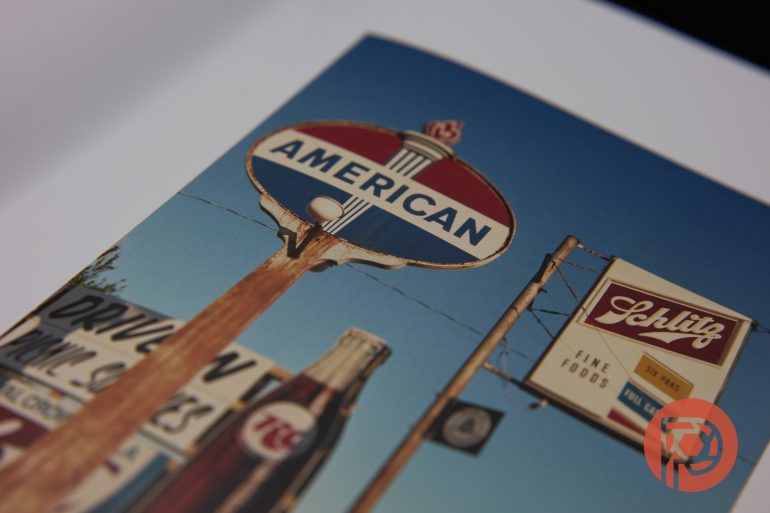
Outside of a beautifully written forward by William’s son, Winston Eggleston, with few exceptions, each image is printed on its own page without any text to distract from the composition, subject, and, of course, the color. As you turn each page, you begin to see the world come to life through Eggleston’s eyes and just how much beauty he found in everyday life. Whenever you come across a two-page spread, it’s usually to draw attention to two images that either segue into the next series of images related by subject matter or, more powerfully, by color.
Ultimately, that might be Eggleston’s biggest contribution to the history of photography. We nowadays rarely give much thought to photography exhibitions that highlight color photography. Eggleston developed his iconic, visionary style at a time when the art world considered color photography “vulgar.” And instead of being deterred by the critics, he went on to develop a style and body of work that has become a part of photography’s canon.
Since I purchased this book at the start of January, I found myself constantly coming back to it – for inspiration, for warmth, and sometimes just to thumb through it one more time. Each time, it’s felt like finding a new lost memory. Early in my journey as a photographer, I asked someone how I could improve, and their immediate answer was to buy great photo books. If you’ve ever been interested in street photography, minimalist books, or simply love artistic use of color, The Last Dyes should have a permanent spot on your coffee table.
The Last Dyes is published by David Zwirner Books and retails for $60. I purchased my copy from Greenlight Bookstore, an independent bookstore in Brooklyn, NY.
Get rid of the ads!
Did you enjoy reading this article as much as we enjoyed writing it? There's a way to support us and our reporting, getting ad-free navigation and more as a bonus. Subscribe to us for less than a coffee per month —just $3.99— or take advantage of our yearly subscription with a hefty discount for only $25.- An ad-free experience
- A free mystery box for Lightroom or Capture One
- All the books in our store
- 20% discount on Capture One
- 30% discount on Imalume Photo Theft Protection
- 20% off Herbs and Kettle Tea Company.
- 20% off your order from MPIX printing services.
- 5% off Viltrox Products via their eCommerce store.
- 10% off all film developing, printing and scanning services from Blue Moon Camera and Machine
- 15% off 7Artisans products: The lens and accessory maker is offering a sweet discount for Phoblographer's readers.
- 15% off a VSCO One subscription: Get a bunch of great tools with their all-in-one package.