

We’ve been discussing photographers who were once famous, then fell into obscurity, and today, we bring you another name that was once popular but is no longer as active: Terry Richardson. Born in 1965, Richardson has shot for popular brands and magazines, but he disappeared from the industry around the late 2000s. So, what pushed him away from the limelight?
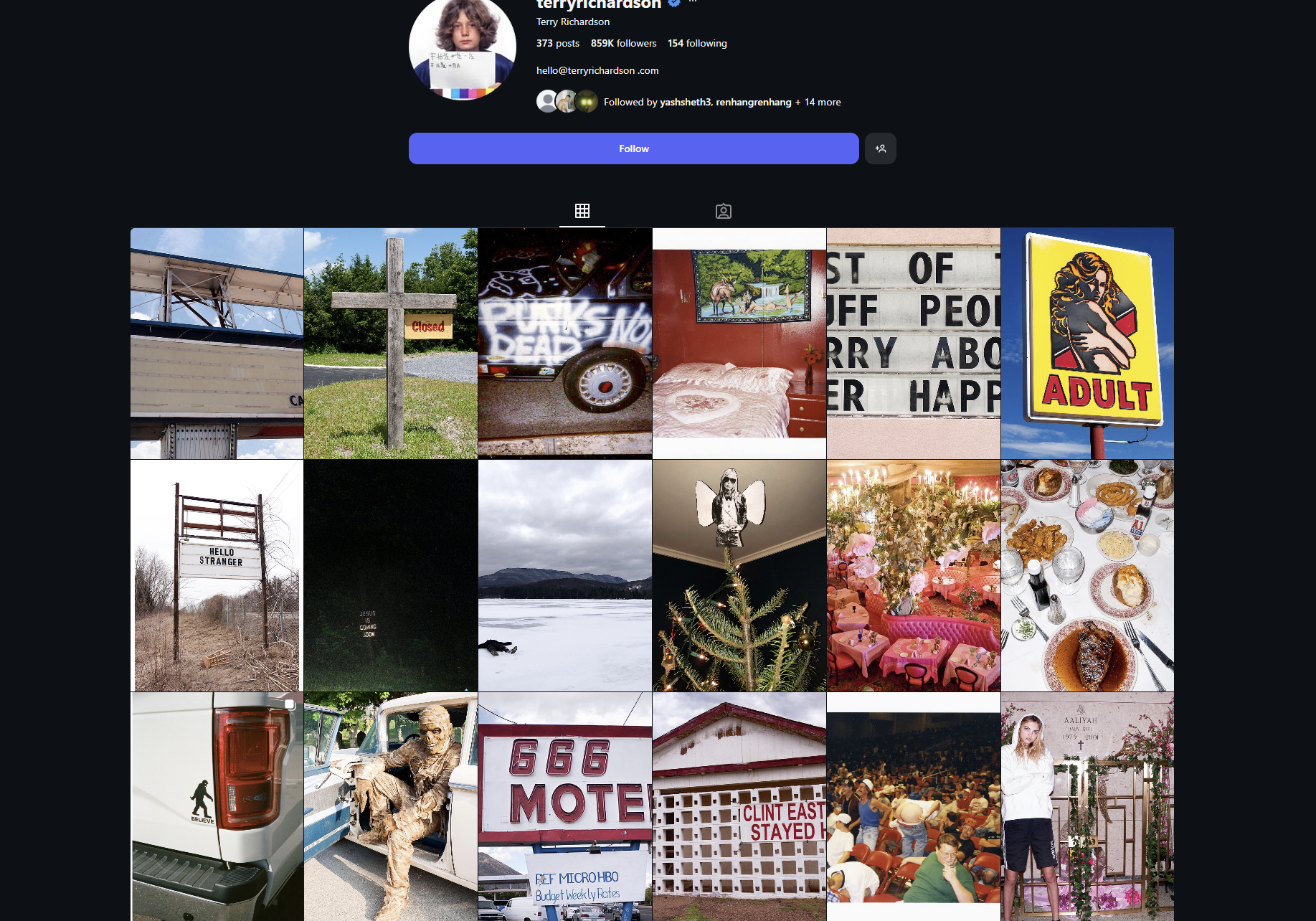
The lead image is the screenshot from Terry Richardson’s Instagram.
Terry Richardson is one of the most conversational photographers, who has shot for brands such as Arc’Angels, Yves Saint Laurent, Supreme, and Aldo. In addition, his work has also appeared in magazines such as Rolling Stone, Vogue, GQ, Vanity Fair, and Harper’s Bazaar, which further catapulted him to fame. However, despite working wth celebrities like Rihanna and Barack Obama, the photographer had to stop his projects due to the sexual misconduct allegations. Around 2010, Terry Richardson was consistently called out by models from the early 2000s, who accused him of pressuring or coercing women into sexualized scenarios on set, sometimes without clear consent.
While the photographer denied the accusation, he asserted that his explicit images were shot with consent and that he also signed releases. However, the backlash continued, and around 2017, amid the #MeToo movement, major fashion brands and magazines began to sever ties with him. Conde Nast International, the publisher of Vogue and GQ, also stopped commissioning his work and plugging his photographs from unpublished publications. Even brands such as Valentino and Bulgari chose to not hire him.
By 2018, most people in the fashion industry had distanced themselves from Terry Richardson, and his photography became inactive. Discussions from Reddit also stated that he was “unofficially blackballed” years before the formal blacklist. It was argued that his behavior was tolerated because it was enabled by the fashion world. However, his legacy and aesthetics are two aspects that continue to be discussed.
Interestingly, as of 2025, Terry Richardson has resurfaced in the public eye. His profile was covered in Arena Homme+, where his portfolio was used as a tribute to filmmaker David Lynch. Critics argue that his return overlooks past allegations and reflects the ongoing tension between artistic freedom and accountability.
Terry Richardson’s story raises questions about the fashion industry and the power that male photographers often have. Whatever his work may be, today, that still stands as a reflection of him. As one says, one can’t separate the art from the artists. Similarly, one can’t separate his behaviour from his art. So, even if he returns, one must continue to stop working with him to avoid further harm to survivors of the misconduct.
Get rid of the ads!
Did you enjoy reading this article as much as we enjoyed writing it? There's a way to support us and our reporting, getting ad-free navigation and more as a bonus. Subscribe to us for less than a coffee per month —just $3.99— or take advantage of our yearly subscription with a hefty discount for only $25.- An ad-free experience
- A free mystery box for Lightroom or Capture One
- All the books in our store
- 20% discount on Capture One
- 30% discount on Imalume Photo Theft Protection
- 20% off Herbs and Kettle Tea Company.
- 20% off your order from MPIX printing services.
- 5% off Viltrox Products via their eCommerce store.
- 10% off all film developing, printing and scanning services from Blue Moon Camera and Machine
- 15% off 7Artisans products: The lens and accessory maker is offering a sweet discount for Phoblographer's readers.