


The latter end of the year has always been the ideal time for Canon to launch its products. Last November, the company introduced the R1 and the R5 II, which raised users’ hopes for a new launch this year as well. So far, we haven’t seen any announcement from the company, and it makes us wonder whether a new camera is indeed on its way now. According to a new report, it appears that Canon is working on something, but you may have to wait until next year. Here’s a look.
According to Canon Rumors, the company is likely to announce something in Q1 of 2026, alongside a new set of lenses. At the same time, Canon has also registered a new camera with wireless capabilities, which means it is likely closer to its release date. Per the article, Canon has submitted a camera that features an IEEE 802.11ax 2×2 MIMO dual-band Wi-Fi 6 module, which is also seen in flagships such as the EOS R1 and EOS R5 Mk II.
However, if you look at the recent cameras launched by the company, such as R6 Mk III, Cinema EOS C80, and Cinema EOS C400, all of them rely on older 802.11ac (Wi-Fi 5) hardware.
So, why does Wi-Fi 6 matter so much? One reason is that it is used for flagship models and is likely far faster and more stable than other options available. This makes the camera critical for sports, wildlife, and news photographers who rely on real-time file delivery.
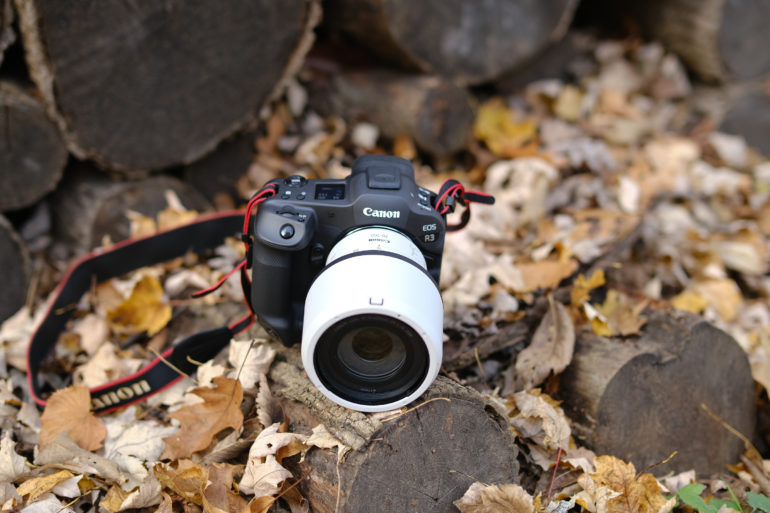
This also raises the question: What kind of camera is the company working on? One of the guesses includes the successor of R3, which was launched in 2021. It has been nearly four years, which means an updated version can be of help. However, considering models such as the R1 and the R5 II, one wonders how the R3 Mk II will position itself as a competitor.
There is also the chance that it is not a full-frame flagship, but rather an APS-C camera: The R7 II. The R7 was launched in 2022, which makes it four years old. Since there aren’t too many higher-end APS-C cameras in Canon’s portfolio, the updated R7 II can fill in that gap. Or, Canon may add another film camera to its portfolio.
There is also the talk of a global shutter camera, but it appears that Canon will reserve this for its cinema cameras. This is honestly sad, given that Sony already has the a9 III designed specifically for photographers. If Canon is able to achieve the same tech, maybe photographers will not feel the need to migrate to Sony.
We must also remember that Canon’s certification filing can take anywhere between 3 and 18 months. This means that the camera can be pushed to the end of 2026 as well. Either way, Canon’s flagship has sparked curiosity, and it remains to be seen how the company designs the device.
Get rid of the ads!
Did you enjoy reading this article as much as we enjoyed writing it? There's a way to support us and our reporting, getting ad-free navigation and more as a bonus. Subscribe to us for less than a coffee per month —just $3.99— or take advantage of our yearly subscription with a hefty discount for only $25.- An ad-free experience
- A free mystery box for Lightroom or Capture One
- All the books in our store
- 20% discount on Capture One
- 30% discount on Imalume Photo Theft Protection
- 20% off Herbs and Kettle Tea Company.
- 20% off your order from MPIX printing services.
- 5% off Viltrox Products via their eCommerce store.
- 10% off all film developing, printing and scanning services from Blue Moon Camera and Machine
- 15% off 7Artisans products: The lens and accessory maker is offering a sweet discount for Phoblographer's readers.