

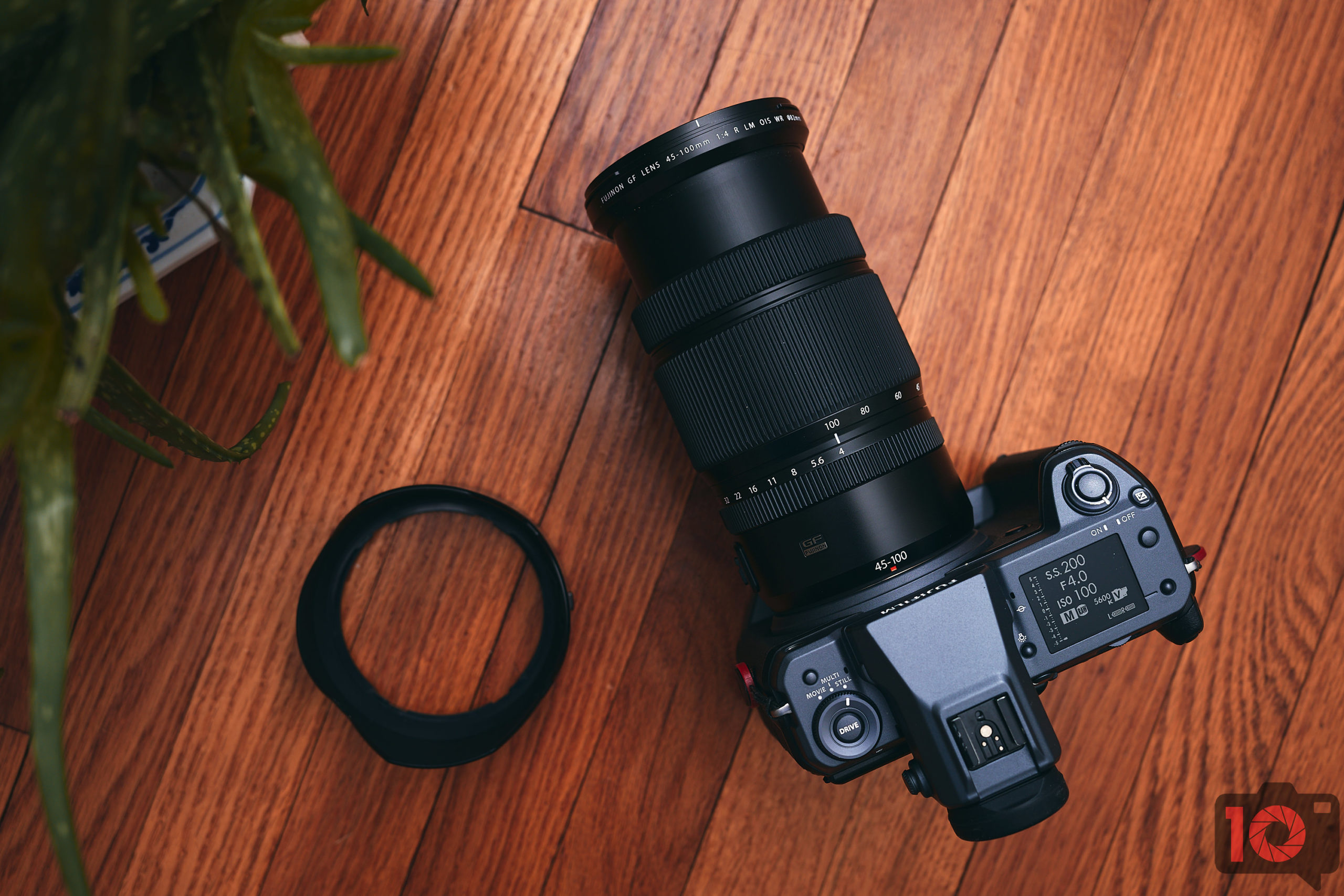
Innovations must not stop in photography. It now appears that four camera and lens manufacturers have filed for new lens patents, each of which depicts improved designs, performance, and versatility. While we must remember that patents may not turn into reality, this only goes to show how far manufacturers are ready to research and create stellar lenses. Without further ado, here are some new patents from Fujifilm, Cosina, Tamron, and Nikon.
Fujifilm Extendable Zoom Lenses
According to Asobinet, Fujifilm has published a patent (P2025018369) for a series of zoom lenses for its compact cameras. Released on February 6, the patent shows examples of three lenses: 50-135mm f2.8, 18-135mm f3.5-5.6, and 18-300mm f3.5-6.3. However, the new patent also highlights that the lens will change in size, unlike the existing XF 50-140mm f2.8 R LM OIS WR, which employs an internal zoom. The reason for this change, per the patent, is supposed to help with more flexibility when the company contracts the lens. It is also said to have a positive impact on optical quality and performance throughout the zoom range.

For those wondering how massive a zoom lens can appear on the X series, especially when it can extend out, the patent also claims that the changes will be minor. However, as we pointed out in our review of the Fujifilm XF 50-140mm f2.8, the autofocus ring was slow. So we do hope that Fujifilm works on this aspect when they are creating new telephoto lenses, and also take into considering the price tag that comes with it.
Cosina Bright Aperture Lenses
The next in line is Cosina’s patent, which was revealed on February 5, reports Asobinet. The company is currently working on two different 50mm lenses, one with an f1.4 aperture and the other with an f1.5 aperture. The designs are supposed to help with better performance and shallow depth of field effects, both of which are needed by portrait photographers. The patent also shows a complex design but also claims there will be minimal aberration, making it perfect for various genres of photographers.

While this may be a design for a new lineup, we must not forget that a 50mm lens is pretty common, especially for those with f1.2 or f1.4 apertures. It remains to be seen what Cosina does here to make its lenses stand out from competitors. However, we do hope they give the lens weather sealing and AF, as many photographers continue to depend on them.
Tamron Super Telephoto Zoom Lenses
Tamron has been doing pretty well, especially since its collaboration with Nikon. And now, with (P2025019320), it appears the company is trying to work with superzoom lenses. The patent was filed again in November 2024, with the original dating back to December 2018. Per the application, the company is aiming to offer two new lenses: 200-800mm f6.7 and 200-600mm f5.6. Both are reportedly going to be more compact and lightweight than Tamron’s existing zooms.

This does not come as a surprise as the company is keeping up with the ongoing trends. As 800mm seems to be the ideal telephoto focal length Canon, Nikon, and even Sigma are going after, why must Tamron leave it behind? The company’s longest focal length is 150-500mm f5-6.7 Di III VC VXD, which, per our review, is quite remarkable for wildlife and sports photography. We can only hope the 200-800mm, too, follows this suit.
Nikon Zoom Lens
Last but not least is Nikon’s patent (P2025019242), which was revealed on February 6. Per the report, the company is hoping to design an 85-135mm f1.8-2.8, bright aperture lens throughout the zoom range. However, at the moment, this is not for wildlife photography but to cater to the needs of portrait photographers. Some other features teased include portability, compactness, and excellent image quality. This also showcases how Nikon hopes to diversify its lens lineup to cater to the needs of mirrorless users.

Currently, Nikon has two 85m lenses (f1.2 and f1.8) and a 135mm (f1.8), all three of which are quite expensive. So, a zoom range may help those who can’t afford two lenses. But we must also remember that Nikon, or any other first-party lens maker, will charge twice the amount of what a third-party lens creator would. Then, who will purchase this focal range?
While some of the lenses could help users, we must remember that today, it is truly hard to find gear that is absolutely horrible. What we need is how these lenses can create an ecosystem where performance, innovation, and affordability can be tied together for varying photographers. Moreover, one without the other may not be entirely useful to people.
Get rid of the ads!
Did you enjoy reading this article as much as we enjoyed writing it? There's a way to support us and our reporting, getting ad-free navigation and more as a bonus. Subscribe to us for less than a coffee per month —just $3.99— or take advantage of our yearly subscription with a hefty discount for only $25.- An ad-free experience
- A free mystery box for Lightroom or Capture One
- All the books in our store
- 20% discount on Capture One
- 30% discount on Imalume Photo Theft Protection
- 20% off Herbs and Kettle Tea Company.
- 20% off your order from MPIX printing services.
- 5% off Viltrox Products via their eCommerce store.
- 10% off all film developing, printing and scanning services from Blue Moon Camera and Machine