

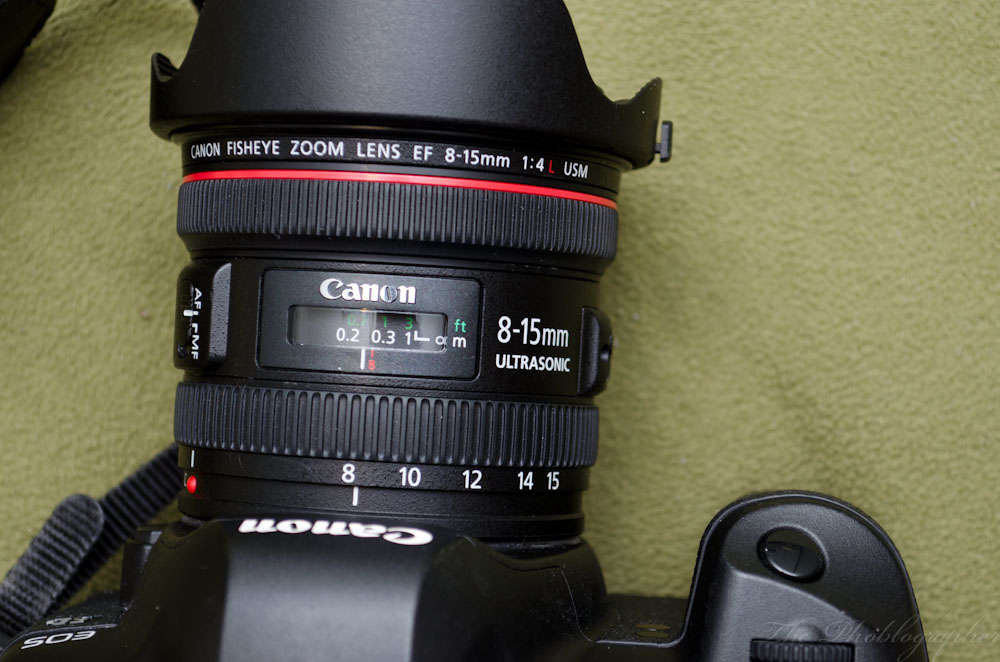
Canon is taking new flights this year. The company had a challenging release in 2024, but it appears they are keen on proving themselves to photographers. How so? They have filed a new patent that may change how we look at fisheye lenses. And if you have followed Canon’s progress when it comes to lenses, the brand truly has some innovations under its EF segment. For instance, the 8-15mm f4 EF was excellent, and so was the 50mm f1. But let’s not stray from the topic. Here’s exactly what’s brewing at Canon.
The report was first seen on Canon Rumors, which noted that the brand is working on a new approach to eliminate distortion in its fisheye lenses. The patent, which is called JP2025-12993, was filed on January 24 and reveals a new optical system that can be used with an existing lens to reduce distortion. All of this, without the overall increase in the size of the lens.
This lens system, called LC (lens group), can be inserted and removed whenever the user wants, based on their needs. The LC system, thus, when utilized, can eliminate about 10% of the distortion in the fisheye lens. Interestingly, this setup can make a fisheye function as a prime lens once the LC system is employed.
Another interesting aspect is how this system allows one to use one lens in two different ways. The design also suggests that when the LC is snapped into place, it will turn a fisheye lens into a non-distorted ultra-wide lens. So, a photographer can make creative portraits with fisheye, but by using the LC system, they can capture landscape images.
Here is a look at the patent:
- Canon RF 8-14mm f4 Fisheye LC
- As seen here, when you add the LC, the fisheye lens will become a 15mm f4 prime lens.

- Key Specs:
- Focal Length (Wide): 8.25mm
- Focal Length (With LC): 15.41mm
- F-Number: 4.12
- Lens Length: 105mm
- Back Focus Distance (With LC): 18.25mm
- Canon RF 16mm f2.8 LC
- Here, with LC, the focal length will increase to 18.69mm.

- Key Specs:
- Focal Length (Normal): 16.11mm
- Focal Length (With LC): 18.69mm
- F-Number: 2.50 (Normal), 2.90 (With LC)
- Lens Length (With LC): 88.32mm
- Back Focus Distance (With LC): 9.91mm
- Canon EF 16mm f2.8 LC
- This design seems to be based on a DSLR lens adapted for mirrorless.

- Key Specs:
- Focal Length (Normal): 17.67mm
- Focal Length (With LC): 16.71mm
- F-Number: 2.50 (Normal), 2.36 (With LC)
- Lens Length: 100.05mm
- Back Focus Distance (With LC): 9.61mm
Although the patent does not state the word “modular” anywhere, the idea of a secondary lens system does resemble what Rokinon did with its three-in-one lenses. The way they designed it, however, allowed the lens to become a 21mm f3.5, to a 28mm f3.5, and to a 32mm f2.8. So, it could be that. Or another way could be that it functions as a teleconverter, where one can change focal lengths, albeit, without no distortion. While this sounds exceptional, there is a small issue with the design. This means that the upcoming lenses could affect their sealing against dust and moisture, especially with the LC on.
Will we say this is a truly revolutionary design? Yes, it is. However, it is also impossible to wonder how this will work in a real-world scenario. Furthermore, if fisheye lenses are used particularly to get the distortion for creative freedom, then why would you want a system to remove that? Unless, of course, you do not wish to purchase a separate lens for your other needs.
One must remember that while this is interesting, there is a probability that it does not become a reality. Canon has filed hundreds of patents, but many do not materialize into actual products. However, if it does, it remains to be seen how costly or useful it can be.
Get rid of the ads!
Did you enjoy reading this article as much as we enjoyed writing it? There's a way to support us and our reporting, getting ad-free navigation and more as a bonus. Subscribe to us for less than a coffee per month —just $3.99— or take advantage of our yearly subscription with a hefty discount for only $25.- An ad-free experience
- A free mystery box for Lightroom or Capture One
- All the books in our store
- 20% discount on Capture One
- 30% discount on Imalume Photo Theft Protection
- 20% off Herbs and Kettle Tea Company.
- 20% off your order from MPIX printing services.