


In the world of Fujifilm, some exciting reports are swirling around. Two lenses are allegedly in the making, one from the company itself and another from a third-party lens maker. However, since the reports have been announced, some individuals have shared excitement, while others aren’t sure whether the new lenses are worth their time. So, what exactly is the fuss about? Let’s dive into what the talks are about.
A 27mm And a 16-55mm Are Allegedly in The Making
According to a report by Fujifilm Rumors, the company is supposed to get two new lenses. One is the new Fujinon XF 16-55mm f2.8, an update of the company’s popular lens, which was launched in 2015. Another is the new AstrHori AF 27mm f2.8 autofocus, whose images have been leaked on Chinese social media.
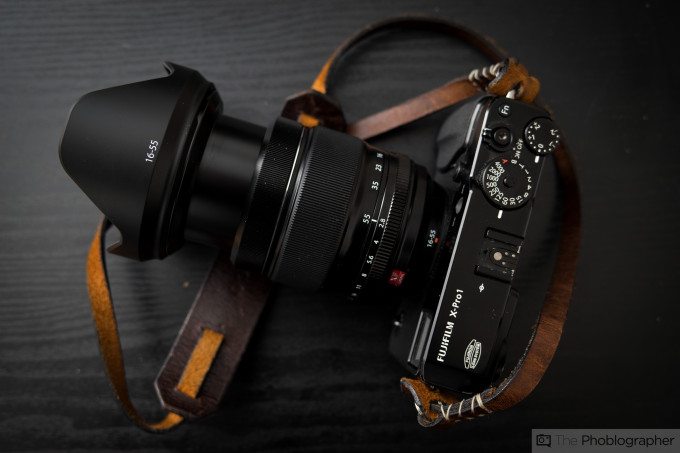
The rumor about the XF 16-55mm f2.8 is that it will be smaller and lighter (about 30%) than the original lens. Sigma already has an 18-50mm f2.8 for the Fujifilm mount. However, the new lens is likely to be better in most ways. For starters, there is hope that the XF 16-55mm will have better weather sealing and an aperture ring. Moreover, Fujifilm’s focal range is wider and longer than Sigma’s.
So far, the details revealed for AstrHori AF 27mm include that it will be an autofocus lens with a minimum focusing distance of 0.3 meters. While it has a 39mm filter size, it will lack an aperture ring. Interestingly, the report also states that AstrHori’s version is similar to the 7Artisans 27mm f/2.8 AF lens, which we reported on earlier. However, we have yet to see the specifications of both to see where either of them has a better advantage over the other.
Should Fujifilm Users be Excited?
Let’s start with the Fujifilm XF 16-55mm first. We had the fortune to review it, and in our test, we felt the lens was sharper than most prime lenses offered by the company. It had 14 weather seals and many other features, which meant the lens was the perfect companion for various shooting experiences. However, where we felt it lagged was the ergonomics. It felt huge with a small mirrorless camera, which could be a drawback for some photographers. Then, Sigma launched its version, which was smaller and lighter. However, we can’t comment on its performance, as Sigma cut us off from their list a while back.
Considering that Fujifilm is getting its popular lens back, Fujifilm users have every right to be excited. Perhaps they are looking for a smaller lens. However, a major difference between the new lens and Sigma remains the price point, which will certainly be hundreds of dollars. It depends on what photographers want: better weather sealing, optics at a higher price, or a more compact lens at a lower price.
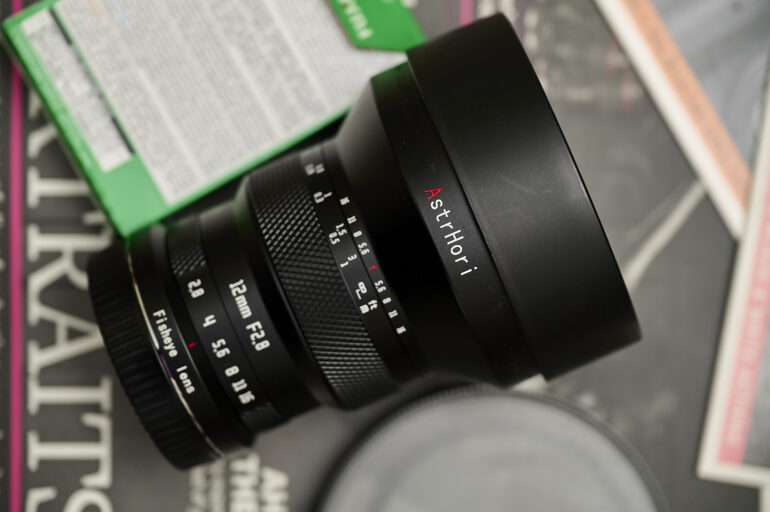
Coming to AstrHori AF 27mm, we reviewed three of their prime lenses before the 50mm f1.4 Tilt, the 12mm f2.8 Fish Eye, and the 85mm f2.8 lens. While the lenses had decent image quality for their price, we noticed other issues, such as no weather sealing, lack of autofocus, and vignetting. So, if anyone is planning to purchase a third-party lens, they must look at other options available in the market. After all, with many Chinese third-party manufacturers producing similar lenses, it takes away from the fun that made third-party lenses so exciting. Maybe I am being a pessimist here, but you have to agree that a similar iteration of a lower price is just not the way to push innovation. Photographers may simply stop returning to you. And no camera maker ever wants that.
Get rid of the ads!
Did you enjoy reading this article as much as we enjoyed writing it? There's a way to support us and our reporting, getting ad-free navigation and more as a bonus. Subscribe to us for less than a coffee per month —just $3.99— or take advantage of our yearly subscription with a hefty discount for only $25.- An ad-free experience
- A free mystery box for Lightroom or Capture One
- All the books in our store
- 20% discount on Capture One
- 30% discount on Imalume Photo Theft Protection
- 20% off Herbs and Kettle Tea Company.
- 20% off your order from MPIX printing services.
- 5% off Viltrox Products via their eCommerce store.
- 10% off all film developing, printing and scanning services from Blue Moon Camera and Machine
- 15% off 7Artisans products: The lens and accessory maker is offering a sweet discount for Phoblographer's readers.
- 15% off a VSCO One subscription: Get a bunch of great tools with their all-in-one package.