Photography has allowed many technical and artistic geniuses to test their imagination and creativity. That’s how the medium offers various ways of creating an image, both with and without a camera. Photograms and cyanotypes allow one to “make” an image without a device, showing us how the medium has grown by leaps and bounds. Similarly, the transition from analog to digital cameras opened doors for artistic expression, documentation, and the democratization of photography. But as it is with human nature, the urge to perfect an existing product gradually led to the creation of quirky Lomography and toy cameras to make the process enjoyable and light-hearted. You might think things can’t get more different, but you’d be mistaken. There are actually a few individuals who have built fully functional cameras using Lego bricks. If you don’t, just take my word for it—scroll down and see these iconic Lego cameras for yourself.
The lead image is by Cary Norton. All images are used with permission in our interviews.
Revival with Lego Bricks
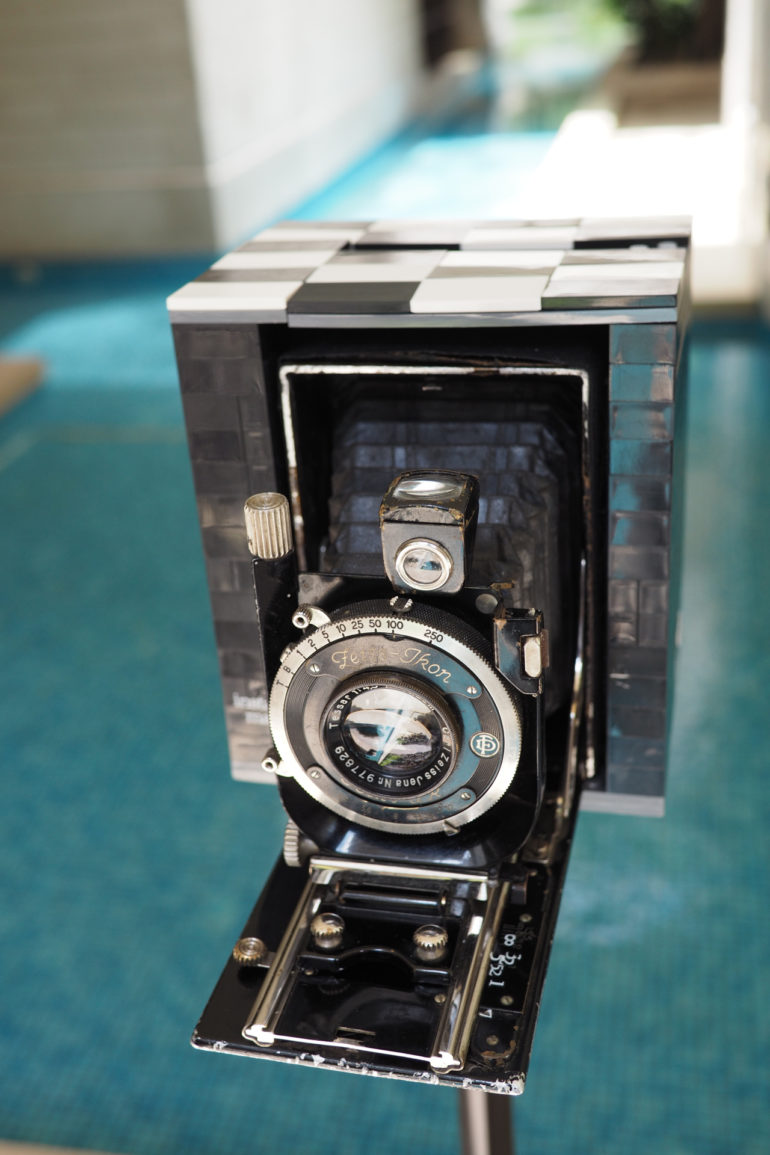
In a blog post published on Instax Magic, contributor Albertino shook the readers when he revived the 90-year-old Zeiss-Ikon Trona using Lego pieces. When asked what made him choose Lego, he said, “To build the camera from scratch, Lego is a good material as it is highly customizable.” Per his input, the camera has been modified to accept instant films. Albertino can load up to 10 Fujifilm’s Instax Mini film through its motorized back, while the design makes it easy to change pack even on the street. This exercise proved how Lego cameras can be fun and serious at the same time.
Googly-Eyed Digital Lego Camera
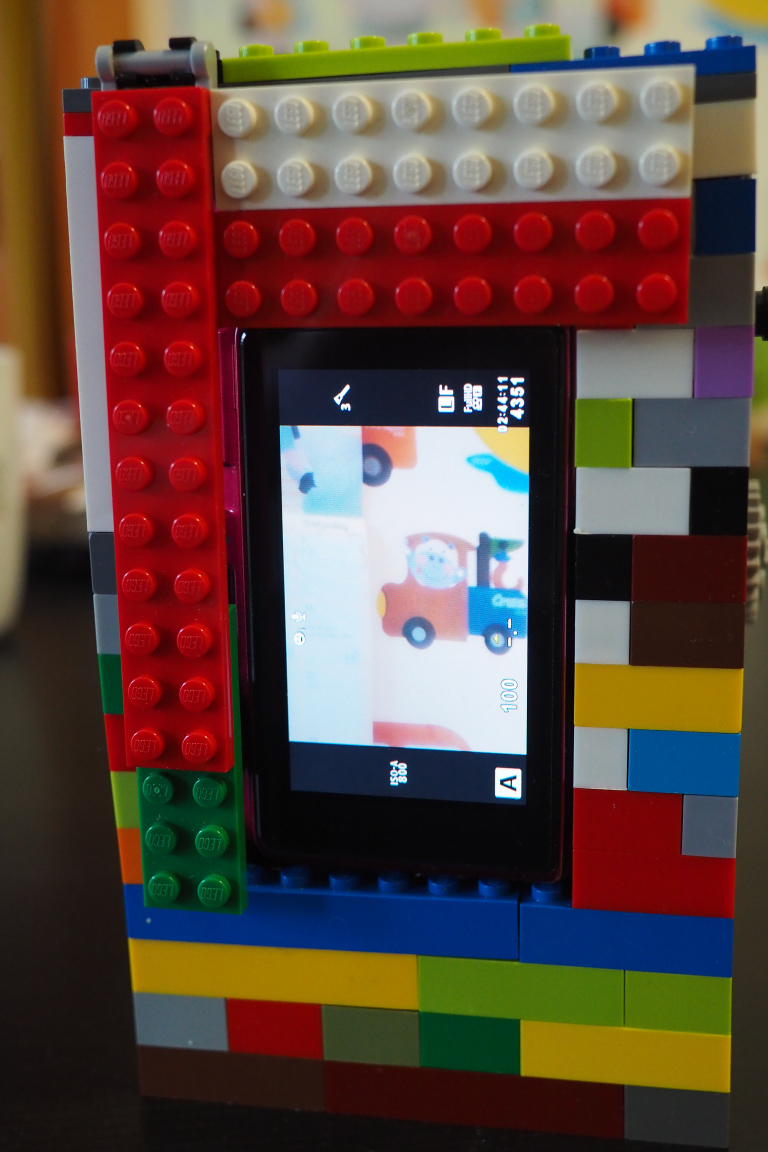
A little later, Albertino was back at it again. This time, instead of refurbishing, he wanted to build a real, digital Lego camera. The idea came to him after his young son made a camera using Lego bricks, which was identical to Albertino’s design. What next? As a caring father, Albertino took it upon himself to break down old cameras to make a new one. For instance, the device’s lens came from a broken Pentax point-and-shoot, whereas the sensor was taken from Olympus EPL3’s digital board. With some Lego Technic bricks, Albertino achieved a manual focus, and he added light seals, like his other Lego instant camera. In the end, the results he achieved were dreamy-looking images with a dash of a soft blur.
Taking Pinhole to The Next Level With Lego
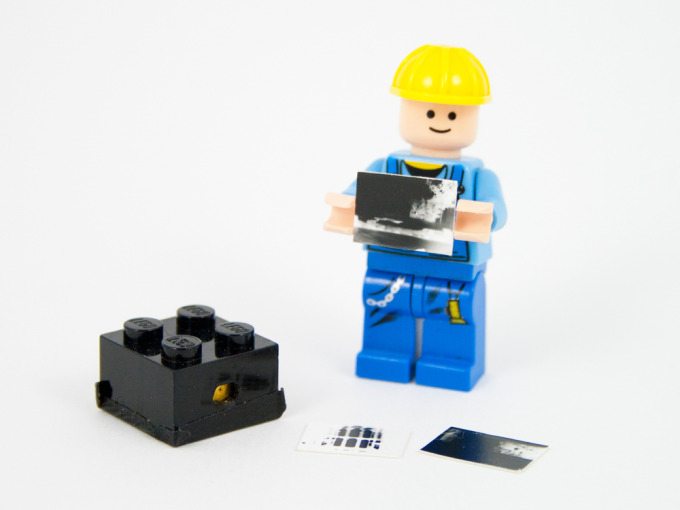
Photographer and artist Ryan Howerter achieved the impossible; he used just one brick to create a pinhole Lego camera. The device was kept inside a 2 x 2 Lego block, and it is fully functional. All one has to do is make a hole in the block and remove the middle tube with a Dremel. The pinhole camera features a small part of brass shim stock with a hole in it, which is stuck at the front of the device. Ryan will use Ilford RC paper to make images. In an interview, Ryan discussed his experience with us: “The hardest parts are loading the camera and developing the paper since it’s so tiny. The photos were about 8-15 seconds of exposure, so it just takes some trial and error to find the right balance, as with any pinhole camera.” It may be painful, but it is one of the cutest Lego cameras on the list.
Large Format Photography with Lego
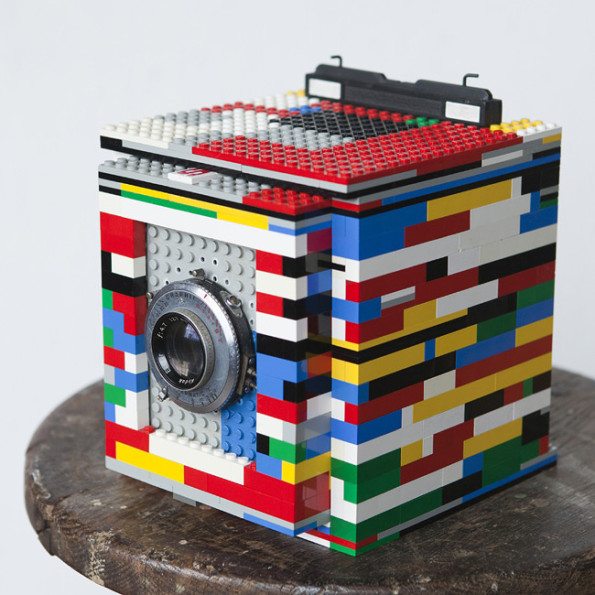
If you think our list of quirky Lego cameras hasn’t been wild, then this one will surely surprise you. Legotron Mark I is the brainchild of an Alabama-based photographer, Cary Norton. Since 2009, he has been considering making the camera, albeit without much planning. “The main thing I built around was having the rear of the camera hold a 4×5 film holder and the front of the camera holding a lens. Beyond that, I figured it was just two boxes inside of each other,” Norton told us in an interview. Once he knew how tall the opening had to be, he began to build the camera around it. The rear was rebuilt to “accept the film holder.”
After a year of dust gathering from the device due to his other commitments, Norton returned to finish it. “I hadn’t considered the focal length of the lens,” he said, adding the 127mm lens could not focus to infinity. “The film plane need to be from each other in order to focus to infinity, which also happens to be 15 studs wide, which is exactly 5-inch,” he added. Once everything was worked around, the device became functional and even had a tripod mound. The latter was created with “flat pieces of Lego stacked up, then a 1/4-inch thread piece screwed into the bottom to accept the tripod plate.” The images captured from Legotron are haunting yet beautiful.
Twin Lens Lego Camera
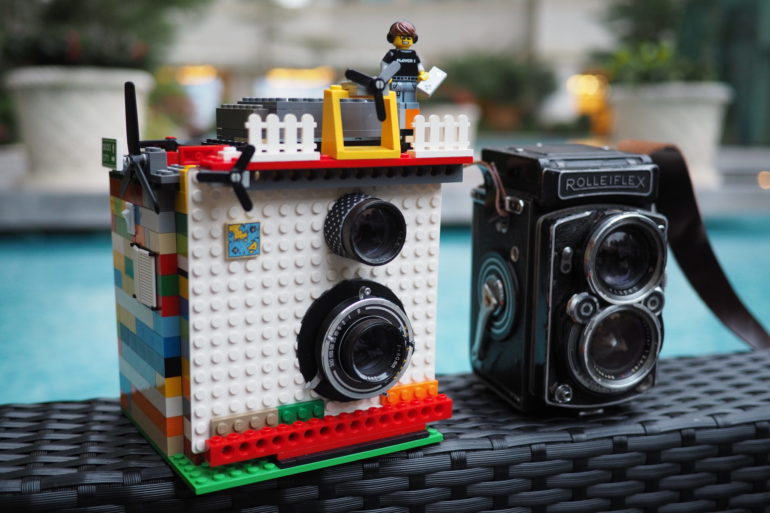
A third creation by Albertino is a Lego Instant Camera with twin lenses. In the image shared with us, it seems the creator used a Roliflex camera to achieve his vision. Albertino remarked that the lens at the top functioned as a viewfinder, whereas the one at the bottom captured breathtaking images. “The focus is achieved by pushing the front panel back and forth like the traditional twin lens camera,” he told us in an interview. Once the image is shot, the camera’s right side features a window/door to take out the film. “The picture will pop up from the top of the camera,” he added.
Medium Format Lego Camera
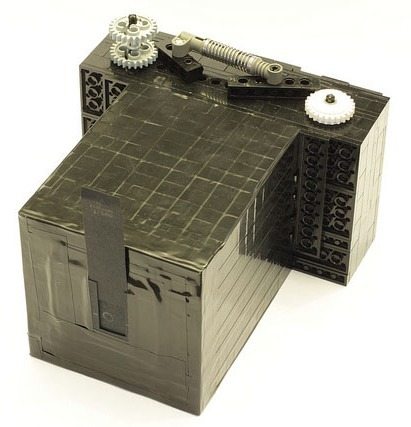
Fernando Martínez, a Flickr user, created a medium format “square” camera from Lego. This 6×6 device features a 150mm focal length and a pinhole aperture of F300. Martínez used duct tape and black cardboard to stop the light from ruining the film. There is also a gear-driven film advance mechanism.
While these are some of the best devices made using Lego, there is a whole new portal called Lego Ideas, where people pitch Lego camera concepts. You may have recently encountered Zung92, a user of this platform, whose proposal of a 35mm functioning Lego camera needs supporters. Akin to him, there are plenty of ideas for Lego camera projects on the portal. All one has to do is achieve 10,000 signatures from backers to go to the second stage of expert review. An idea can only become a commercial project once that is done.
As challenging as it may sound, the Lego Ideas project is a fantastic way to ensure creativity continues to thrive in the industry. If anyone can learn anything from the creators mentioned on our Lego cameras list, then it is never too late to follow what you believe in and explore the endless possibilities that lie before you.
Get rid of the ads!
Did you enjoy reading this article as much as we enjoyed writing it? There's a way to support us and our reporting, getting ad-free navigation and more as a bonus. Subscribe to us for less than a coffee per month —just $3.99— or take advantage of our yearly subscription with a hefty discount for only $25.- An ad-free experience
- A free mystery box for Lightroom or Capture One
- All the books in our store
- 20% discount on Capture One
- 30% discount on Imalume Photo Theft Protection
- 20% off Herbs and Kettle Tea Company.
- 20% off your order from MPIX printing services.
- 5% off Viltrox Products via their eCommerce store.
- 10% off all film developing, printing and scanning services from Blue Moon Camera and Machine
- 15% off 7Artisans products: The lens and accessory maker is offering a sweet discount for Phoblographer's readers.
- 15% off a VSCO One subscription: Get a bunch of great tools with their all-in-one package.