


Nikon has some wonderful lenses for amateurs and professionals alike. The company has introduced models such as the 40mm f2, the 35mm f1.2, and 400mm f2.8 TC, but it seems this is no longer enough. The company has recently revealed a new patent, which further proves that the Z series cameras will continue to grow their optics, and this time, with much faster lenses.
According to Asobinet, the company has published patent P2026049054, which was originally filed in February of 2023. The patent showcases optical designs for three lenses: 18mm f1.2, a 24mm f1.2, and a 35mm f1.4. Here is a look at its designs:
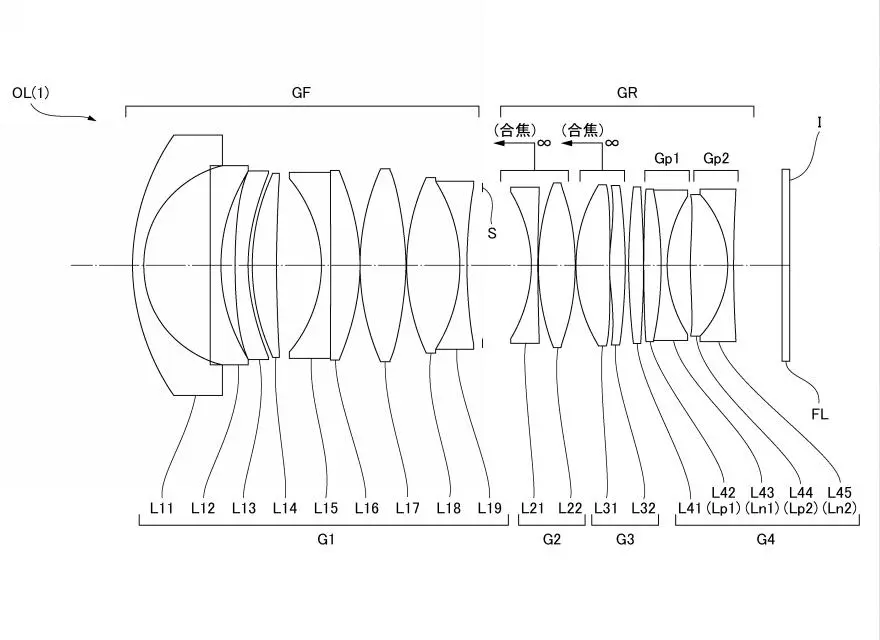
Example 1
- Focal length: 24.74
- F-number: 1.23
- Half-angle of view: 45.59
- Image height: 21.70
- Total length: 152.37
- Back focus: 12.45
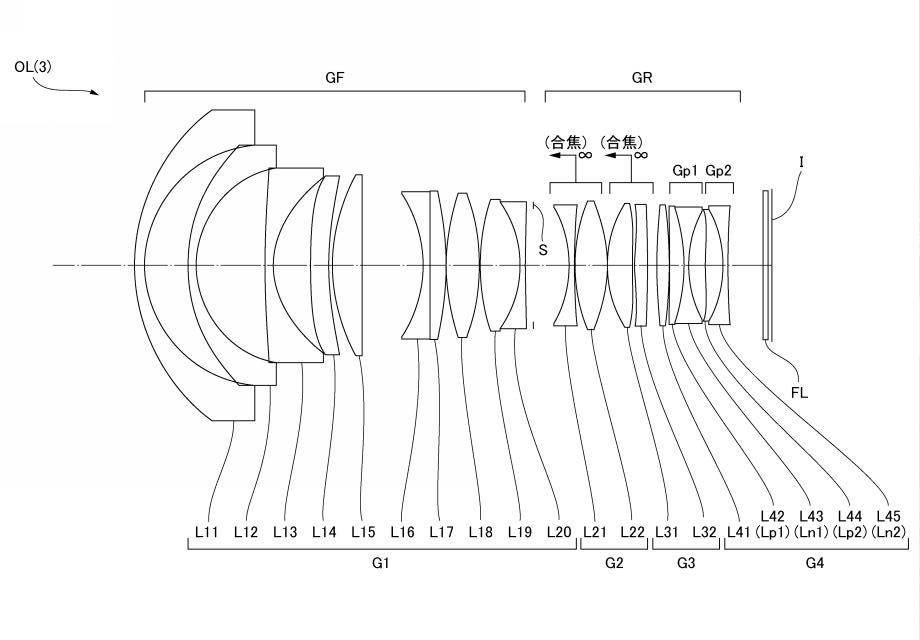
Example 2
- Focal length: 18.54
- F-number: 1.24
- Half-angle: 50.93
- Image height: 21.70
- Total length: 188.27
- Back focus: 12.45
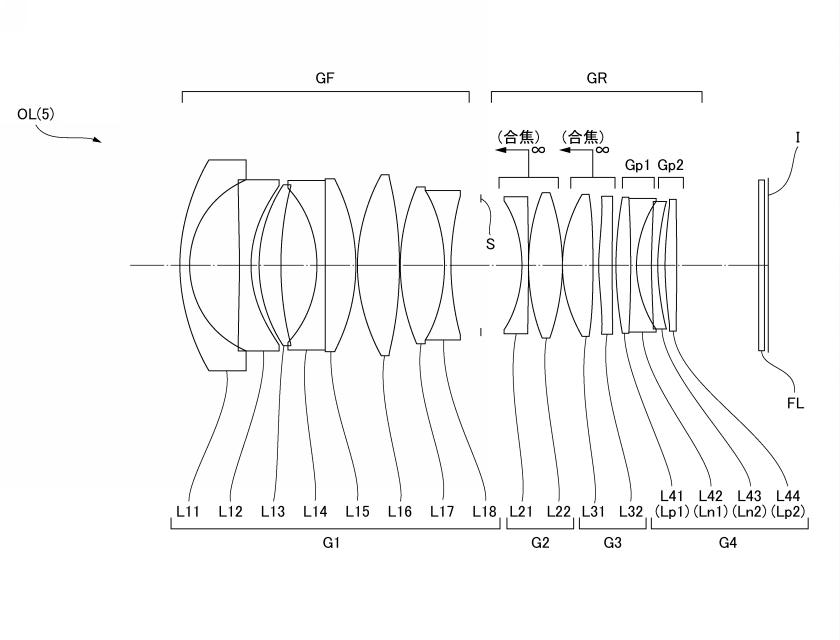
Example 3
- Focal length: 33.92
- F-number: 1.46
- Half-angle: 32.90
- Image height: 21.70
- Total length: 152.46
- Back focus: 23.23
The patent states that Nikon is trying to solve the hardest problem: to make a wide-angle, fast prime without making it a huge, heavy glass. Technically, it has always been a challenge to make an f1.2 lens without the front looking bulbous. So, we aren’t sure how the company will change that.
So far, Nikon has three 35mm lenses: f1.2, f1.4, and f1.8. The 35mm f1.2 and f1.8 are S series lenses, which means they offer the best image quality. As for the f1.4, that is just a standard version. It is uncertain whether the patent is talking about the existing 35mm f1.4, which was introduced in 2024, or a new S series lens that will cater to professions.
At the same time, Nikon offers only one prime version of the 24mm, that is, f1.8. As for the 18mm, there is no native first-party lens in the prime lens range yet. This means that the 24mm and the 18mm are two focal lengths that the company may introduce in the S series, given that they are the ones to often carry f1.2 aperture primes. The other f1.2 lenses also include the 50mm and the 85mm, both of which are S series.
The 18mm, if launched, will certainly be one of a kind. It can open up a whole new world for astrophotography, environmental portraits, architecture, and street photography. However, an 18mm f1.2 seems impossible. The other 18mm lenses we have seen are Panasonic’s f1.8, Fujifilm’s f1.4, and Laowa’s f0.95 MFT. Similarly, the 24mm f1.2 also offers a wide aperture but would also be great for low-light capabilities. Canon has already introduced the 24mm f1.4L, and so has Sony. This means it’s only Nikon that is left behind. If they introduced f1.2 instead, they would certainly be chosen by many wedding and documentary photographers.
Given the current state, we aren’t sure what the future holds. But the fact that Nikon is looking to develop more wide-angle primes at a time when people still choose zooms means the demand is not as low as we may have thought. Nikon and Canon may go toe-to-toe on the 18mm front. Which one emerges victorious remains to be seen.
Get rid of the ads!
Did you enjoy reading this article as much as we enjoyed writing it? There's a way to support us and our reporting, getting ad-free navigation and more as a bonus. Subscribe to us for less than a coffee per month —just $3.99— or take advantage of our yearly subscription with a hefty discount for only $25.- An ad-free experience
- A free mystery box for Lightroom or Capture One
- All the books in our store
- 20% discount on Capture One
- 30% discount on Imalume Photo Theft Protection
- 20% off Herbs and Kettle Tea Company.