

Last Updated on 07/24/2012 by Felix Esser
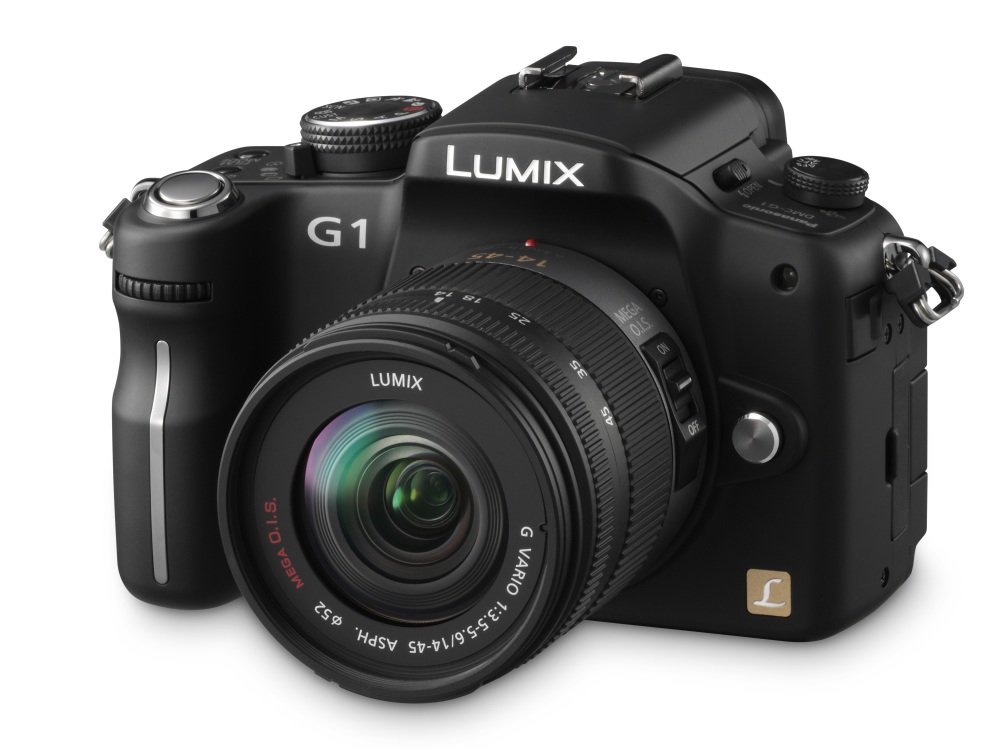
The Panasonic G1 + 14-45mm kit lens. Oldie but Goldie?
When the Panasonic G1 was introduced in late 2008, it marked the beginning of a completely new camera system called Micro Four Thirds. What set this system apart from most other interchangeable-lens systems of that time was its lack of a swing mirror and optical viewfinder, thus drastically reducing the flange-back-distance (distance from mount to sensor) and making possible a much more compact design of both camera body and lenses. When the Micro Four Thirds system was first introduced to the public, no one had any idea that in a few years from then, mirrorless electronic viewfinder systems would become serious competitors to DSLRs. Rather, it was an interesting idea that Olympus and Panasonic had conceived, but it would remain to be seen if this was more than just a neat gimmick.
Today, we know better. Mirrorless systems don’t have to prove themselves anymore—we do know now that they are as capable as their DSLR contenders, but in a much smaller and lighter package. Almost every major manufacturer has come up with a mirrorless system of their own by now. However, having been the first on the market, and being an open system with many contributors, Micro Four Thirds undoubtedly has the edge by far. With now almost twenty different camera bodies and over thirty different lenses from various manufacturers, the system is the most versatile of all compact mirrorless systems. With a history of now almost four years since the first camera of that system has been released, and with the recent advent of the system’s new flagship camera, the Olympus OM-D E-M5 (read our review here), I thought it was time to take a look back at the very beginnings, and assess whether the very first offering of the system would still be able to hold a candle to its youngest siblings.
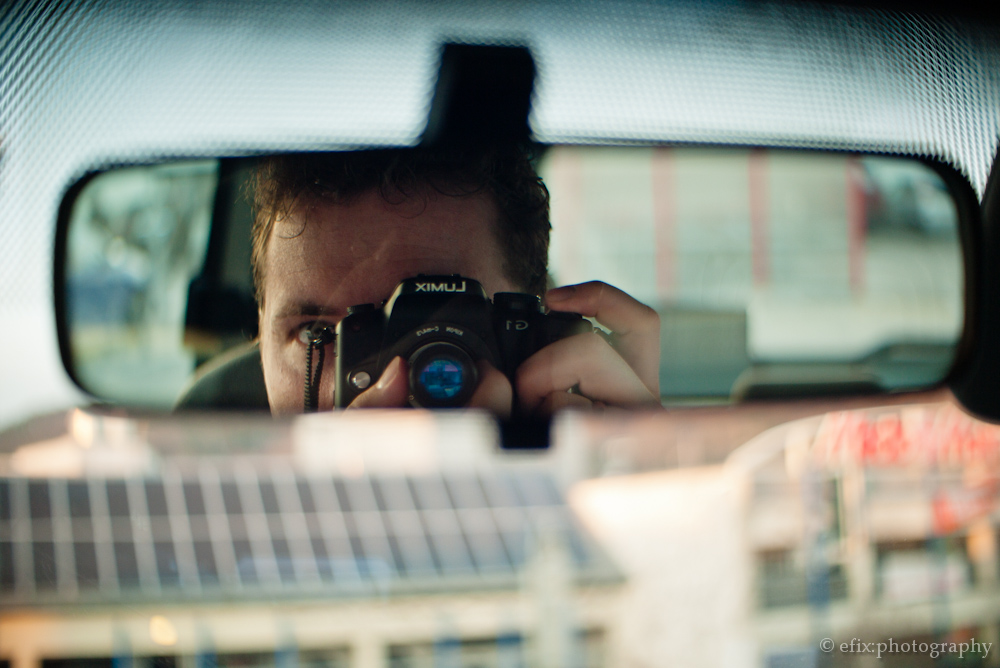
Self portrait with G1 and Pentax 25/1.4 C-mount lens in the car’s rear mirror.
Back in 2008, the G1’s specifications were pretty impressive. Twelve megapixels on a LiveMOS sensor only one quarter the size of 35mm full frame, permanent live-view with a 460k dot, 3″ tilt-and-swivel display and a 1.44m dot electronic viewfinder with 100% coverage and 0.7x magnification, quick contrast-detection multi-area AF, face detection, AF tracking, multi-area metering, shutter speeds ranging from 60 seconds to 1/4000 sec., RAW shooting, Adobe RGB support, USB 2.0 etc. etc. And a load of buttons and dials that would make even the most demanding of photographers happy. It featured SLR-style look and feel in a body the size of a bridge camera, with almost SLR-like image quality and the ease of use of a point-and-shoot. I cannot think of any other camera of that time or before it that featured so many bests of so many different worlds as the G1.
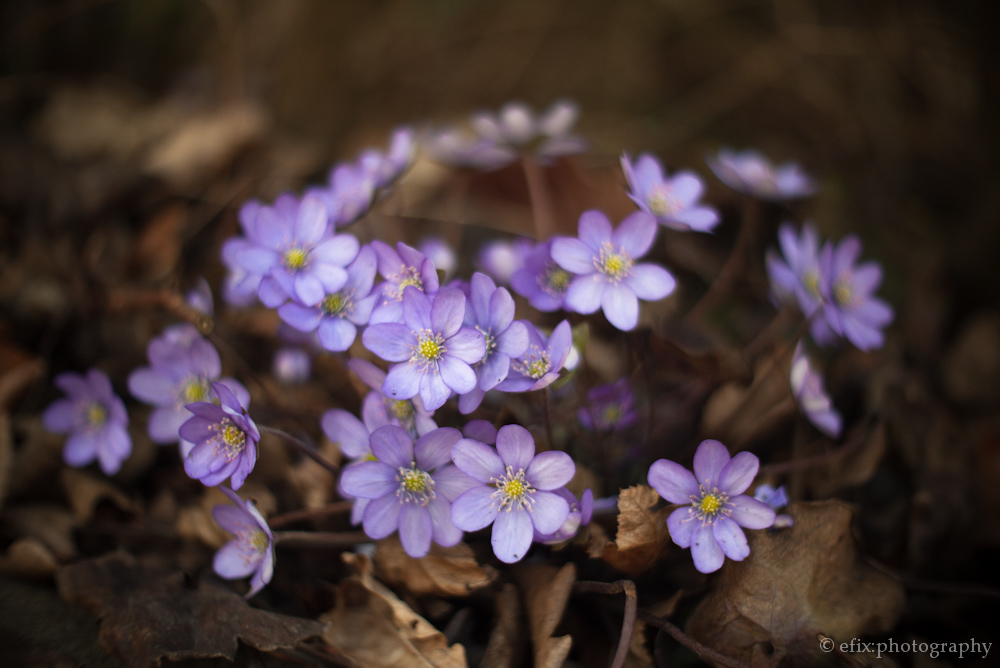
With those C-mount lenses, you can get pretty close up. Manual focusing with the 1.44m dot viewfinder is a blast.
Today, all of the G1’s features are either standard or outdated. But does that make it any less capable of a camera? No, it doesn’t. Even by today’s standards, the G1 is still a pretty good camera if you can do without the following:
- HD video recording (in fact, the G1 has no video mode at all)
- In-camera image stabilization (Panasonic’s lenses generally feature in-lens stabilization)
- Super-clean high-ISO capability
If you don’t necessarily need any of the things above, the G1 still is a superb camera. It features a good 12 megapixel sensor that delivers very good results at ISO 100 and 200, good results at ISO 400 and usable results up to ISO 1600—and honestly, our favorite RAW converters’ noise reduction algorithms get better all the time. It has a high-resolution EVF that makes manual focusing a blast, it has superb ergonomics, it’s small and light, and it takes all the latest and greatest Micro Four Thirds lenses. And in the end, that’s all that matters, isn’t it? A good camera that you can use your favorite lenses with.

The 20mm pancake is a great allround performer. I got it with my E-P1 and still love it.
My entry into the Micro Four Thirds system was the Olympus E-P1, mainly because it has a smaller form factor and in-body image stabilization. However, after tasting the G1, I now prefer it over the E-P1 in many ways. These are:
- The ergonomics. The G1 is so much nicer to hold with its pronounced grip, so much nicer to operate with every button and dial in the right place and no functions you have to work your way through endless menus to activate, and its tilt-and-swivel display that makes shooting from unconventional positions so much easier.
- The RAW image quality. The G1’s files are sharper and have more latitude for editing. They’re just so much more fun to chimp and pimp and tweak in Lightroom. The E-P1, on the other hand, is really great for JPEGs, if that’s your thing.
- The electronic viewfinder. I cannot imagine ever using a camera without viewfinder again. This is so much better. Not only because it gives you the feeling of using a proper camera. Also because it doesn’t wash out when it’s bright outside, because it resolves much higher than the E-P1’s 230k dot screen, and because it’s so much easier to focus manually, especially when adapting legacy lenses.
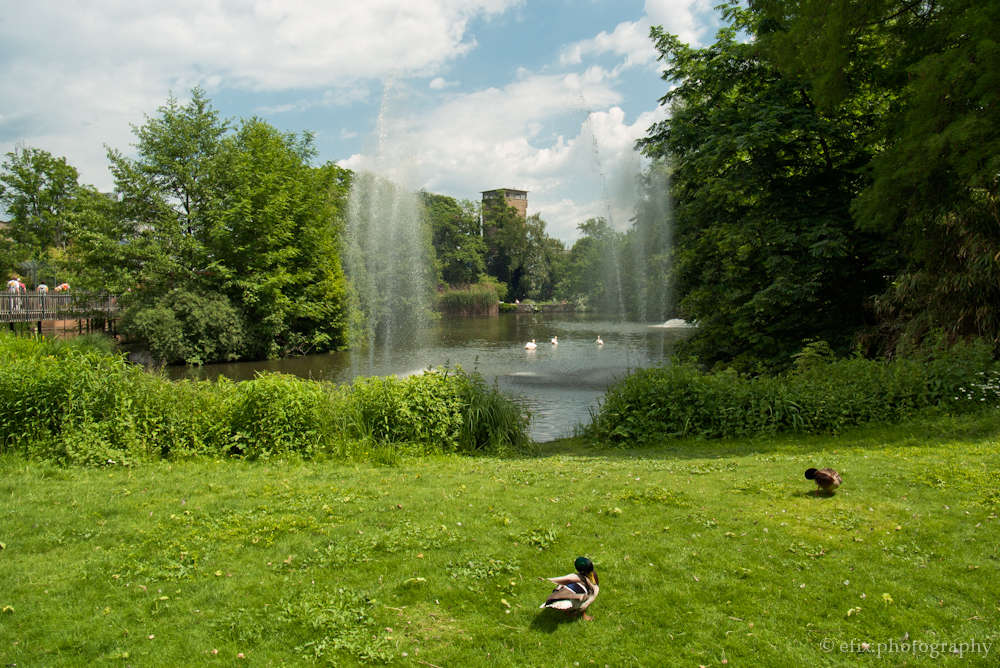
With the 12mm f/1.6 Noktor from SLR Magic. Manually focused, the skies pulled by 1 stop and the shadows pushed by one stop.
The only thing I really miss in the G1 is in-body image stabilization. However, I have to admit that so far, I haven’t had any problems with blurred images due to camera shake. When paired with a fast lens such as the Panasonic/Leica Summilux 25/1.4 or the amazing Voigtländer Nokton 17.5/0.95, you will always have a shutter speed fast enough to minimize the risk of ending up with blurred pictures. This could, however, become more of a problem with longer lenses. So it’s probably advisable to use shutter priority and crank up the ISO if necessary when using longer lenses, following the rule of using at least the reciprocal value of your lens’ focal length as shutter speed. I.e., when using a 45mm lens, choose a shutter speed of 1/45 sec. or faster. This way, the risk of blurring your pictures due to camera shake is minimized.

One of the many picturesque spots in the town I live in. Strolling through town and taking pictures with the G1 is highly satisfying.
However, even with its few shortcomings, there are a lot of neat little gimmicks that I particularly like about the G1. For one, almost every function can be set using on of the many levers, dialy and buttons on the camera. Want to switch from single AF to continuous AF or manual focus? Easy, there’s a dial to the left of the viewfinder for just that. Want to quickly switch from single exposure to continuous, bracketing or self-timer? A small lever below the mode dial makes it possible. Quick access to the basic shooting settings like image size, quality, ISO, white balance etc.? There’s a quick menu button for that. There’s a button for depth-of-field preview. There are dedicated buttons for ISO, white balance and AF field selection. I have not found a single function that I could not access directly from the camera body.
Then, there’s the quality of the RAW files. They’re sharp. Really, really sharp. At base ISO, they’re really really good. They also have some great latitude for processing, especially in the shadows. I was surprised when I first loaded the G1’s RAW output into Lightroom that the files are actually much better than those of the E-P1, even at higher ISOs. The chroma noise can easily be dealt with using Lightroom’s sophisticated noise reduction routines, and the lumincance noise has an almost film-like grain quality to it, so that I, personally, find it totally unobtrusive and tolerable. While the G1’s JPEG output is no match for the wonderful stuff Olympus’ JPEG engine can do, the RAW files are so much more fun to handle.
With good lighting, product shots are no problem with the G1.
When it comes to choosing which camera to take with me for the day, I find myself grabbing the G1 much more often than the E-P1, and even more often than the Leica M8. It’s just such a nice and compact package that is so much fun to use and gives me such great quality results that I seriously wonder if I need anything else. Despite, of course, my film cameras, which I take with me even more often than the G1 these days, but that’s another story.

Savouring those precious family moments. Which is, in the end, all that counts.
So, what’s the moral of this story? The moral is that you don’t always need the latest and greatest if you’re looking for a great camera that’s fun to use and delivers good quality. Take a good look on the older models, which can often be had for much less than their original selling price. In my case, I bought my G1 used for 100 €. Yes, that’s right. I paid 100 € for it, and it was in perfect constitution. So, think twice before you shell out those hard-earned hundreds or thousands for the latest gear. Because more often than not, what was good a couple years ago is still good, despite the fact that many current models might objectively be “better”. Think about what you really need, and only then make a decision. Yes, the E-M5 is one helluva camera. But couldn’t you also make do with a Panasonic G2, or an Olympus E-PL2? Get a good and working older body, and buy some nice lenses for the cash you saved.
Which is not to say that you shouldn’t buy the E-M5, if you feel like it. Go ahead. But please, use my affiliate links if you do so 😉
Please Support The Phoblographer
We love to bring you guys the latest and greatest news and gear related stuff. However, we can’t keep doing that unless we have your continued support. If you would like to purchase any of the items mentioned, please do so by clicking our links first and then purchasing the items as we then get a small portion of the sale to help run the website.