Learn

Help your subjects look their best

Help your subjects look their best

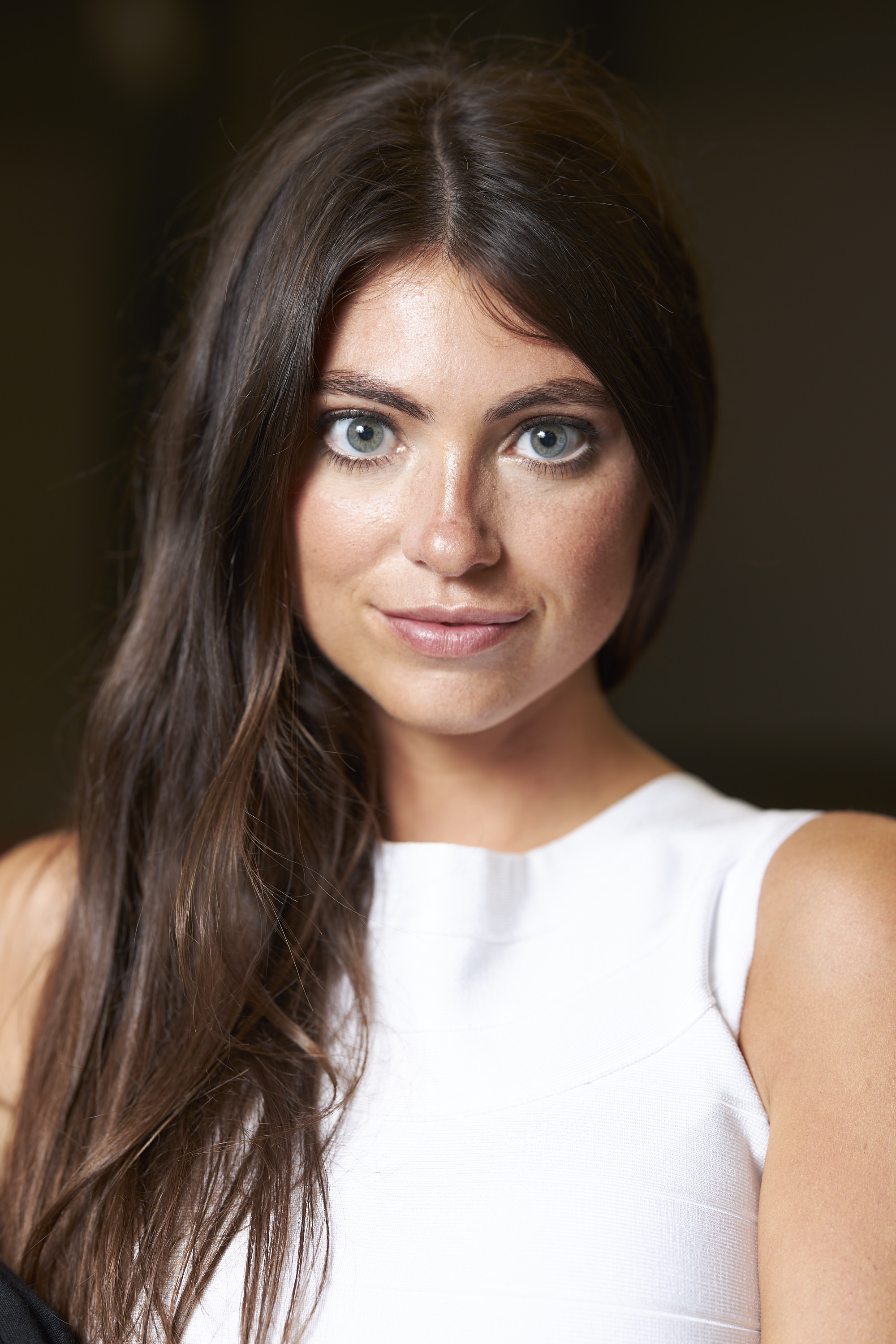
The most common question I get at the beginning of a shoot from non-professional models, especially females is “Can you make me look skinnier/prettier/younger?” They’re generally saying it in jest and are thus surprised when I answer in all seriousness “Yes, I can. It will still be you, just the best you.” How do I do that without changing what the person actually looks like? Well here are a few tricks to do just that.

[click to continue…]

{ 1 comment }

Mixed lighting photo unedited

Mixed lighting photo unedited

As a follow-up to my post on coping with mixed lighting while shooting, here is a way you can save an image where you didn’t get it right in-camera. There are many different ways of doing this that take varying amounts of time, this is just one way to do it and a pretty quick one.We’ll use this image as our test:

You can see that the majority of the image is quite yellow from the incandescent lighting at the event, but there are blue reflections in the platter from the flash as well. There are other issues but for the tutorial let’s just focus on those two obvious problems.

[click to continue…]

{ 2 comments }

Glare on table without polarizing filter

Glare on table without polarizing filter

Glare is caused by diffused reflection (as opposed to direct reflection). While there are techniques for eliminating this with proper lighting, sometimes that’s not possible. Other times the glare is on a secondary object such as a table when the primary object is already lit exactly as you want. An inexpensive addition to your kit which can solve this problem in seconds is a circular polarazing filter. A 52mm filter runs about $20 and larger ones aren’t much more. Just place one on the front of your lens and rotate it till the glare disappears, and in seconds you have a better photo.  Here are two photos, one without and one with a polarizing filter attached.

With polarizing filter

With polarizing filter

Other Uses for a Polarizing Filter

This is not the only time a polarizing filter can help your photos. It will also add color to washed out skies, reduce haze and other uses. When working in a studio keep in mind you will lose approximately one stop with this filter attached so adjust your metering accordingly. If you’re metering through the lens your camera will make that adjustment automatically.

To find out which thread your lens requires, look on it for an ø followed by a number – that’s the size filter you need. My Nikon 50mm f/1 says ø52 and my Tamron 28-75mm says ø67. Then get the right size circular polarizing filter for your lens.

Please Support The Phoblographer

We love to bring you guys the latest and greatest news and gear related stuff. However, we can’t keep doing that unless we have your continued support. If you would like to purchase any of the items mentioned, please do so by clicking our links first and then purchasing the items as we then get a small portion of the sale to help run the website.

Also, please follow us on Facebook, Flickr and Twitter.

{ 8 comments }

Kevin Kubota's Lighting Notebook

Kevin Kubota's Lighting Notebook

Being a photographer has its downsides. We work in a very fast paced, ever-changing field. We need to constantly update our style and keep on top of current trends to make sure we don’t sink into the competition sea and sink like so many before us. We do this by using several different methods, one being trying to wade through all the books and magazines to find those special ones that stick out, grab your genuine attention, and actually teach you something. I recently come across a book that does all of that: Kevin Kubota’s Lighting Notebook.

Editor’s Note: This is a guest blog posting by Travis Lawton, the Lawtographer

[click to continue…]

{ 4 comments }

Silver Bounce Umbrella

Silver Bounce Umbrella

How many of you out there are afraid of, or intimidated by off-camera lighting? Don’t be afraid to admit it; I was in that same boat when I first began too. A favorite quote that I have accepted lately, “If you’re too afraid to try for fear of failure, you’ve failed already” – Anonymous. If anyone knows where this quote came from, let me know in the comments. Okay, back to the subject. You can read an infinite amount of material on off-camera lighting. The problem is that there is almost too much information. You might fall into the trap of info overload without actually learning for yourself with experimentation and practice. My advice would be to read enough information to learn how to get your flash off the camera and then get out there and shoot.

Editor’s Note: This is a guest blog posting by Travis Lawton, the Lawtographer

[click to continue…]

{ 33 comments }

Cerri McQuillan by Sander-Martijn

Cerri McQuillan by Sander-Martijn

There are several different ways to sharpen your image in Photoshop. The best way is also the least known, which is to use a High Pass filter.  Here’s a quick tutorial on how to use it to get more finished looking images.

[click to continue…]

{ 10 comments }