PhotoShelter’s, “The Photographer’s Outook on 2013″ Provides Lots of Insight Into This Year’s Trends

by Chris Gampat on 02/01/2013

2013outlooksm

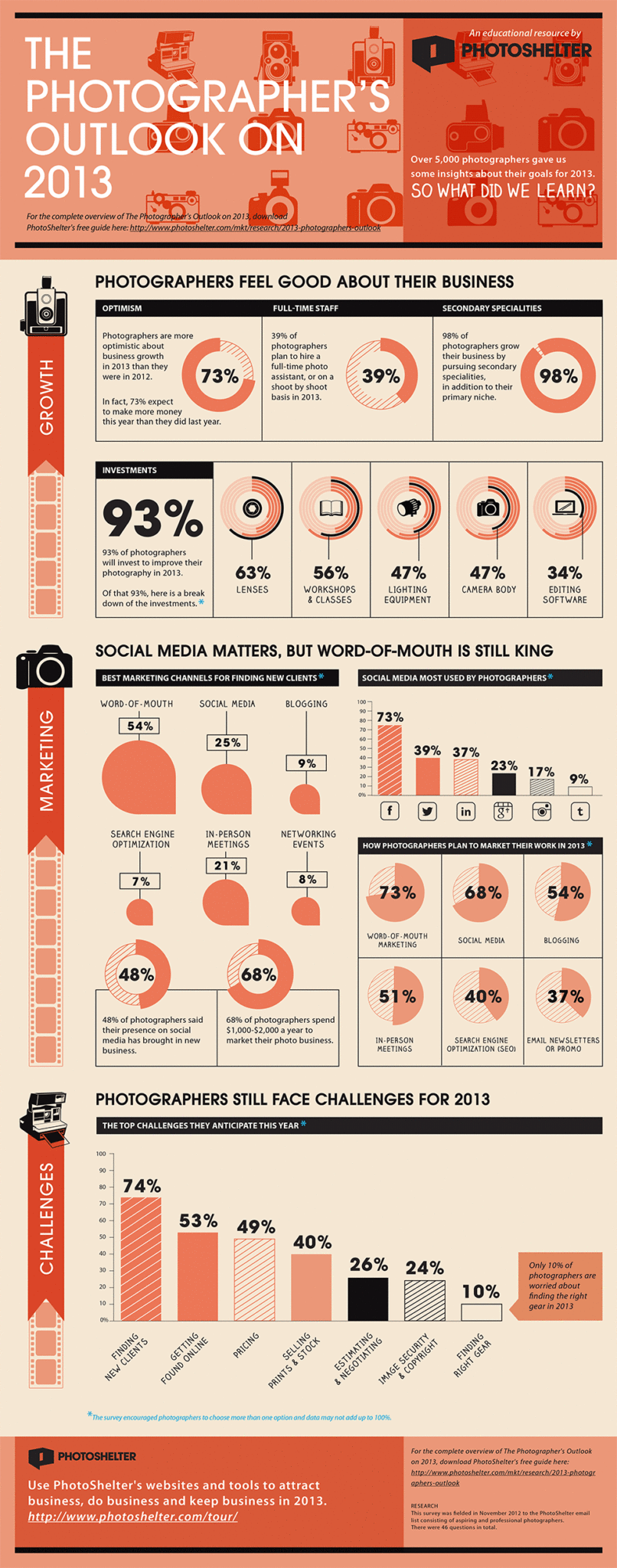
Photoshelter creates some seriously kick ass marketing tools and their content development is also really quite good. Yesterday, the company announced their new guide giving insights into how photographers are viewing 2013. They summarized it themselves in the infographic above. But to get the full details, you should really sit down and internalize the 19 pages worth of content. After some careful review and a read-through three times, here’s what I took away:

- Photographers care about marketing quite a bit

- Photographers will invest in lenses and classes. Less than half will invest in camera bodies, lights, and software.

- Finding new clients and getting found online are big problems

- Not many of them are concerned about finding the right gear (most shouldn’t be)

- Most photographers are on Facebook; Twitter not so much and even less care about Instagram.

- They want to improve their websites. Phoblographer contributor Sander-Martijn recently revamped his website quite a bit. You should check it out on an iPad and also try interacting with it there.

- 40% use the iPhone to conduct business, but many still don’t use their phones to do it.

- Many photographers still give out CDs even in these days where optical drives are becoming obsolete.

- 65% still aren’t concerned about video

This is all really interesting outlooks. When I used to work in Retail Social Media marketing, those around me would always talk about how the end of times are coming and that video and stills are going to be merging extremely soon. Personally, we still don’t totally see it–and in addition we always say that content is king and that gear comes second or third, though we understand its importance and would never recommend a knife when you need a screwdriver.

On top of this, the social media world is extremely saturated and creating new and innovative ways of marketing yourself is going to be a challenge that will require better understanding of who your clients are.

  • Pingback: Article: PhotoShelter’s, “The Photographer’s Outook on 2013″ Provides Lots of Insight Into This Year’s Trends « Howard Photography

  • Dan Wells

    I wonder about that “invest in software” question – are we talking about totally new products, or counting upgrades as well. I’m almost sure that 95%+ of professional photographers will make a substantial payment to Adobe this year, for example… Everybody already owns Photoshop, but they are trying to change the upgrade policy to make sure we either have to buy every upgrade or rent it as Creative Cloud. I’d find an entirely new package of any substantial price unlikely to gain large numbers of followers – the closest thing to an exception might be Capture One, which is collecting users from among Fuji camera owners (still a small number, but an increasing collection of pros seem to own a Fuji along with various other cameras).

  • Mark Pinder

    This figure of 73% of photographers feeling more optimistic and expect to earn more money intrigues me. I would be interested in knowing more about the demographic spread of the sample of those that responded to the survey. From where I stand as a professional photographer with 26 years experience in the UK industry, things look incredibly bleak, and i am most certainly not alone in this.

    Whereas once, the business could provide a good income, comparable with many other middle class professionals, the same cannot be said today. Clients that pay decent money are shrinking, traditional media and their web iterations have been hollowed out, and the profession is being populated by those that will work for very little or nothing in the vain hope off courting favour from a market that is more than happy to exploit this almost bottomless resource for cheap labour, whilst rarely delivering on the promises of ‘jam tomorrow’. I can only assume that this 73% is largely made up of this demographic, as it’s not a figure that most older hands in the industry recognise? It is interesting that a figure of 98% is attributed to the percentage of respondents pursuing ‘secondary specialities to grow their niche’. I suspect a lot of that may be shelf stacking or burger flipping.

Previous post:

Next post: