

Last Updated on 06/14/2012 by Chris Gampat
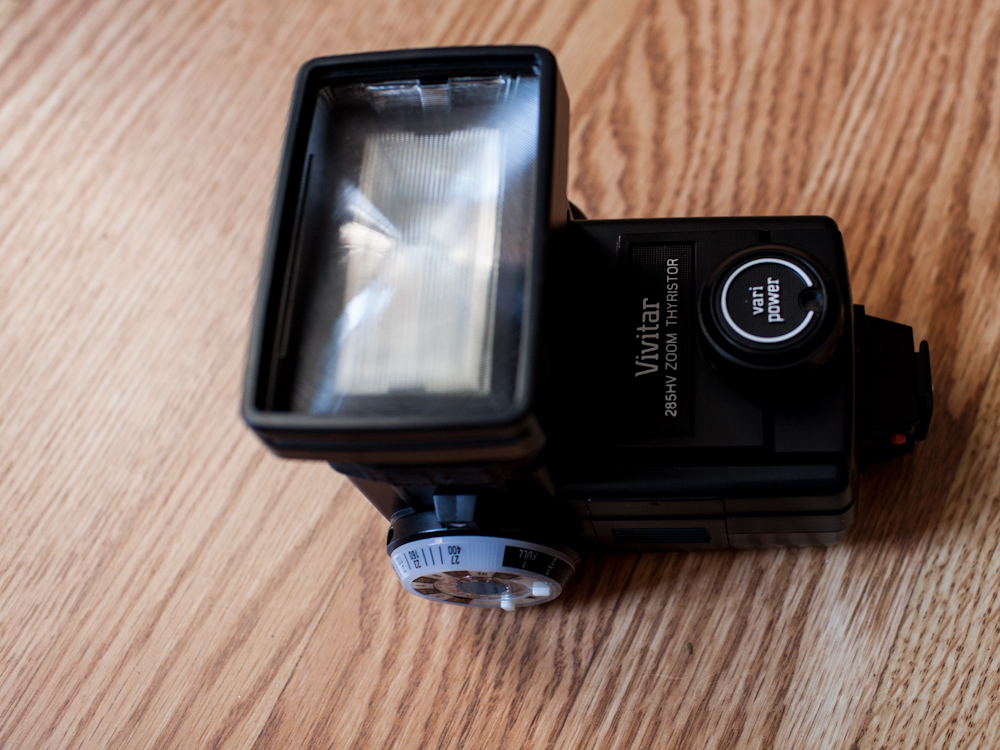
The Vivitar brand name has often been maligned with products that aren’t the highest of quality, or with those random film camera commercials you see targeted towards older, less tech savvy folk. However, for many years (and even still today) there are many that use one flash in particular: the Vivitar 285HV. As a full manual flash, it is also perhaps one of the best and easiest to use manual flashes available considering it’s very analog functionality.
Tech Specs
All information taken from the B&H Photo Video Listing
| Mount | Shoe |
| Guide No. | 120′ (36.58 m) ISO100 at 50 mm position |
| Angle of Coverage | 70° – 27° |
| Vari-Power | 1/1 – 1/16 |
| TTL Dedication | No |
| Bounce Head | Yes |
| Swivel Head | None |
| Coverage | 28 mm – 105 mm (Full frame) |
| Zoom Head | Full frame: 28 mm – 105 mm |
| Off Camera Terminal | PC |
| Recycle Time | Approximately 4.8 seconds – 10.4 |
| Power Source | 4x AA Alkaline Batteries |
| Dimensions (WxHxD) | 4.0 x 5.2 x 4.2″ / 10.16 x 13.21 x 10.67 cm |
| Weight | 14.9 oz / 422 g |
Build Quality
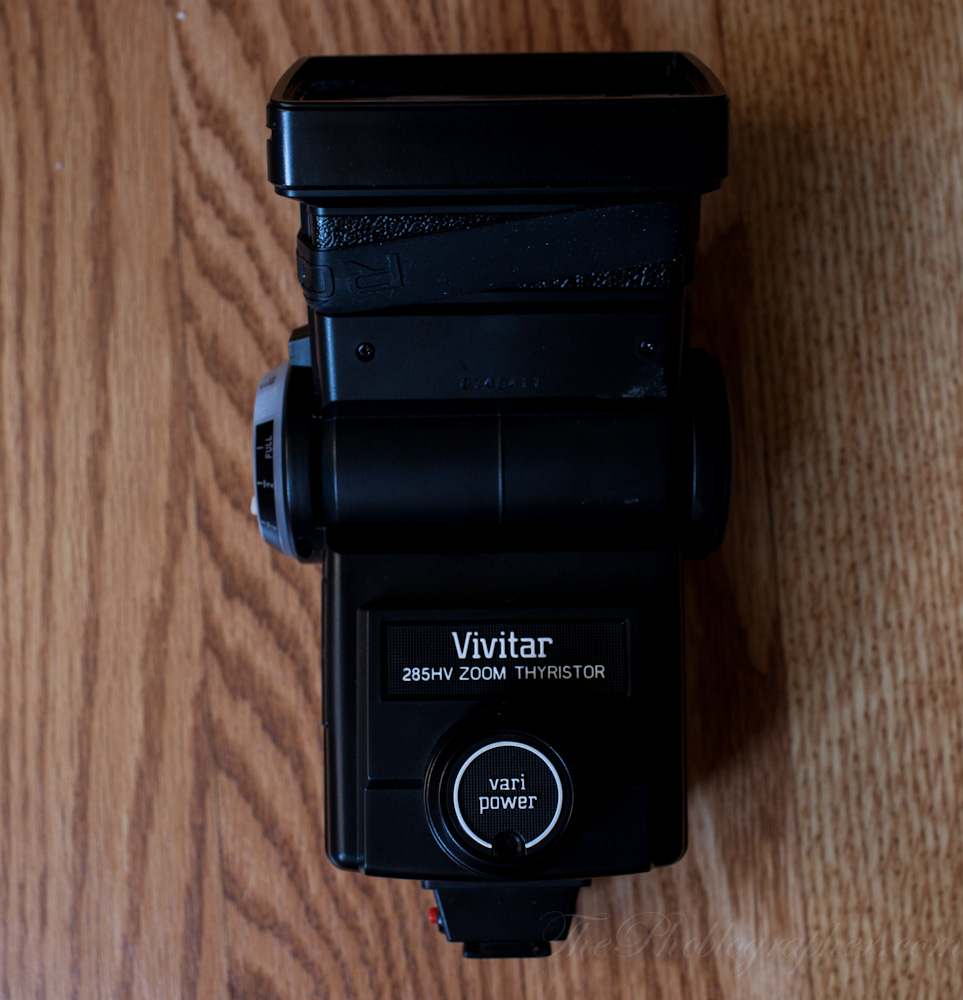
The first thing that you’ll notice about the Vivitar 285HV is that the build quality is really quite good. It feels extremely solid in the hand and there is almost no doubt in my mind that it could survive quite a bit of hell. Though my Canon 580 EX II has survived a 6 foot fall with need for repair, I wasn’t exactly willing to put the Vivitar through the same punishment.
On the front of the flash is a variable power adjustor.
It is color coded and also has full manual output control.
Yellow delivers the weakest flash output: which is great for when you’re shooting wide open or at a higher ISO
Red is a bit more powerful
Blue is even more powerful
Purple is very powerful
Then there is an M mode for full power, which I’ve never used. Beyond this there is 1/2 power, 1/4 power, and 1/16th.
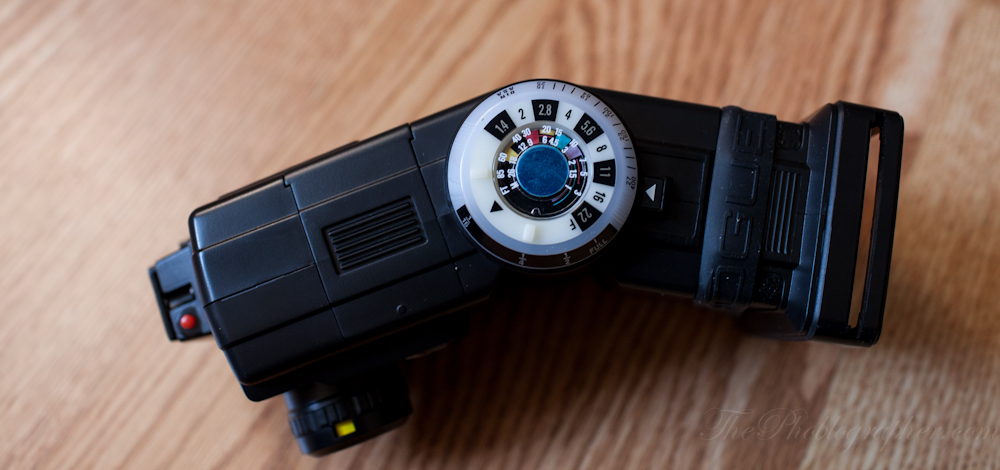
On the side of the flash is a chart that will help you to determine what flash output you’ll need.
Here’s how this works: First, realize that there are two rings: an outer ring to control the ISO settings on the side and an inner ring that controls your aperture. One again, these actually control nothing with the flash, it only helps you to adjust your settings easier.
Let’s say that you’re shooting with a lens that opens up to F1.4 and you’ll be at ISO 400. First, turn the outer dial to ISO 400. Then, turn the inner dial so that f1.4 is lined up with the first color, which is yellow. At f1.4 and at ISO 400, you can set the flash power setting on the front of the flash to yellow. If you’re stopping down to f2.8, then you’ll need to switch to red (as shown in the graph above.)
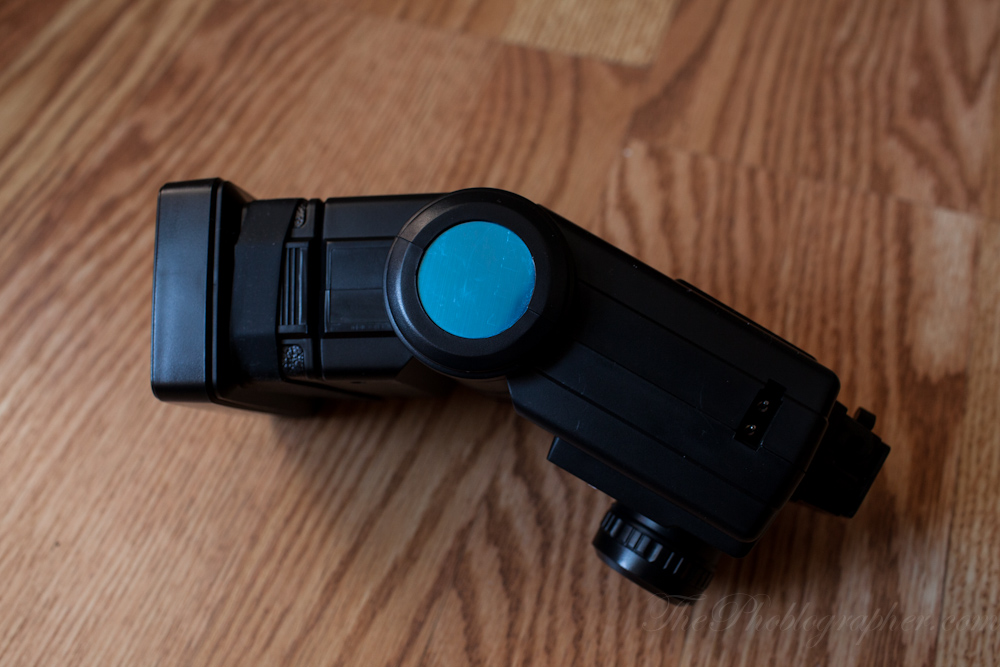
On the other side of the flash is really just a plain surface with a slot for you to incorporate a battery pack.
The head is also expandable to a wide, normal or telephoto position.
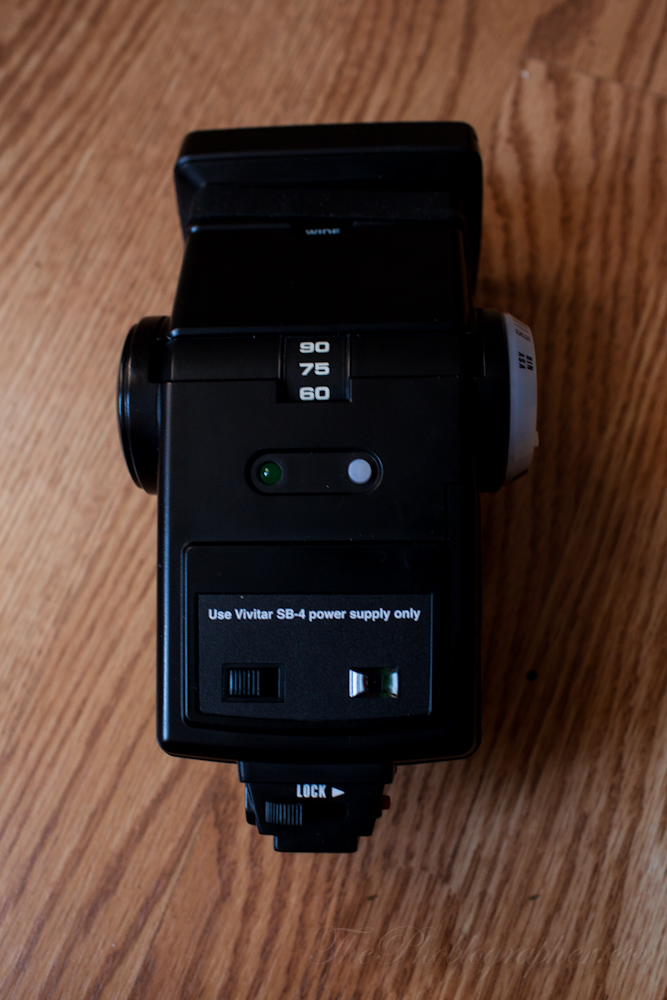
The back of the camera is characterized by a couple of lights and switches that add to the functionality.
Ease of Use
I never really had much of a problem using the flash, but it did take a little bit of time to totally understand the color coding and dials. However, the manual does a fairly good job of explaining it once you have a bit of patience.
I used the flash almost religiously for three weeks and found that it really only works when you bounce off of a surface. With that said, it can only point forward, upward and in between. It cannot swivel around like other speedlights and speedlites. That essentially always means that you’ll be pointing your flash towards the ceiling.
Then I thought about using it with wireless triggers. I own two Phottix Odins, and the flash was easily able to be set off with the Odins, but was obviously not controllable because it is not a Canon flash.
I also used it on a film camera, and it is wonderful to know that when the camera is set to aperture priority, all that you’ll ever have to worry about setting is your aperture and the dial on this flash.
Conclusions
In the end, I recommend the Vivitar 285HV for any photographer looking to learn the basics of camera flashes and that will want a powerful and well built flash for their needs. My only major peeve with it was that it ate through my Duracell rechargable batteries too fast, but not my Pearstone or Enloop.
Please Support The Phoblographer
We love to bring you guys the latest and greatest news and gear related stuff. However, we can’t keep doing that unless we have your continued support. If you would like to purchase any of the items mentioned, please do so by clicking our links first and then purchasing the items as we then get a small portion of the sale to help run the website.