

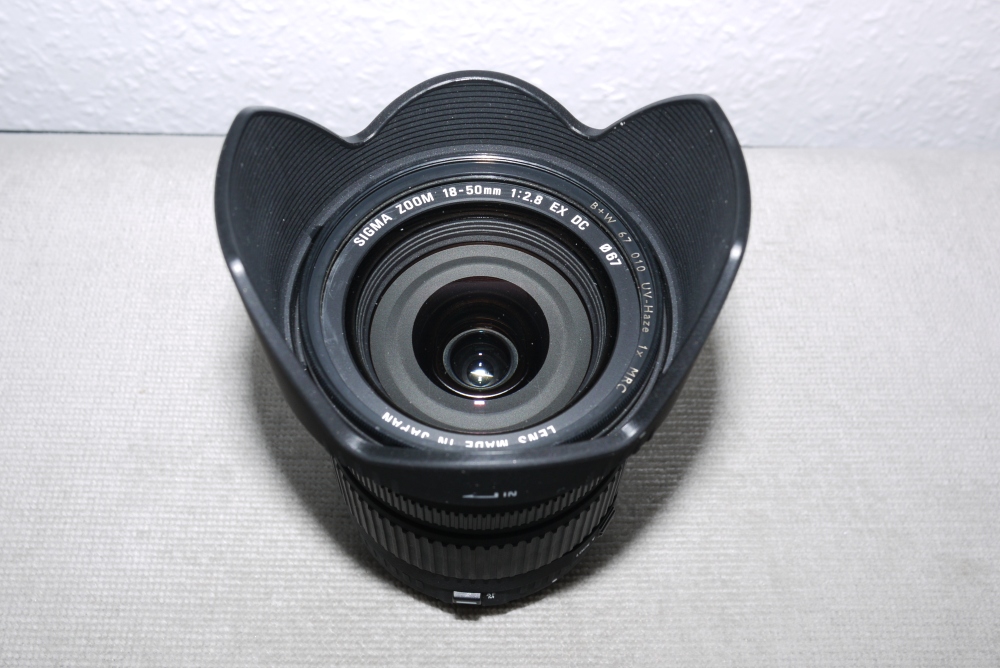
When being out and about taking pictures, one of the most important rules is to keep your lens(es) protected. There are various reasons why this is important, and various ways of lens protection that are possible. For one, you don’t want your lenses to be damaged. Ever walked through the narrow streets of a small Mediterranean village? You could easily come too close to a wall and scratch your front lens element. Ever taken pictures at the sea with a non-waterproof camera? Dirt or salt could easily penetrate your lens. But it’s not only about the lenses—it’s also about the camera. Ever walked through bright sunlight without a lens cap on? Your shutter or sensor could be damaged by a concentrated beam of light. (Remember how you used to burn ants with a loupe when you were a child?)
Here are a number of ways to protect your lens, and the reasons why you should do so.
Tip #1: Keep a Filter on Your Lens!
As I mentioned in the first paragraph, when being out taking pictures, there are number of ways how to get scratches on your precious, and often expensive lens. (You wouldn’t want to ruin your new 85mm f1.2 L, would you?) The example I used above was walking through the narrow streets of a Mediterranean village. But even in big cities like New York, you could easily accidentally hit something with your lens when you’ve got your camera hanging from your shoulder, when you’re taking it up, putting it down etc. So here’s tip #1: protect your lens with a filter! If you hit something, worst case scenario the filter might crack. You pay a couple bucks to replace it. Getting your front lens element repaired will cost you much much more.
Tip #2: Keep a Hood on Your Lens!
If you want to protect even your filter from damage, because it was one of those expensive vari-ND filters or a special polarizer or a Leica-branded UV/IR filter for your M8, here’s a good one: keep a hood on your lens! If you hit something with your lens, chances are the hood will hit first and keep your filter undamaged. This works best with long zoom lenses that often come with giant hoods, but even a tiny lens like the Leica 28mm Elmarit-M can be fitted with a hood.
Nice side-effect: you might get less flare in your pictures!
Tip #3: Keep a Lens Cap on!
If you don’t have a hood, or don’t use filters, here’s an easy way to protect your glass from damage: keep the lens cap on! Again, if you accidentally hit something, the cap will take the shock. If you’re also using a filter, you double your chances of not getting the lens damaged. When you also keep a hood on your lens…well, I guess you can catch my drift.
But there’s another reason to always have a cap on your lens: you wouldn’t want your shutter or sensor get damaged! Why would your shutter or sensor be damaged by something that hits the lens? Like I mentioned in the first paragraph, a ground piece of glass can be used to bundle light. If the light source is extremely strong like, say, the sun, and the the piece of glass will bundle the light hitting into one very very tiny spot, this spot may get very very hot and burn a hole into whatever is behind it. This will probably not easily happen to a metal shutter, nor will it be a problem with a DSLR where the light is just reflected by the mirror and exits through the viewfinder at the other end. But it can be a problem when the sensor is exposed, like with Micro Four Thirds cameras, and it definitely is a problem with the cloth curtain shutters of many older film cameras. And even if chances for this are low—it does happen, and it will be very expensive to repair.
Tip #4: Keep Front and Rear Caps on the Lens When it’s in Your Bag!
Camera bags are made from soft materials so your gear is cozily tucked away and well-protected. But, soft materials have a habit of attracting small pieces of dust or dirt, or to emit lint themselves. If you don’t protect your lenses with front and rear caps, not only will that stuff stick to the glass and eventually end up on the sensor, it can also get inside the lens, from where it is very difficult to get out again. And if you’re unlucky, also expensive. Also, depending on what else you carry in your bag, something might hit the glass of your lens while the bag is being hurled around.
Tip #5: Keep Your Lenses Separate in the Bag!
Most dedicated camera bags have velcro-padded inserts that can be rearranged in a number of ways to form compartments as you need them. It’s wise to keep only one lens per compartment. Why? You will hurl your bag eventually, even if it’s just when taking it from your shoulder or lifting it up. You might even accidentally drop it. And you can’t prevent the stuff inside from moving around when you’re walking. If you keep more than one lens in the same compartment, they can end up a bit too close to each other, and one or both could take damage. That may just be cosmetic damage, but if you forgot to put a lens cap on again, it can be worse. And even if it’s just cosmetic: if you want to eventually sell your stuff again one day, you will want it to look shiny. Oh, and if you don’t have a proper camera bag, here’s an easy workaround: wrap your lenses in microfibre cloths!
Tip #6: Wrap a Plastic Bag Around Your Lens!
What? Why would I do that? Okay, I admit, this really only makes sense when you’re shooting in places with much water, mud, dirt or sand. Like at the sea or in the desert. But you might eventually end up at such a place, and you will want to be prepared. If sand, mud or salt water gets onto your lens, it can potentially damage everything. It can enter through the tight spaces between the zoom and focusing rings and the main lens body, and destroy all moving parts inside. And from the outside, it can hit the glass and scratch it. Well, mud and sand, anyway. So, in order to keep your lens protected from that kind of danger — if it’s not already fully weather-sealed — the easiest way to do so is to wrap a plastic bag around it. Use rubber bands to tighten it, and don’t forget to cut a second hole for the lens to look through! You can protect your expensive ND or polarizer filter with another cheap UV filter if necessary.
Now, you might think, how often does any of this really happen? Do I really need to be so over-cautious with my stuff? Well, of course you don’t need to. But let me assure you, this kind of stuff does happen! And when it happens to you because you didn’t properly protect your gear, you will be pissed. And you will be even more pissed when you get the repair bill…
Please Support The Phoblographer
We love to bring you guys the latest and greatest news and gear related stuff. However, we can’t keep doing that unless we have your continued support. If you would like to purchase any of the items mentioned, please do so by clicking our links first and then purchasing the items as we then get a small portion of the sale to help run the website.
Also, please follow us on Facebook, Flickr and Twitter.
Get rid of the ads!
Did you enjoy reading this article as much as we enjoyed writing it? There's a way to support us and our reporting, getting ad-free navigation and more as a bonus. Subscribe to us for less than a coffee per month —just $3.99— or take advantage of our yearly subscription with a hefty discount for only $25.- An ad-free experience
- A free mystery box for Lightroom or Capture One
- All the books in our store
- 20% discount on Capture One
- 30% discount on Imalume Photo Theft Protection
- 20% off Herbs and Kettle Tea Company.