The Canon Photographers Guide To Upgrading Your Equipment – Part I: Lenses

by Travis Lawton on 12/01/2011

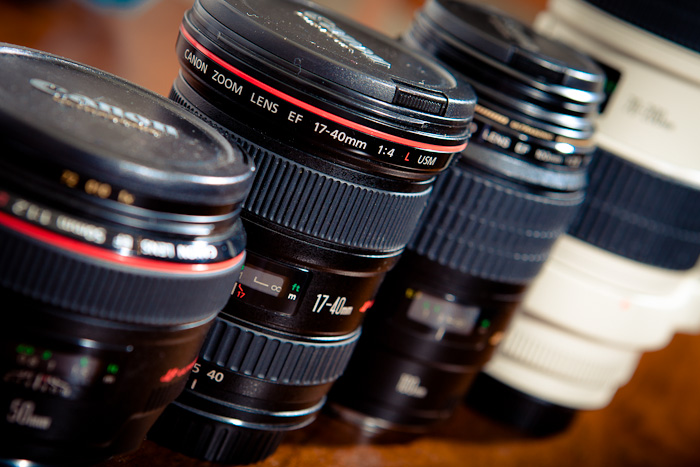
Canon Lens Upgrade Path

This is the first post in a series of posts that will tell all you Canon shooters out there a general upgrade path for your equipment.

You’ve probably heard the term that the best camera (or lens) is the one you have on you. You’ve also probably heard from several people who you don’t need super high-end equipment to create stunning images. While these statements can be true, better gear can make your photography life a whole lot easier. Sure you can mow your lawn with an old school push mower, but a new riding mower would probably do a much better job, quicker, and without having to work nearly as hard.

In this post, we’ll concentrate on the first item that should be on your upgrade list, the lens.

A quick note: you must be careful not to fall into the more-gear-and-better-gear-will-give-me-better-images trap. Some people (myself included, in the past) always want that next thing on their list. They think if I can just get X, my photography will be amazing. While new gear can help, it’s not going to make you the next Ansel Adams.

This post is assuming that you at least have a Canon digital single lens reflex (DSLR) camera. If you don’t, that is definitely priority number one. Look into getting a Canon Rebel series DSLR. These are the less expensive line of Canon’s DSLR’s. Check out our reviews of Canon’s T2i and T3i to help with your decision.

The first thing that many photographers want to upgrade when buying new gear is the camera. It’s the logical choice since that his what everything else revolves around. But it’s also the wrong choice. Many pros will tell you to put your money toward “good glass” rather than the camera. Meaning a good lens on a bad camera is much better than a bad lens on a good camera. Think of it like this: if you had 20/20 vision, you wouldn’t want to put glasses on that are blurry or give dull and muted colors.

Which Lens Is Right For Me?

As lenses are generally an expensive purchase, you’ll probably want to take adequate time deciding on which to purchase. The first question you must ask yourself is what type of photography do you plan to use your new lens for. This will greatly narrow down the list of lenses for you to look at. A lens that is generally used for landscape isn’t going to be very good for shooting sports, and vice-versa.

Even after narrowing down your selection, there’s usually still many lenses to look at. This is because there are several formidable lens manufactures outside of Canon. For example, you can get excellent lenses that will work for your Canon camera from companies like Sigma, Tamron, Tokina, and many more.

Before getting into the different categories, I want to mention a very special lens that I feel should be everyone’s first lens purchase: the Canon EF 50mm f/1.8 II Lens. This lens is a perfect starter portrait lens, also great as an everyday lens to leave on your camera, gives you good bokeh, great low light capabilities, and last but not least is only a little over $100. That is an unheard of amount for such a great lens.

It’s not all perfect though. It’s not made of the highest quality materials. I’ve had several friends who’ve actually had to buy two or three of them because they keep breaking. Even though I recommend this lens to everyone that has a Canon DSLR, there are some much better ones mentioned below.

Below, you will find some of the most popular genres of photography and recommended lens upgrades for each at a range of prices.

Portraits

The best portrait lenses are generally prime lenses. Prime meaning they don’t zoom. They have a fixed focal length and for you to get more or less in the frame, you have to move the camera closer or further instead of being able to zoom the lens in or out. Prime lenses are usually very sharp and can go to very wide apertures. There are two primary portrait traits that you want in a lens. You want a tack sharp image as well as the ability to blur out the background while keeping your subject in focus thus adding separation to the image.  Another typical portrait lens characteristic is longer focal length to accentuate the bokeh.

  • Tier 2: Canon EF 135mm f/2L USM - This 135mm lens from Canon is unique in that it a very long focal length but capable of delivering beautiful bokeh with its f/2 aperture.
  • Tier 3: Canon EF 85mm f1.2L II USM - Similar to the 85mm f/1.8 but much better build quality and materials, lower aperture, weather sealing, and Canon’s legendary L optics

Honorable mentions:

Landscapes

For landscapes, you want to go wide. The wider the lens can go, the more of the scene you can capture in your image. However you also want lines (such as a horizon) to be as straight as possible. This rules out fish eye lenses as they can go extremely wide however intentionally distort the image. Other qualities you want in a landscape lens, much like portrait lenses, is sharpness. You want every little detail to be as sharp and crisp as possible. Keep in mind that if you are going to be putting these lenses on a cropped sensor camera, you must multiply the mm by 1.6.

  • Tier 1: Sigma 10-20mm f/4-5.6 EX DC HSM - One of the cheapest, super-wide angle lenses you can buy. Although I haven’t used it myself, it’s very highly rated. This is the equivalent of an EF-S lens. That means it only works on Canon’s cropped sensor cameras. This would include all the Rebel series cameras as well as the 60D, 50D, 40D etc. The 7D also is compatible with this lens. This is the ideal lens for a cropped sensor as when factoring the 1.6 multiplication for the sensor, this is the equivalent of a 16mm lens by general terms
  • Tier 2: Tokina 11-16mm f/2.8 - While I haven’t personally used this lens, I’ve had several friends who have and have purchased it. However, just like the 10-22mm, this is a cropped sensor only lens.
  • Tier 3: Canon EF 16-35mm f/2.8L II USM - This is the lens used by many professional landscape photographers. It’s a Canon L-series lens so the optics of the highest that Canon produces. Also, this lens offers weather-sealing if coupling this with compatible weather-sealed camera. This lens has the bonus of giving you a very wide aperture in the instances you were looking to use it for some more creative portraits.
Honorable Mentions:
  • Canon EF-S 10-22mm f/3.5-4.5 USM - This is a lens I’ve personally owned. I currently don’t own it because, like the other 10-22mm’s, it’s a cropped sensor only lens.

Sports/Animal/Anything Where You Need A Longer Reach

I know the heading for the section is somewhat confusing but that was my way of coming up with a section to talk about those lenses with longer focal lengths. These are the the type of lenses you’ll need when your subject is far away from where you are or if you can’t safely get any closer than you currently are.

  • Tier 1: Canon EF-S 55-250mm f/4.0-5.6 IS - This is actually a great lens for the cost. You get quite a bit of reach (especially on a cropped sensor) and image stabilization. Keep in mind the mm of this lens on a cropped sensor is 88-400mm. One downside is that this lens does have a variable aperture. That means that at 55mm your lowest aperture is f/4 but as you zoom, that minimum aperture goes up, ending at f/5.6 at 250mm. While f/5.6 isn’t too bad, you might have some issues pulling in enough light in low light areas while using this lens.
  • Tier 2: Canon EF 70-300mm f/4-5.6 IS USM - This is another lens that I’ve owned at one point or another. Although its lowest mm isn’t as wide as the 55, its reach is longer at 300 vs 250. Gets you just that bit closer to the action. The build quality of this lens is also far greater than the 55-250 as well as having the USM (ultra-sonic motor).
  • Tier 3: Canon EF 70-200mm f/4L USM - Here we have one of the most popular lenses, maybe ever, from Canon. Although you don’t have as much reach with this lens, it has been a go-to for professionals for years now due to its outstanding image quality. The bonus here is that if you buy this for your cropped sensor camera, it will also work on a full frame camera if you upgrade in the future. I listed the f/4 version here but you actually have 4 flavors to choose from with this lens. There’s this one, the f/4, then you have an f/4 image stabilized, then there’s the f/2.8, and finally the f/2.8 image stabilized. Choices choices. FYI, this is the current lens I own (the f/2.8 IS version).

Walk-Around

  •  Tier 1: Tamron AF 17-50mm F/2.8 XR Di-II LD SP - Enough acronyms, jeez. This is a highly regarded lens for it features and price. Although I’m partial to Canon branded lenses, third parties have been stepping up their game in the recent years and are starting to offer great equipment at a reasonable price.
  • Tier 2: Canon EF-S 17-55mm f/2.8 IS USM - This is on the newer end spectrum of Canon’s lens arsenal. This lens is considered one of the best lenses in Canon’s line for this focal length and features.

Conclusion

Don’t make the mistake of immediately running out and buying that fancy new camera when it comes time to upgrade your system. Think about possibly holding off and spending that money on some better lenses for your current camera. You’ll only be hindering the performance of a new camera by sticking low end lenses in front of it. Lenses cost a lot of money and shouldn’t be purchased without putting at least a little thought into.

Although we’ve only scratched the surface on the various genres and the popular lenses for each, we have given you a starting point to begin looking at upgrading your current lens assortment from whatever level you’re currently at and for whatever genre interests you most. We hope we’ve provided some nice information for you to begin your upgrade journey in the wonderful world of photography.

If you would like us to come up with some more lens recommendations for other genres that interest you, please let us know in the comments below.

If you found this post helpful and would like to be a part of helping them continue, please consider donating through PayPal.

Please Support The Phoblographer

We love to bring you guys the latest and greatest news and gear related stuff. However, we can’t keep doing that unless we have your continued support. If you would like to purchase any of the items mentioned, please do so by clicking our links first and then purchasing the items as we then get a small portion of the sale to help run the website.

  • Erik Hawkinson

    I’m wanting to upgrade some of my lenses right now, though neither of the two I’m eying first are on your list. I want the 16-35 but first I want the 35 f1.4. I have the 55-250 but hope to replace it with the 70-200 f2.8. I also want the 100L and 300 f4.

    Eventually, I’ll replace my 50 f1.8 (which I also recommend to all new camera owners), but with my setup, it’s low on my list. It’s just not one I use much right now.

    Besides that, I like your choices. One note that I would make, though, is about the Tamron. I’ve owned it for about a year and it’s proven to be my most problematic lens. It’s still my main lens, but on my T1i, I kept getting a lens contact error though when I sent it in, they found no problems. On the plus side, they did clean it quite well. The other issue is that a couple of months ago, the zoom’s been getting stuck. I think there’s something loose inside but I haven’t bothered to send it in yet.

    • Anonymous

      Are you still under warranty? It sounds like it’s time to replace that lens…

      -Chris Gampat
      Editor in Chief
      The Phoblographer

      • Erik Hawkinson

        Chris,

        I was told by the store I bought it from that Tamron has a 6 year warranty so it should still be covered. Honestly, I just haven’t gotten around to sending it off yet.

        • Anonymous

          Alright, let us know how it works out.

          *-Chris Gampat*
          Editor in Chief, ThePhoBlographer.com
          Twitter.com/Phoblographer
          Facebook.com/ThePhoblographer
          The Phoblographer on Google +
          The Phoblographer on Tumblr

  • Pingback: The Canon Photographers Guide To Upgrading Your Equipment – Part I: Lenses | | Nikon D3000Nikon D3000

  • Pingback: Latest Lenses For Digital Camera News | | Canon PowerShot A3000ISCanon PowerShot A3000IS

  • Pingback: The Canon Photographers Guide To Upgrading Your Equipment – Part I: Lenses | | ContourROAMContourROAM

  • Anonymous

    I just picked up a new T3i kit and am thinking about the lenses.  It came with the 18-55 and 55-250.  I would like the 17-55 and 70-200 but I’m going to have to save up some $.  I’m considering the 50mm f/1.8 since it is so inexpensive and would be a good learning lens.  My question however is on the 18-200 as an everyday walk around lens.  My brother-in-law picked one up for his Nikon d90 and loves it.  I have enough saved up to either pick up a used 17-55 if I can find it for around $700, get an 18-200 which I found new for $519 or go for the Tamron 17-50 that you have listed above (except I’m thinking to go with the VC version of it for stabilization) for around $600.  I will probably keep the 55-250 for now until I can save up for the 17-200. 

    Of those three lenses, Canon 17-55 and 18-200 and Tamron’s 17-50, which would you recommend?  As mentioned above, the price range goes from $500 new to $700 used.

    Thanks
    Alex

    • Erik Hawkinson

      arodrigz,

      Without question, I would suggest you get the 50 f1.8. Like Chris said, while the construction is cheap, it’s still an excellent little lens. It is the lens I suggest to anyone getting a camera or asking about a new lens. If you just want a single lens to walk around with, I’ve heard good things about Tamron’s 18-270.

      If you definitely want one of those three, I would say get the Tamron 17-50 new. When I first read through the article, I missed that his suggestion was for the non-VC instead of the one with VC, which is what I have. Apparently, it’s not as sharp as the non-VC version though it’s sharp enough for my needs. Also, keep in mind that VC doesn’t help if your subject is moving. Honestly, I would be concerned about a Canon 17-55 used at $700, the cheapest I could find it quickly was a minimum of $865 on Amazon. Chris might have other suggestions though.

      By the way, I don’t think the Canon 18-200 is nearly as good as Nikon’s.

      • Anonymous

        I’ll more than likely get the 50mm. The 17-55 deal fell through. So in the price range of $500-600 I’m down to the tamron and 18-200. I thought about the 18-200 because it had a broad range although I like the f/2.8 throughout the range of the 17-55 and tamron lenses we’ve been discussing. Initially I was thinking about selling both kit lenses that came with my T3i (18-55 and 55-250). After which I was going to replace them with the 50mm 1.8 and the 18-200. If I had enough money, and I could find the 17-55 at a steal, I thought about adding that as well but if not, I was going to do with the 50 and 18-200 until I could save up for the 17-55 and 70-200 f/4L IS.

        If I were to sell both lenses that would give me enough cash to get a lens then I would have another $600 or so to put into a second lens or simply put away to save for a second lens. So I guess what I need to figure out is whether to sell both kit lenses and what to replace them with if I do. Or, get rid of the 18-55, keep the 55-250 and get the 17-55 or 17-50.

        I’m not necessarily stuck with those choices. If their is a better way to go I’d welcome hearing it.

        • Anonymous

          I’m definitely still subscribing to the 50 1.8 theory for you. At $100, you have your low-light lens covered.  I do like your idea for getting the 50 and the 18-200 as this will give you nice range coverage while you sack away more money for some better glass.

          If I was in your situation, I think I would end up selling the kit lenses as you’ve said. 

          • Anonymous

            Two last questions: 1. Would you go with the Canon 18-200 or Tamron’s 18-270.  2. Would you save up for Canon’s 17-55 or Tamron’s 17-50.

            Or would you forgo all of these options and go with Canon’s 24-70 f/2.8L or 24-105 f/2.4L.  Of course, the down side to that is I would have to multiply that by 1.6 or so since they are EF lenses which will leave me without a wide enough lens.  So probably need to go with the 17′s.  What’s your thought?

            • Anonymous

              I wouldn’t say that getting the L lenses are a must do. Many pro’s out there make good money without using L lenses. 

              Tough call on the 18-200 vs 18-270. Like I stated in the article, I’m partial to Canon. The Canon lens is also a little cheaper. The only big difference is the reach. I would say if you think you will use that reach, go with the Tamron, otherwise, Canon it up.

  • Guest

    The Canon EF 70-300mm f/4-5.6 IS USM is not only a cropped sensor lens. As the denominator “EF” tells it can be used on full format. I would have expected you mentioned the EF 70-300 mm L IS pendant. Whilst the first one delivers honorable image quality and is fairly compact, the latter convinces with superb image quality and a very efficient stabilizer

    • Anonymous

      You’re absolutely right about the cropped lens. Thank you for pointing that out.

      Also, good call on the 70-300L. Obviously there are many more lenses than just 3-5 mentioned in each section. The 70-300 4-5.6 fit well into the price range for the tier 2 section.

      Once again, thanks for that catch.

  • Pingback: Black Friday 2011: PriceGrabber® Reveals Most Popular Products and Shopping Times | | Olympus SZ-10Olympus SZ-10

  • Pingback: Camera Test: Canon's Awesome S100 Compact | Digital Photography

  • http://enigmatic.org Amber Gregory

    We share a love for the 85mm1.8 — excellent! It will be my next purchase too.

    • http://www.thelawtographer.com Travis Lawton

      I’m really looking forward to mine :)

  • Pingback: Year 3~Day 85 +56/365 AND Day 816: Finished My Sub Plans

  • Pingback: Latest Canon T2i Digital Slr Camera News | | Nikon COOLPIX S8200Nikon COOLPIX S8200

  • Rodney

    The 24-105 and 24-70 lenses are not very wide on a crop body, so I think they should only be recommended as a walkabout lens if the owner *also* has a Sigma 10-20 or Canon 10-22 lens when wide angle shots are required.

  • Emily

    I recently bought a Canon T3i with the kit lens 18-55mm. I’d like to get another lens. My husband is a musician and I like to take photos at his shows and they are usually in low light. Which lens would you suggest I buy? Nothing too expensive. I’m not a professional so something under $300. Thanks! Love the blog!

    • ChrisGampat

      50mm f1.8. Please use our links and banners when purchasing to support the site

      - Chris Gampat
      Editor in Chief
      The Phoblographer

      • Emily

        Thanks! I have been reading all the reviews on that lens after I saw your review of it. The only thing I’m worried about is that there is no zoom so I’d have to be pretty close I would think. I’m also looking at the Canon EF 85mm f/1.8 USM. Thanks again!

  • Pingback: Great avice «

  • Pingback: The Canon Photographer’s Guide To Upgrading Your Equipment – Part III … | Photography Lighting Tips

  • Abimanyu

    never liked the 17mmL zoom and the 24-105mmL zoom, for crop body just go for the 10mmEFS, it is my favorite lens. For F.F nothing beats the 14mmL( I sold my 17mmL zoom and the 24-104L and got a mint second hand 14mmL for U$1600 with 8 months warranty from a hobbyist) for landscape. For walk around lens, I’d go for the new 35mm I.S or crop definitely the 17-55 EFS 2.8( my second fave lens after the 10mm zoom EFS) if you think gears matter, check out the book “Landscape Photographers No.2) and most of the photos that I liked was taken with the original 5d and crop body cameras. So what is the use of buying expensive cameras?

  • Christopher

    This is a great article, great stuff here. I agree that these choices are spot on, if you have the pesos to spend. However, some of the best photos I’ve ever taken have been on a Rebel with a kit lens when I first started shooting. The most important thing to remember is having vision. You could put a 5dmkiii with a an L lens in an amateur’s hands and then give a pro an iPhone camera to use and I guarantee the pro will get a better image. Be creative!

    http://www.http//descanophotography.com

  • Pingback: The Canon Photographers Guide To Upgrading Your Equipment – Part I: Lenses | larkalong

  • http://profile.yahoo.com/VIFAU6MNO7O3WNNU7CXTAEJ5TM Kryn

    ACtually, I’m not that impressed with this article. Don’t get me wrong, it’s great someone puts these things down. However, it contradicts itself in the first couple of paragraphs. In the first paragraph the author states he agrees with the statement that better/more expensive gear doesn’t matter, but then goes about saying that better equipment does matter. Subsequently he follows up with saying that one should not believe that having the best gear makes better photos, and then ends the introduction with the statement that you SHOULD buy better gear if you want better photos. That sort of writing confuses beginners that read well, because in one intro they are being told twice to buy better gear and in the same intro they are also being told twice not to fall for that mistake, so which is it??

    I’m also missing some other real contenders: the Canon 50/1.4, the Sigma 50/1.4, the Tamron 17-50/2.8, the 70-200/2.8, the Tamron 28-75/2.8, and there are quite a few amazing lenses that can contend with these…

  • Pingback: The Canon Photographer’s Guide To Upgrading Your Equipment – Part II: Camera Bodies | larkalong

  • http://twitter.com/BitSpot Benny Thaibert

    I agree on the 24-105. Perfect fit on a full frame body. The lens is lightweight and doesn’t wear down your shoulder after a days walk.

Previous post:

Next post: