Micro Four Thirds Lens Comparison: Olympus 12mm f2 vs. Panasonic 14mm f2.5

by Mike Pouliot on 10/04/2011

Over the past two to three years, the Micro Four Thirds (M43) system has morphed from an uncertain new category into a serious alternative to consumer DSLRs. As this segment grows, manufactures, mainly Olympus and Panasonic, have started to provide users with more lens options, but more importantly, they are producing higher quality lenses. Because of the relatively small sensors size, M43 systems have to deal with a 2x crop factor. Because of this, Olympus and Panasonic have to produce very wide lenses to provide users with a field of view that is similar to what their used to using with SLRs (e.g. 24mm, 35mm, 50mm, etc.). In this review, we are going to compare two M43 wide angle primes, the Olympus 12mm f/2 and the Panasonic 14mm f/2.5.

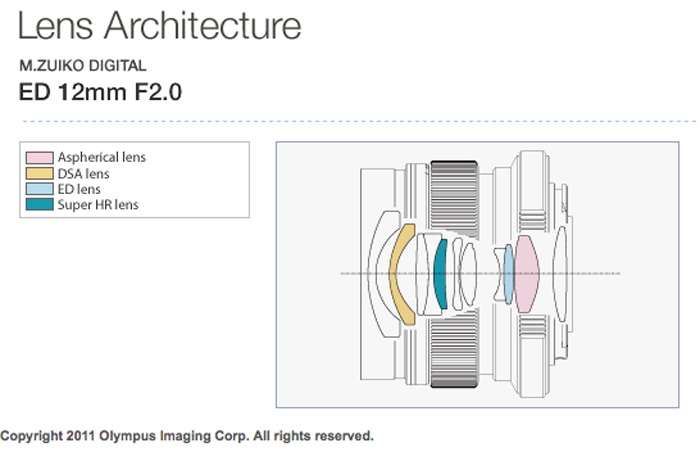
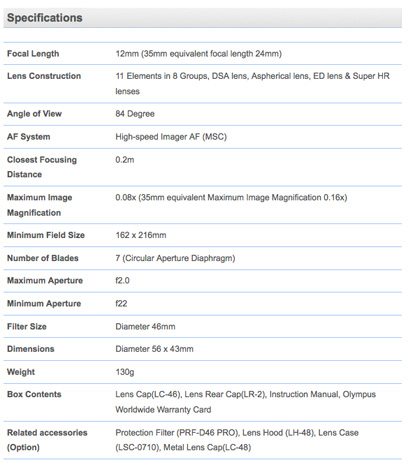
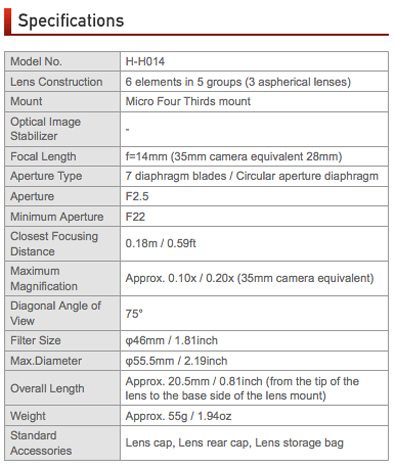
Specs

Olympus
 

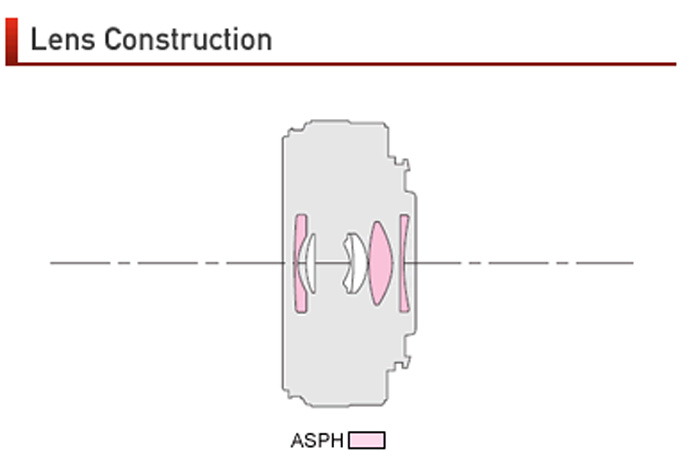
Panasonic
Looks & Build Quality

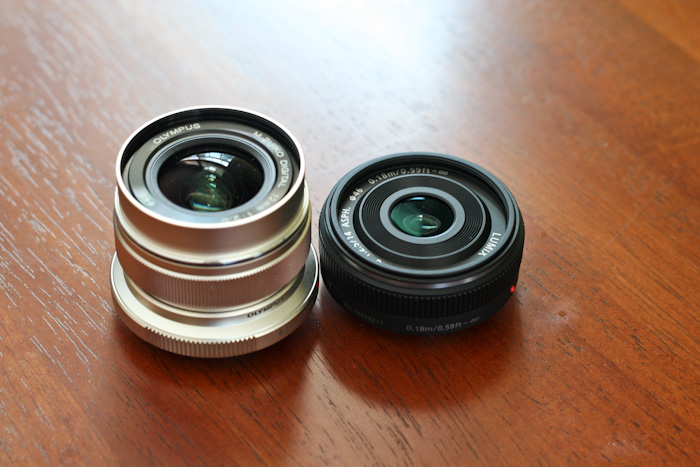
While there is only a 2mm difference between these two lenses, you wouldn’t know it by simply looking at them. The Panasonic is a tiny little thing, both in size and weight while the Olympus is quite a bit larger and feels much more substantial in your hand.

Panasonic
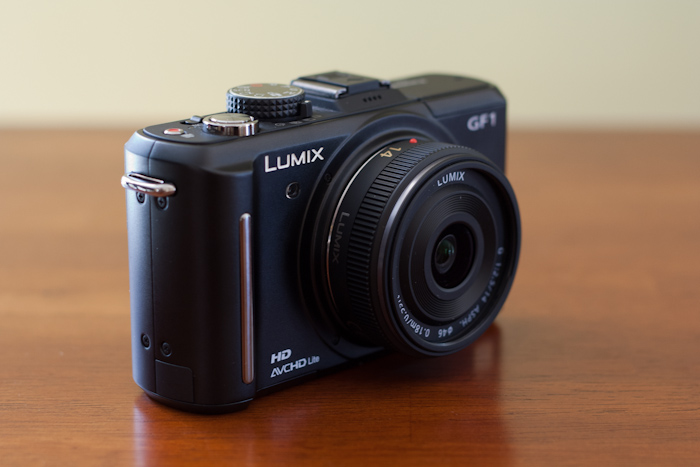
I have no idea how Panasonic was able to construct a lens like the 14mm f/2.5 pancake lens, this thing is so tiny! It is, by far, the the lightest and most compact M43 lens you can buy. Because of this compact dimensions and ultra lightweight body, the 14mm f/2.5 is a wonderful travel lens for you M43 body. When attached to my GF-1, you hardly know it’s there. The all black finish and gold lettering make the 14mm f/2.5 look right at home on the GF-1.
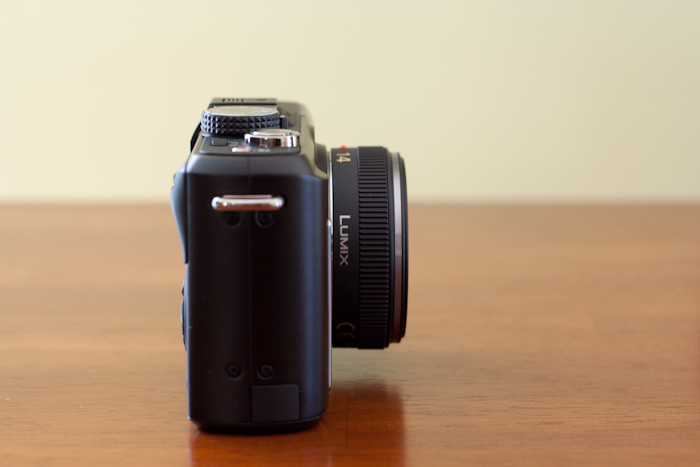
To keep the weight down, Panasonic opted to construct the 14mm f/2.5 of plastic. Does it feel cheap? No, I personally think it feels rather well constructed. I wouldn’t want to drop it down a flight of stairs, but then again, would you throw any lens down a flight of stairs? It has a focus ring that is smooth and big enough for me to work with my lanky fingers but I hardly ever use manual focus with my GF-1 as the AF is very quick and accurate with this lens. There really is not much else you can say about the 14mm f/2.5. Panasonic opted for compactness and simplicity with the 14mm, and I think that decision will sit well with most M43 users.

Olympus
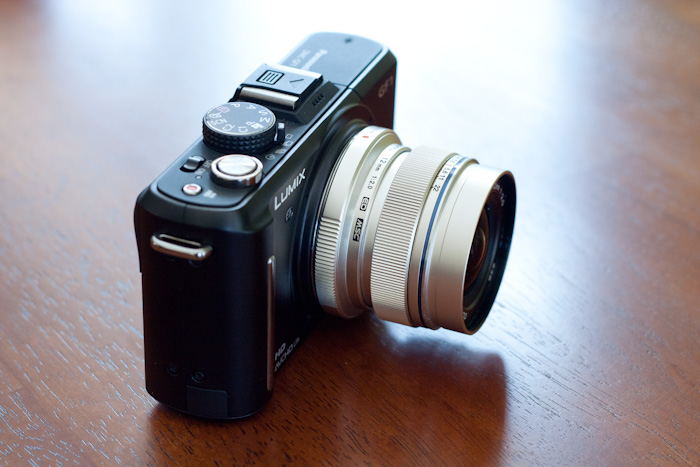
While the Panasonic is compact and light, the Olympus 12mm f/2 is extremely well built and solid. It looks like is should be on the front of a Leica, not a M43 body. The lens is finished with a champagne colored metal and a blue ring adorns the top of the lens, similar to Canon’s red L ring. Nicely done Olympus.
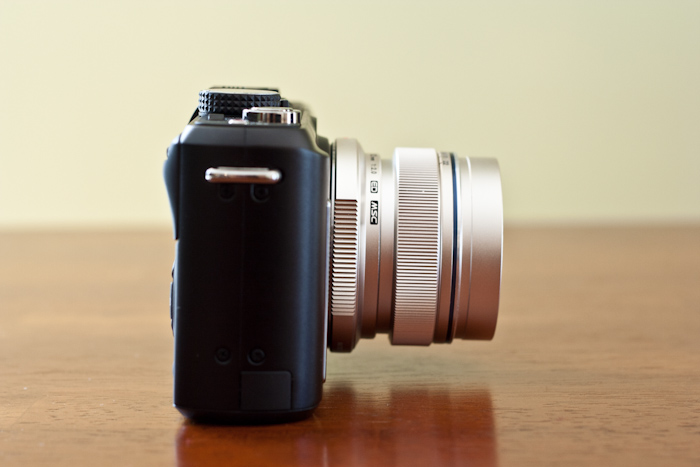
Olympus 12mm f/2. Shown with focus ring set to AF focus mode.

Forgoing the plastics that make up the majority of the Panasonic, Olympus opted for and all metal construction for the 12mm. Because of the all metal construction, the Olympus 12mm feels wonderful in your hand but the weight may bother some users. The difference in weight is especially noticeable when switching between these lenses. The Olympus’ weight and length actually makes my GF-1 heavy and slightly off balance when in use. Replace the Olympus 12mm with the Panasonic 14mm f/2.5 and you would think the GF-1 just lost a few pounds.
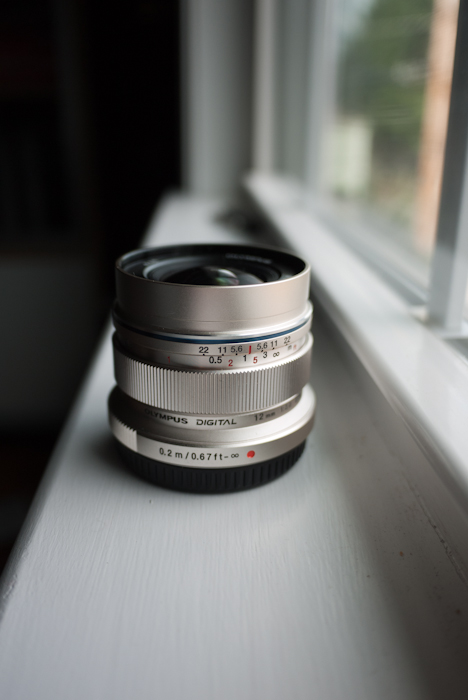
Olympus 12mm f/2. Shown with focus ring set to manual focus mode.

The real showstopper with the Olympus is the focus ring. It has a smooth and buttery action, but that’s not what makes this special. At first look, the focus ring seems like any other focus ring, but pull it towards the body of the camera and it will slide down into manual mode—which is pretty sweet. After you slide down the focus ring, you will see distance scales like in old manual focus lenses. Any photographer that is a fan of zone focusing should be very excited with this feature.

AF Performance

Panasonic GF-1 with Panasonic 14mm. Shot at ISO 500, f/2.5, 1/25 sec.

Auto focus performance with both lenses is very impressive. Even in low light, each lens snaps into focus in less than a second. One thing that aids in the speed of these lenses is there are no external moving parts meaning the front element does not move. The Panasonic 20mm f/1.7′s front element does move which means slower AF speed when compared to the 14mm. In addition to slower AF speeds, moving front elements make lenses more prone to dust and gunk into your lens.

On my Panasonic GF-1, I would have to call it a draw but slap these lenses on a new E-P3 and it would be a completely different story, the Olympus 12mm would simply slaughter Panasonic’s 14mm. Check out our review of the E-P3 and 12mm combo. Also take a look at our 12mm review on the EP2.

Image Quality

Build quality and AF speed are important, but what about image quality? Can Panasonic’s 14mm really keep up with Olympus’ new 12mm lens that costs more than three times as much. In short, yes. The images produced from these lenses are very compatible but there are a few slight difference between these lenses.

Bokeh

Unlike sharpness or color accuracy, bokeh is a very subjective lens characteristic and I honestly think this one is a tossup. The Olympus has the benefit of having a maximum aperture of f/2 while the Panasonic maxes out at f/2.5. Not a huge difference (see below), especially with a wide angle lens and a sensor of this size, but a difference nonetheless. If someone put a gun to my head and made me choose one, I think I would actually the give honors to the Panasonic if both were being shot at f/2.5. Take a look at the images below. I find trees on the left and the out of focus green area to be more pleasing from the Panasonic. Again, there is no right or wrong answer here, it’s all personal preference.


Panasonic GF-1 with Olympus 12mm. Shot at ISO 200, f/2, 1/400.

Panasonic GF-1 with Olympus 12mm. Shot at ISO 200, f/2.5, 1/400.

Panasonic GF-1 with Panasonic 14mm. Shot at ISO 200, f/2.5, 1/400.

Color and Saturation

Like bokeh, this is a tough call. Both produce deep rich colors and allow the user to take full advantage of the M43 sensor’s dynamic range. Take another look a the images of the flower. I honestly feel like this is a toss up. What do you think? If I had to pick a winner, I think it would go with the Olympus. The greens look more natural with the Olympus, the Panasonic looks a bit orange but this could easily be adjusted with a tweak to the white balance.

If you look at the rest of the comparison images in this review, you will see that the colors produced by these lenses are very similar.

Sharpness/Detail/Contrast

Again, this is a close one. Both lenses produce images with lots of detail in the center of the frame, especially when stopped down, but the Olympus trumps the Panasonic in the corners. Take a look at the bushes in the bottom corner of the shots below. The Olympus has much more detail in the corner than the Panasonic.


Panasonic GF-1 with Panasonic 14mm. Shot at ISO 200, f/8, 1/320 sec.

Panasonic GF-1 with Olympus 12mm. Shot at ISO 200, f/8, 1/320 sec.

Panasonic GF-1 with Panasonic 14mm
Panasonic GF-1 with Olympus 12mm

Below are center crops from the images above. Not surprisingly, both look very good but I actually think the Panasonic is slightly sharper and resolves more detail in the center than the Olympus although it could be that extra 2mm of reach, it’s debatable. While the Panasonic may be very sharp in the middle, the Olympus is slightly (and I do mean slightly) sharper and more contrasty across the image which is what will matter to most.


Panasonic GF-1 with Panasonic 14mm

Panasonic GF-1 with Olympus 12mm

Color Fringing and Distortion

Note: The GF-1 actually compensates for color fringing and distortion in camera when shooting JPEGs. Because of this, all images for this test were shot in RAW for both lenses.

Both of these lenses mange color fringing surprisingly well. So well in fact, that I spent several minutes scouring images for traces of color fringing…nothing. This is extremely impressive considering how wide these lenses are. Distortion, on the other hand, is an issue. Both lenses display a noticeable amount of distortion which has to be expected with lenses that are this wide. Like I stated before, the Panasonic will actually compensate and correct this in-camera when shooting JPEGs but that isn’t helpful unless you have a Panasonic M43 body. Not surprisingly, the Olympus seems to have slightly more distortion but that has to be expected due to it being a wider lens. But honestly, considering their size and focal lengths, I’m very impressed with how well both of these lenses manage distortion.

Conclusion

As you can see from the images above, both lenses produce excellent images and I wouldn’t hesitate to recommend either to any M43 user. I found performance with the Olympus 12mm and the Panasonic 14mm to be very similar when shooting with my GF-1. With that being said, there are reasons to buy one over the other, see below.

Olympus

Panasonic GF-1 with Olympus 12mm. Shot at ISO 500, f/5.6, 1/125 sec.

Let’s be honest here, the Olympus is expensive. It’s more than double (closer to triple) the price of the Panasonic 14mm. The lens preforms slightly better than Panasonic’s 14mm, but that’s a hard price to swallow. Most photographers use M43 as an alternative to lugging around their DSLR which means M43 is not their primary kit. For many, $800 for one wide M43 prime lens is going to be out of the question. So why buy the 12mm? Well, I can answer that question with one word/model number, the E-P3. Check out our review of the E-P3 with the 12mm lens and make sure you check out the video of the focus speed, you will be amazed. The Olympus 12mm and E-P3 work together to have one of the fastest focusing speeds I have seen in ANY camera, including DSLRs.

So, if you are looking to get into M43 and the E-P3 is on your list, you should strongly consider buying it paired with the 12mm f/2, I think you will be more than happy with that combo.

Panasonic
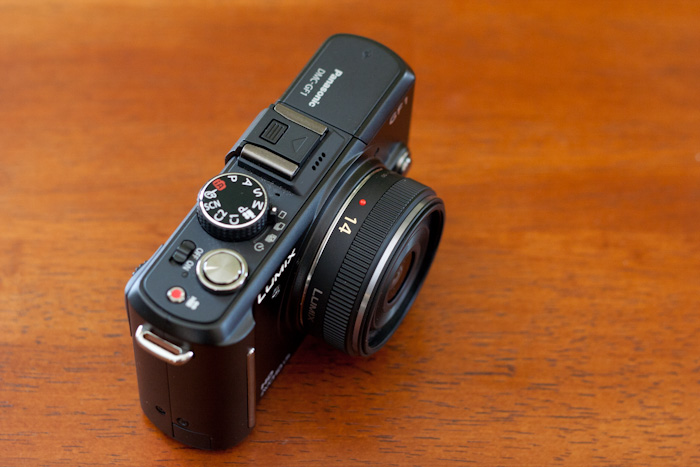
This ultra compact pancake lens is a freak of nature. How can something so compact produce photos that look this good? Yes, the corners are a bit soft and distortion is present, but it manages to keep up with the Olympus 12mm in almost every way for a fraction of the price. If you already have a M43 body (that isn’t an E-P3) and you are looking for a wide prime, the Panasonic 14mm f/2.5 should be at the top of your list.

Personal Note

Panasonic GF-1 with Panasonic 14mm. Shot at ISO 500, f/4.5, 1/8 sec.

Lately, I’ve been adding a “Personal Note” section to my posts. When I read objective reviews, I also like to know what the writer personally thinks about each lens and I always want to know which one would get their money. Let me know what you think about this section.

As I stated early on in this review, I own the GF-1 and 14mm f/2.5. Personally, I think the 14mm is a great value for the money and I would choose it over the 12mm simply because of the 12mm’s price. You could buy the Panasonic 14mm f/2.5 and the Panasonic 20mm f/1.7 (my favorite M43 lens) for less than the 12mm f/2. That’s a solid kit and you’d only need to add something in the telephoto range which can be had for a less money than the primes. That’s my personal opinion, take it for what it’s worth.

More Comparison Images

A few readers asked to see more photos and we here at The Phoblographer like to give our readers what they want. So, below are a few more comparison shots from the Olympus 12mm and the Panasonic 14mm. Enjoy!

Panasonic GF-1 with Olympus 12mm. Shot at ISO 500, f/7.1, 1/800 sec.

Panasonic GF-1 with Panasonic 14mm. Shot at ISO 500, f/7.1, 1/800 sec.

Panasonic GF-1 with Olympus 12mm. Shot at ISO 500, f/7.1, 1/320 sec

Panasonic GF-1 with Panasonic 14mm. Shot at ISO 500, f/7.1, 1/320 sec

Panasonic GF-1 with Olympus 12mm. Shot at ISO 500, f/5, 1/1000 sec

Panasonic GF-1 with Panasonic 14mm. Shot at ISO 500, f/5, 1/1000 sec

Please Support The Phoblographer

We love to bring you guys the latest and greatest news and gear related stuff. However, we can’t keep doing that unless we have your continued support. If you would like to purchase any of the items mentioned, please do so by clicking our links first and then purchasing the items as we then get a small portion of the sale to help run the website.

Also, please follow us on FacebookFlickr and Twitter.

  • Matthew Sugiarto

    yes yes, this is a review that I need! Thanks!!

    • Anonymous

      Glad we could help!

      Mike Pouliot

      The Phoblographer

      • Marymarla1

        Thank you for the review.  I’m making a decision between these lenses, and I gleaned a lot reading your review – and enjoyed it! .  I will be doing more low-light/indoor photography this winter due to “Raynauds Disease” the only symptoms are – making fingers numb/painful when it is cold.  When it’s warm, it goes away, thankfully!  This winter I really want to keep up with my shooting so decided to get the best for lowlight I can get.  I see here the lenses are quite similar in IQ.  However, the 12mm seems a bit brighter.  Do you have any thoughts that would help me get the best images indoors/lowlight?  Thanks! 

        Maria

      • Marymarla1

        Thank you for the review.  I’m making a decision between these lenses, and I gleaned a lot reading your review – and enjoyed it! .  I will be doing more low-light/indoor photography this winter due to “Raynauds Disease” the only symptoms are – making fingers numb/painful when it is cold.  When it’s warm, it goes away, thankfully!  This winter I really want to keep up with my shooting so decided to get the best for lowlight I can get.  I see here the lenses are quite similar in IQ.  However, the 12mm seems a bit brighter.  Do you have any thoughts that would help me get the best images indoors/lowlight?  Thanks! 

        Maria

        • Marymarla1

          Just want to add to my post above – I do have the E-P3 but basically do stills.

          • Anonymous

            Sorry to hear about your medical condition. My mother has Raynauds so I know how debilitating it can be.

            Honestly, the extra light that the 12mm will let in is not much. If you have the E-P3, you have a camera that can take wonderful images at higher ISOs. Check out our review of the E-P3. You shouldn’t be afraid to bump up the ISO when shooting with the E-P3

            If you are going to shoot inside in low light conditions, I would recommend the following:

            1. Get a tripod
            2. Get fast glass. Check out the Panasonic 20mm f/1.7 or the Leica 24mm f/1.4. Also, I would consider looking at old manual focus lenses. You can get some killer deals on  great glass.
            3. Shoot RAW. There are a number of programs that can quickly and easily clean up a noisy RAW image.

            Mike Pouliot
            The Phoblographer

            • Galih

              How about capturing moments on lighting festival? such a moving lantern or water show with lighting effect. Will you consider brighter lens of Oly for these purpose?

          • Anonymous

            Sorry to hear about your medical condition. My mother has Raynauds so I know how debilitating it can be.

            Honestly, the extra light that the 12mm will let in is not much. If you have the E-P3, you have a camera that can take wonderful images at higher ISOs. Check out our review of the E-P3. You shouldn’t be afraid to bump up the ISO when shooting with the E-P3

            If you are going to shoot inside in low light conditions, I would recommend the following:

            1. Get a tripod
            2. Get fast glass. Check out the Panasonic 20mm f/1.7 or the Leica 24mm f/1.4. Also, I would consider looking at old manual focus lenses. You can get some killer deals on  great glass.
            3. Shoot RAW. There are a number of programs that can quickly and easily clean up a noisy RAW image.

            Mike Pouliot
            The Phoblographer

        • Marymarla1

          Just want to add to my post above – I do have the E-P3 but basically do stills.

  • yzf426f

    Thank you for the review. This is a photo I took with my GF2 and the 14mm on my trip to London last week…Really impressed with the pancake so far: http://www.flickr.com/photos/nanastasiou/6208591226/in/photostream

    • Anonymous

      Great shot! Thanks for sharing.

  • WT21

    I had the 12mm for a short time, but couldn’t get comfortable with the price, so moved to the 14mm. I don’t think I’ve missed much (I shoot for casual/family uses, not critical landscape shots nor street, where I think the 12 would be better). Thanks for confirming what I felt I had already experienced!

    • Anonymous

      Not a problem. Like I said in the review, if I already had a M43 body, buying the 12mm over the 14mm would be tough given the price difference. I think you made the right choice.

      Mike Pouliot
      The Phoblographer

  • Tomnewstead

    Thanks, good simple comparison. I would like to see the lenses compared for angle of view in a landscape format though, especially on buildings. This is  because, for me, a wide prime would be used while traveling in cities, photographing buildings, plazas and monuments. Would be good to see what that extra 2mm means when taking such images in a constrained street, where you can’t “zoom with your feet”.

    • Anonymous

      I have a few more city shots with lots of buildings that I could add to the review. I’ll update the post with some additional images tonight.

      Mike Pouliot
      The Phoblographer

    • Anonymous

      I added a few more comparison shots for you…hope they help.

      Mike Pouliot
      The Phoblographer

    • Anonymous

      I added a few more comparison shots for you…hope they help.

      Mike Pouliot
      The Phoblographer

  • Pingback: New Olympus reviews (and why DxOmark is wrong by saying Nikon1 is as good as m43!) « b r e a k m e l o d y

  • Refudiation

    Olympus cameras DO correct distortion for all lenses, Panasonic and Olympus. Distortion correction is a fundamental part of the micro 4/3 spec. It is only chromatic aberration that Olympus cameras don’t correct.

  • Jason

    Thanks for posting this! What are your thoughts on the Panasonic 14mm compared to the various kit lenses at 14mm? Since the aperture is close (3.5 to 2.5), that’s got me on the fence a bit…thanks.

    • Anonymous

      It really depends on your needs. If you already have a fast prime (e.g. the 20mm f/1.7) then a zoom may compliment your kit nicely that is IF you like zooms. Personally, I prefer primes so I would rather have the 14mm, 20mm, and say the Oly 45mm. If you put the 14mm f/2.5 up against the kit zoom, I would put my money on the prime. I don’t have any evidence to back this up, but zooms usually do not perform well at the extremes of their zoom range. Hope that helps.

      Mike Pouliot
      The Phoblographer

      • Jason

        Thanks Mike, I appreciate the thoughts. I really enjoy primes, and I do have the 20mm and the 45mm is on its way. The 20 essentially lives on my camera, over 95% of my shots are with it. I’d love the 12mm for it’s perspective (24mm was among my favorite focal lengths in my film days), but can’t quite get myself to go for it based on cost alone.

      • Jason

        Thanks Mike, I appreciate the thoughts. I really enjoy primes, and I do have the 20mm and the 45mm is on its way. The 20 essentially lives on my camera, over 95% of my shots are with it. I’d love the 12mm for it’s perspective (24mm was among my favorite focal lengths in my film days), but can’t quite get myself to go for it based on cost alone.

        • Anonymous

          I’m with you on the 20mm, that is my favorite M43 lens. Probably the best bang for your buck at the moment.

          If you’re a prime guy and if you’re only going to use it on occasion, save yourself some $ and go for the 14mm. I really think you will be more than happy with the results.

          Be sure to click through the links in the post if you decide to pull the trigger on either lens.

          Thanks,
          Mike Pouliot
          The Phoblographer

        • Anonymous

          I’m with you on the 20mm, that is my favorite M43 lens. Probably the best bang for your buck at the moment.

          If you’re a prime guy and if you’re only going to use it on occasion, save yourself some $ and go for the 14mm. I really think you will be more than happy with the results.

          Be sure to click through the links in the post if you decide to pull the trigger on either lens.

          Thanks,
          Mike Pouliot
          The Phoblographer

  • Anonymous

    Thanks for the review!

    I also have the 14mm and 20mm ‘cakes as my only lenses. The 14mm is a decent lens, but on my GH2s the edge softness and high-contrast fringing (softened more by the software aberration correction which doesn’t remove it completely either) are a little disappointing. The 20mm just looks a little better overall. So I would jump at the 12mm (a little wider would be useful too) – but the price is just crazy. And it’s silver, euch.

    There’s a good opportunity for Panny to produce their own plastic version (as long as it’s a similar step up optically from the 14mm – I don’t need the advanced focus ring or the extra weight, and if Panny could make it smaller with the same aperture, great : ).

  • Southboy

    i would like to ask is the f2.5 and f2 created bokeh is much different? and the light absorb will much different? 

    • Anonymous

      Take a look at the shots of the flower. I have samples of the Panasonic at f/2.5 as well as the Olympus at f/2 and f/2.5. Can you see a difference between f/2 and f/2.5?

    • Anonymous

      Take a look at the shots of the flower. I have samples of the Panasonic at f/2.5 as well as the Olympus at f/2 and f/2.5. Can you see a difference between f/2 and f/2.5?

  • Pingback: #2 « حكاية صورة ،

  • http://www.galapinoyredux.com Cedric

    These are pretty impressive images. If money weren’t an issue though, and if I were a M43 user, I’d definitely pick the Oly because of the amount of detail it captures. :)

  • Pingback: Upgrading Your Micro Four Thirds Camera System at The Phoblographer

  • Df

    Thanks for this, really helped me decide what  one to buy.   :-)

  • Hugh

    Thanks for your review. Does the 12mm revert automatically to manual focus when you pull back the focusing ring? I have tried to use the lens on my GF1 and it flashes up a message saying “switch to manual mode” when I pull the ring.

    • ChrisGampat

      Yes it does.

      Maybe there is a communication error of some sort with Panasonic cameras. Mike will know better on that one.

      *-Chris Gampat*
      Editor in Chief, ThePhoBlographer.com
      Twitter.com/Phoblographer
      Facebook.com/ThePhoblographer

  • Pingback: TEST: Olympus 12mm f2 vs. Panasonic 14mm f2.5 | Mirrorless-System.com

  • Pingback: After much consideration... - Micro Four Thirds User Forum

  • DrDave

    Thanks for this review! I was leaning towards the 12mm, but after seeing your review and the MTF data from lensrentals I decided to go with the 14mm, which I got on eBay for $170. I’m not a pixel peeper, so I didn’t really see a difference in the IQ. Maybe the 14mm looks sharper in the center. But so handy for travel! Nice choice of photos to show the what the lenses can really do. I expected the 12mm to do better on the architecture shots, but I actually preferred the 14mm, but they are too close to call.
    Speaking of resolution, I’m wondering if you noticed more of difference in the lenses when placed on the newest Olympus cam, the EM5, but I’m guessing the center resolution of the 14mm must really be slightly sharper.

    • Mike_Pouliot

      Glad to hear our comparison was helpful!

      I personally have not had a chance to shoot with the EM5, but I’m assuming your results would be similar. I know that the 12mm will focus faster on Olympus bodies, so that may be something to think about if you are going to pick up an EM5.

      While the 12mm may be a better all around lens, I personally do not think it is worth the difference in price over the 14mm. You could get the Panasonic 14mm, Sigma 30mm and Olympus 45mm for the same price and all of those lenses are great performers. 

      If you decide to buy, please be sure to click through links in this article :-)

  • Pingback: 12-18 mm Lenses: MFT wide-angle « dirkvoorhoeve

  • Pingback: cloud forest | notripod

  • Pingback: Olympus 12mm/f2 vs Panasonic 14mm/f2.5

  • manoj kalita

    Thanx for the review. One question: since Panasonic cameras do not have in body stabilization and this lens is also without OIS, so what is the usable limit of shutter speed in this lens (in a Panasonic body)?

  • Pingback: oly 12mmf2 or panny 14mm f2.5?

  • Ismael

    hi looking to buy the panasonic 14mm f2.5

    just want to know if it fits on a canon 550d or 600d

    thanks ishyramos@gmail.com

Previous post:

Next post: