

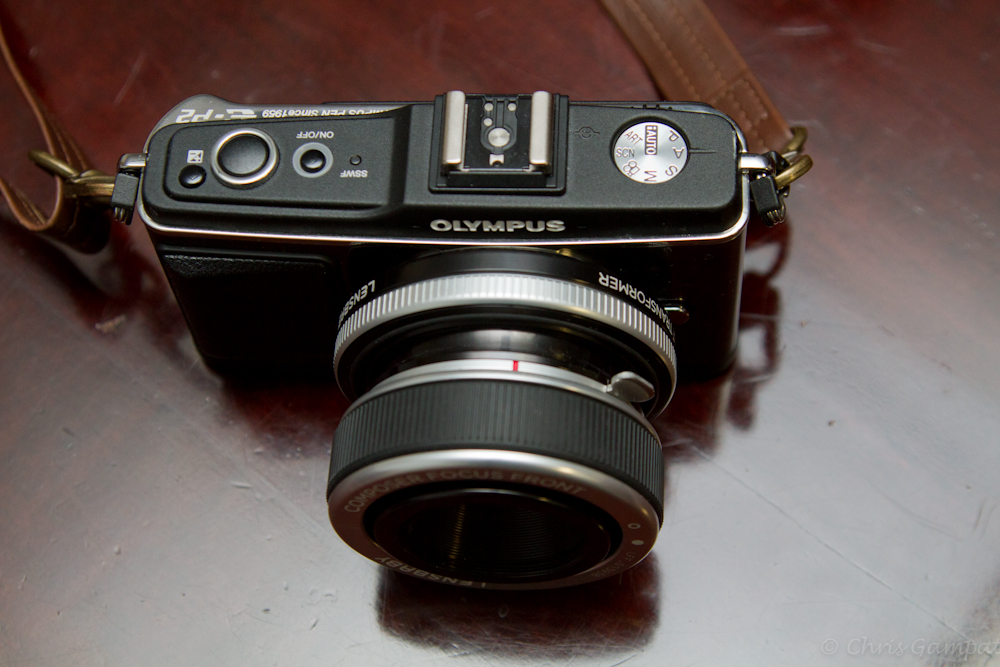
More than anything, my Canon 5D Mk II and Olympus EP-2 are both extremely important to me and for the most part, serve different purposes. Then one day, I was given the request from a co-worker/reader to make the two duel it out to see if the Olympus EP-2 is worth being called a professional’s backup camera. As a studio shooter these days, it only makes sense to see if the two can stay toe to toe in the studio. Throughout my time with the camera, I’ve already seen that the Olympus EP-2 is capable of doing most things that professionals and hobbyists would need or ask from their cameras. Indeed, I’ve used it to shoot some photojournalism, street photography, and even some video. But let’s see how the two manage at a portrait session.
Gear Used
Off-camera continuous light
The Test
This test involved photographing a model in three different poses with the cameras. The Olympus EP-2 and Canon 5D Mk II were both exposed identically and focused on the same spots. Later on, I noticed that the EP-2 was shooting in its default 4:3 format while the Canon 5D Mk II shot in the 3:2 aspect. I decided that this would be better for the test because one could also compare the aspect ratios.
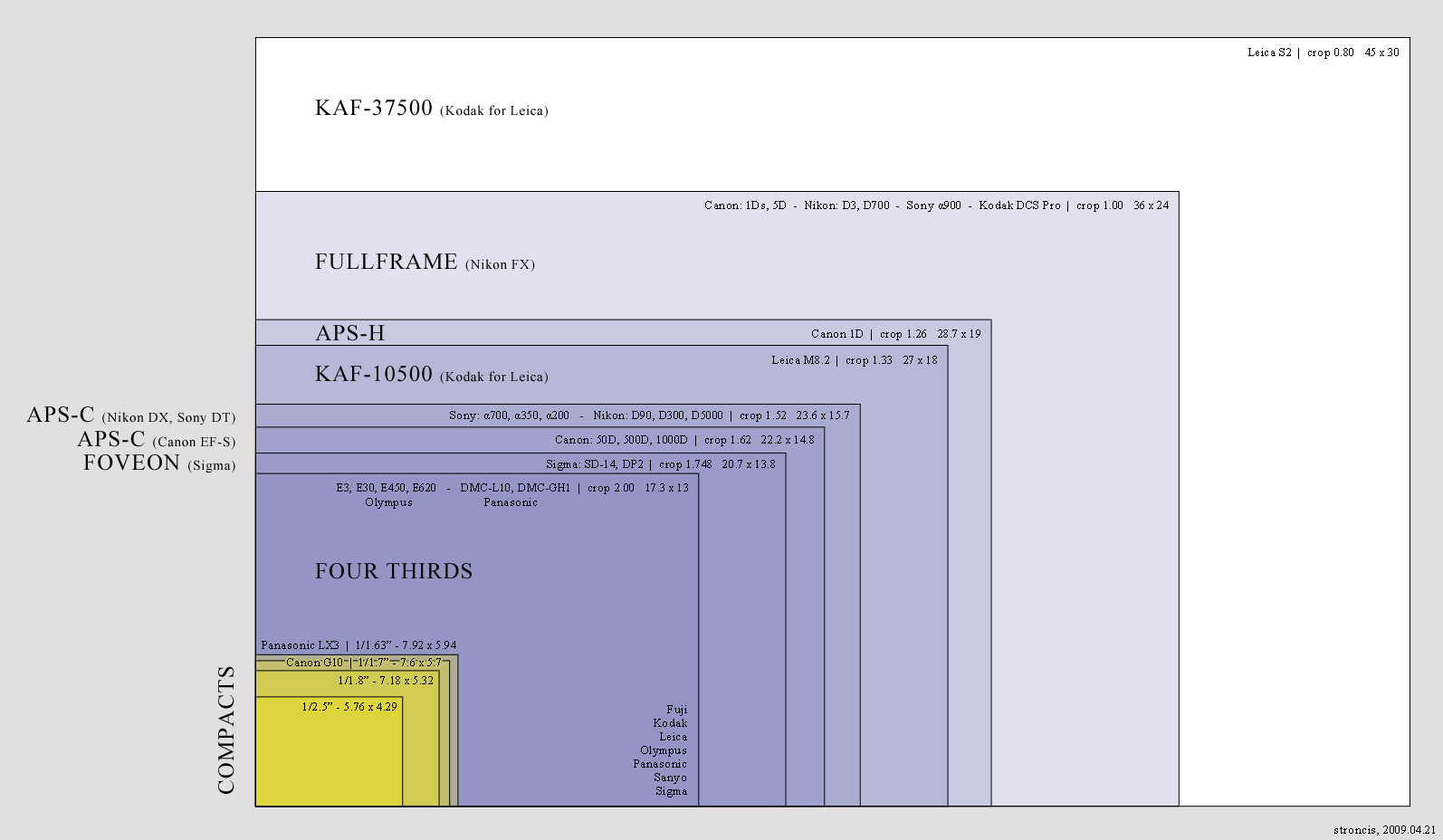
Do note that I am fully aware of the sensor size differences in these cameras and when I got the request for this crazy test, I had the most confused look in the world on my face.
After the test was complete, both sets of images were sized down to 1000 pixels on the long side in Lightroom 3 for comparison on the web.
ISO 800



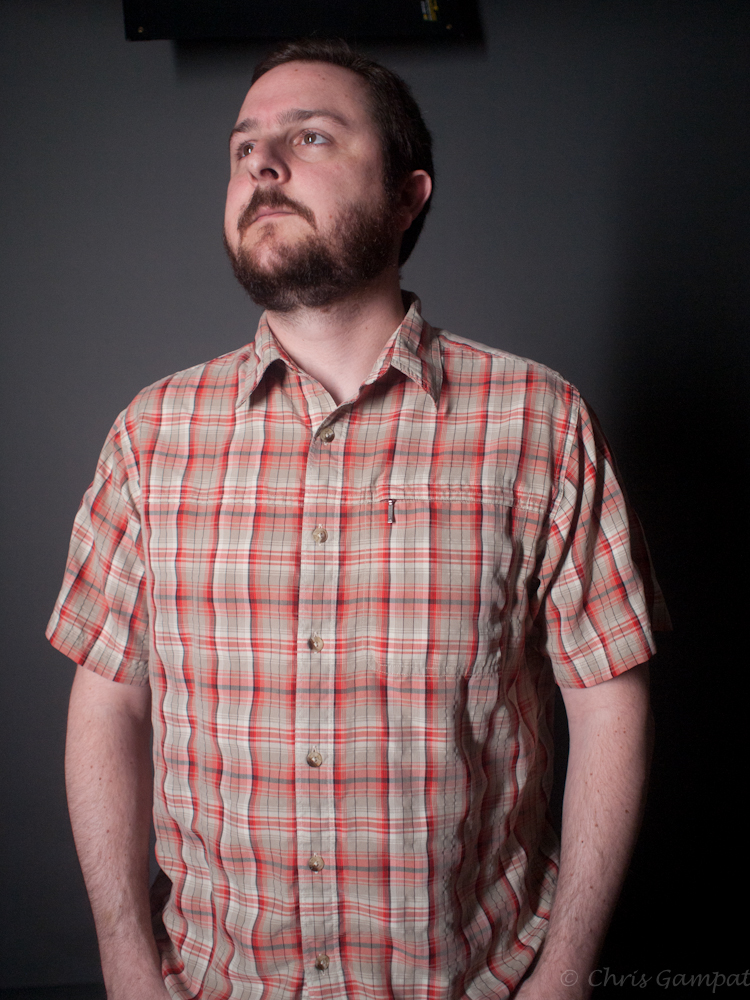
ISO 2500


Image Quality Analysis
There are a couple of things that we can tell right off the bat with these two cameras. First off, the High ISO image quality of the Canon 5D Mk II blows the EP-2 out of the water. Surely, there is less noise in Canon’s image at ISO 2500 and there is also better color and detail being retained.
Even at lower ISOs, one starts to see noise in the shadows on the EP-2.
The Olympus EP-2‘s strength lies in the ability to render slightly more interesting colors. If you look back and forth at the images, you’ll see some differences and the 5D Mk II’s color depth and dynamic range absolutely shows. However, the colors on the EP-2 are still very interesting. With all that said, even if I didn’t label which photos were which, I’m positive that most people would be able to tell which photos came from which camera.
Ease of Use
Both cameras had their pros and cons for use in the studio and I’m experienced enough with both models to be able to say that I’m easily able to overcome any problems that either camera has. However, I preferred the quicker access to settings that were most important on the 5D Mk II than having to dig through the menus on the EP-2. This had to do with the ISOs and focusing methods mostly. In terms of actually setting the exposures, both cameras came to me as second nature and users that have had either camera in their hands for a couple of minutes would be able to have similar experiences.
Focusing
Here’s where it came down to the big difference. The Olympus EP-2 has face detection while the Canon 5D Mk II was designed for the photographer to focus and then recompose. To make the two sets of images as similar as possible, I had to shoot with the Canon 5D Mk II first, observe the image, and then compose the EP-2 to be similar. No matter what though, the EP-2 would be able to focus on John’s face.
For studio photography, face detection is a very nice feature to have because you’ll more than likely be putting an emphasis on the person’s face. Indeed, it starts to make the old method of focusing and recomposing seem a bit stone age. However, it’s a proven method that has worked for many photographers for years and how do you argue with that?
Thoughts? Please share them in the comments below. If you liked this test, go ahead and use the sharing buttons to spread the love.
Please Support The Phoblographer
We love to bring you guys the latest and greatest news and gear related stuff. However, we can’t keep doing that unless we have your continued support. If you would like to purchase any of the items mentioned, please do so by clicking our links first and then purchasing the items as we then get a small portion of the sale to help run the website.